
Fedir Yakymenko

Read the article to find out his biography and inspirations
Fedir Yakymenko was a Ukrainian composer of the early 20th century whose music works with images of space, nature, and dreams. In this article you can find what his world sounds like and why it is worth returning to it today
Fedir Yakymenko was born on 20 February 1876 in the village of Pisky near Kharkiv. He and his two younger brothers inherited their musical talent and expressive singing voices from their father, a church cantor. At the age of ten, Yakymenko joined the St. Petersburg Court Choir, where Russian officials regularly selected musically gifted boys from Ukraine for service.
Later, his brother Yakiv, also a Ukrainian composer known as Stepovyi, joined the choir. At this institution, and later at the St. Petersburg Conservatory (1895–1901), Yakymenko received a thorough musical education under the guidance of Russian composers. During his studies, his surname was Russified to Akimenko. Most of his works were published under this surname, including his first ones, written at the turn of the 19th and 20th centuries: piano miniatures, romances and choruses to texts by Russian poets, String Trio and Lyrical Poem for orchestra.
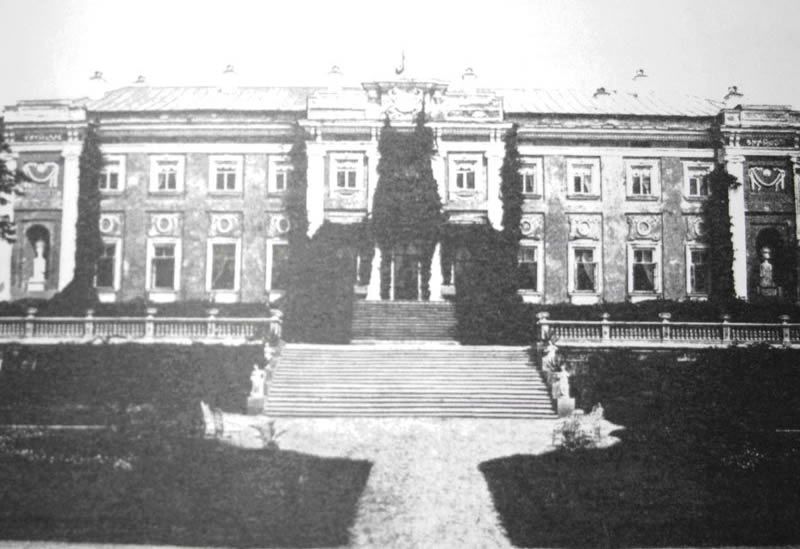
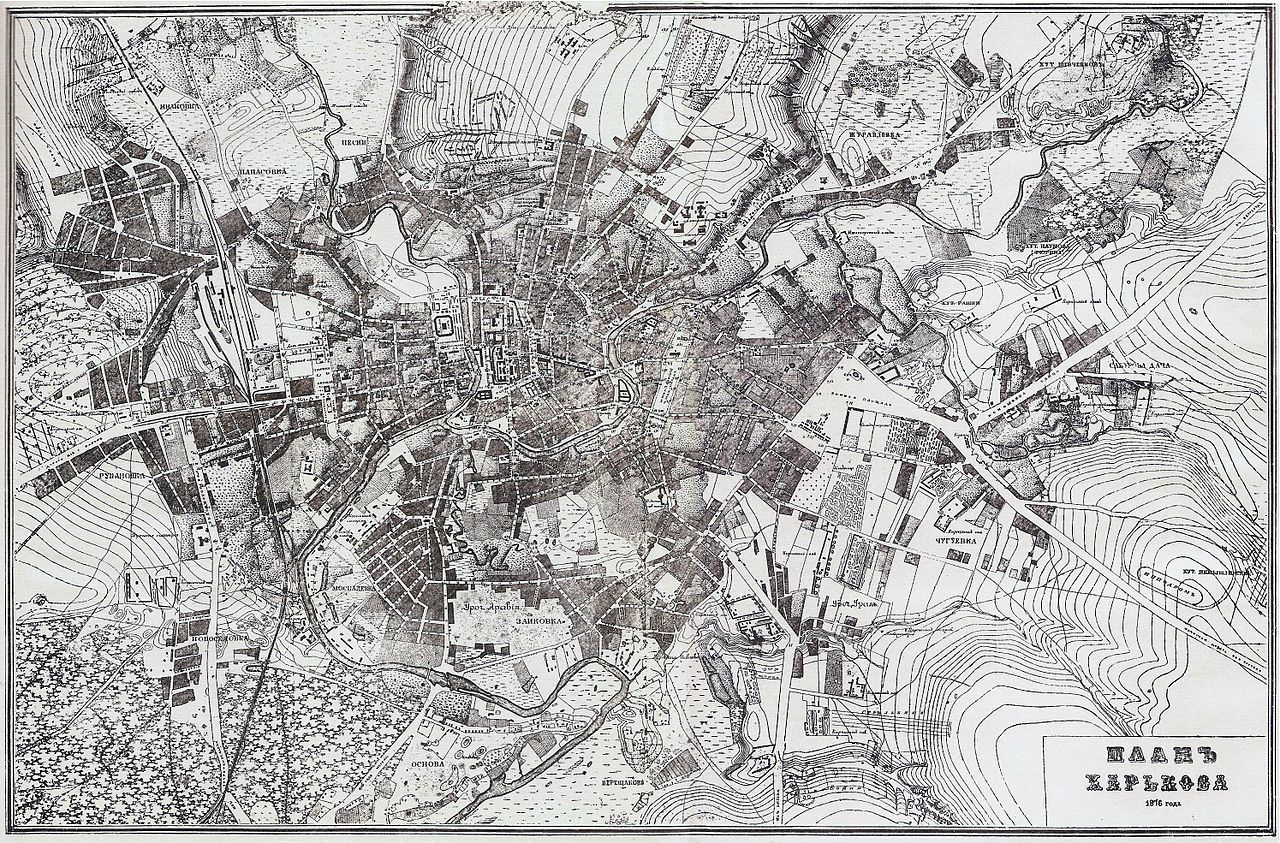
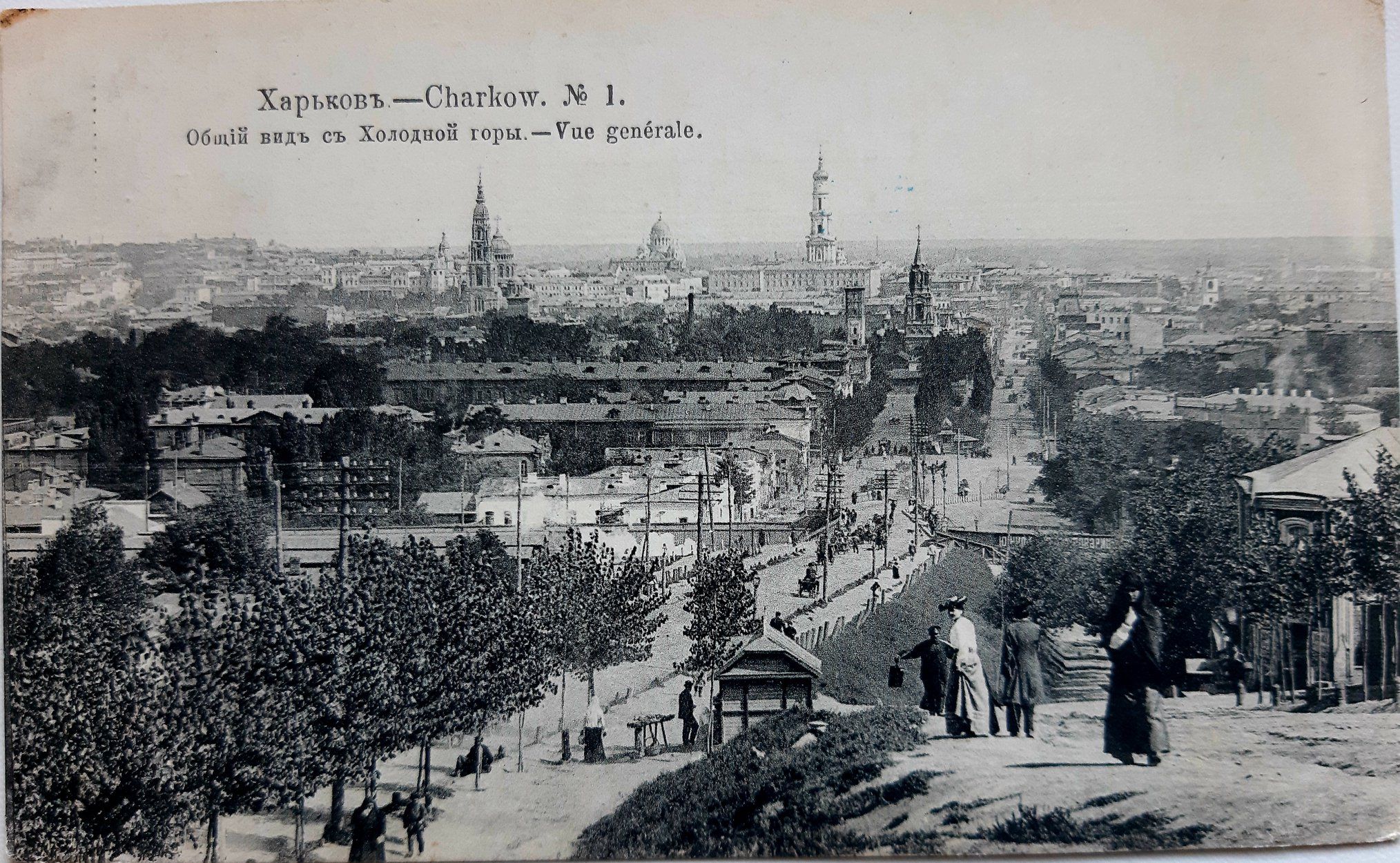
1. The Staromerkhansky Palace and Park Complex (Shidlovsky Palace) — a historic architectural and landscape ensemble located approximately 30 km from Kharkiv, in the urban-type settlement of Staryi Merchyk, Valkivskyi District. The complex is situated not far from the birthplace of the composer.
2. Map of Kharkiv, 1876 — the year of Fedir Yakymenko’s birth.
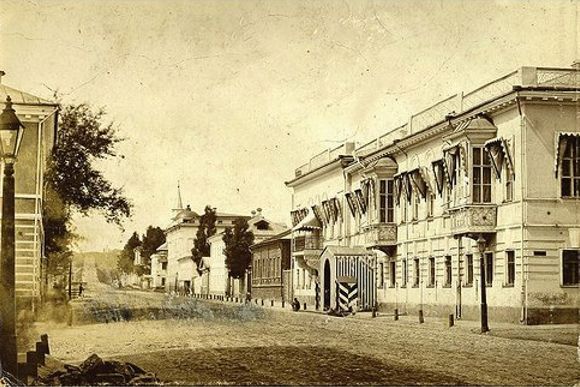
3. Kharkiv at the end of the 19th century — a view of the city during the period in which Yakymenko was born and formed his earliest cultural impressions.
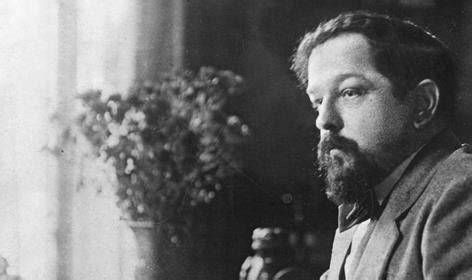
After graduating from the St. Petersburg Conservatory, Yakymenko taught for about a year at a music school in Tiflis (Tbilisi) before embarking on an extended journey through Western Europe. Between 1903 and 1906, he lived in France, Switzerland, and Italy, where he immersed himself in the vibrant artistic life and became an active participant in it. During this period, he developed a strong interest in the music of modernists Claude Debussy and Maurice Ravel, formed close friendships with composer Alexander Scriabin and musicologist Michel Calvocoressi, performed publicly as a pianist, and composed new works.
From left to right: Claude Debussy, Michel Dimitri Calvocoressi, and Maurice Ravel
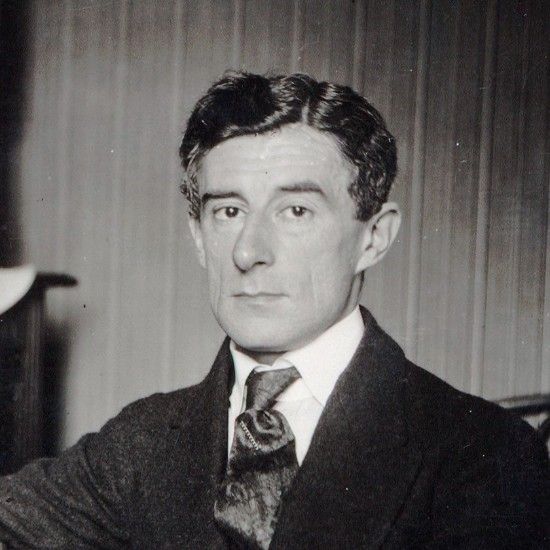
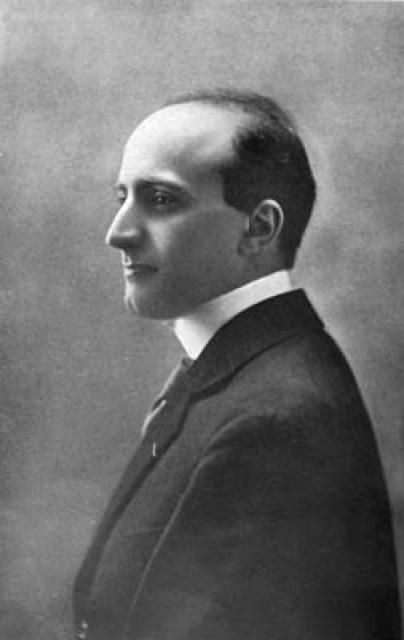
Yakymenko’s modernist style was shaped at the intersection of cosmogony, mysticism, symbolism, and impressionism. His compositions serve as sonic embodiments of ideas related to celestial bodies and the mysteries of human consciousness. The content of these works is eloquently suggested by their titles: Urania, Fantastic Sonata, Starry Dreams, the nocturne poem Angel, Song of Moonbeams, Idyllic Dances, Moonlight, Fleeting Visions, Dance of Angels, Starry Nights, and others.
The aesthetics of symbolism and mysticism also inspired Yakymenko’s artistic and philosophical reflections, published in St. Petersburg between 1909 and 1914: Aphorisms of an Artist, Life in Art, Art in the Universe, The Sphere of Music, and Art and War. These texts are marked by a distinctly metaphorical mode of expression, closely aligned with the poetry and painting of French Symbolism. The fourth section of Life in Art, devoted to the wondrous dreams of a dreamer, resonates strongly with the imagery of Puvis de Chavannes’s painting The Dream (1883). It is likely that Yakymenko recognized in this work a reflection of his own conception of creative inspiration, grounded in the unity of three “muses”: Science, Art, and Love.
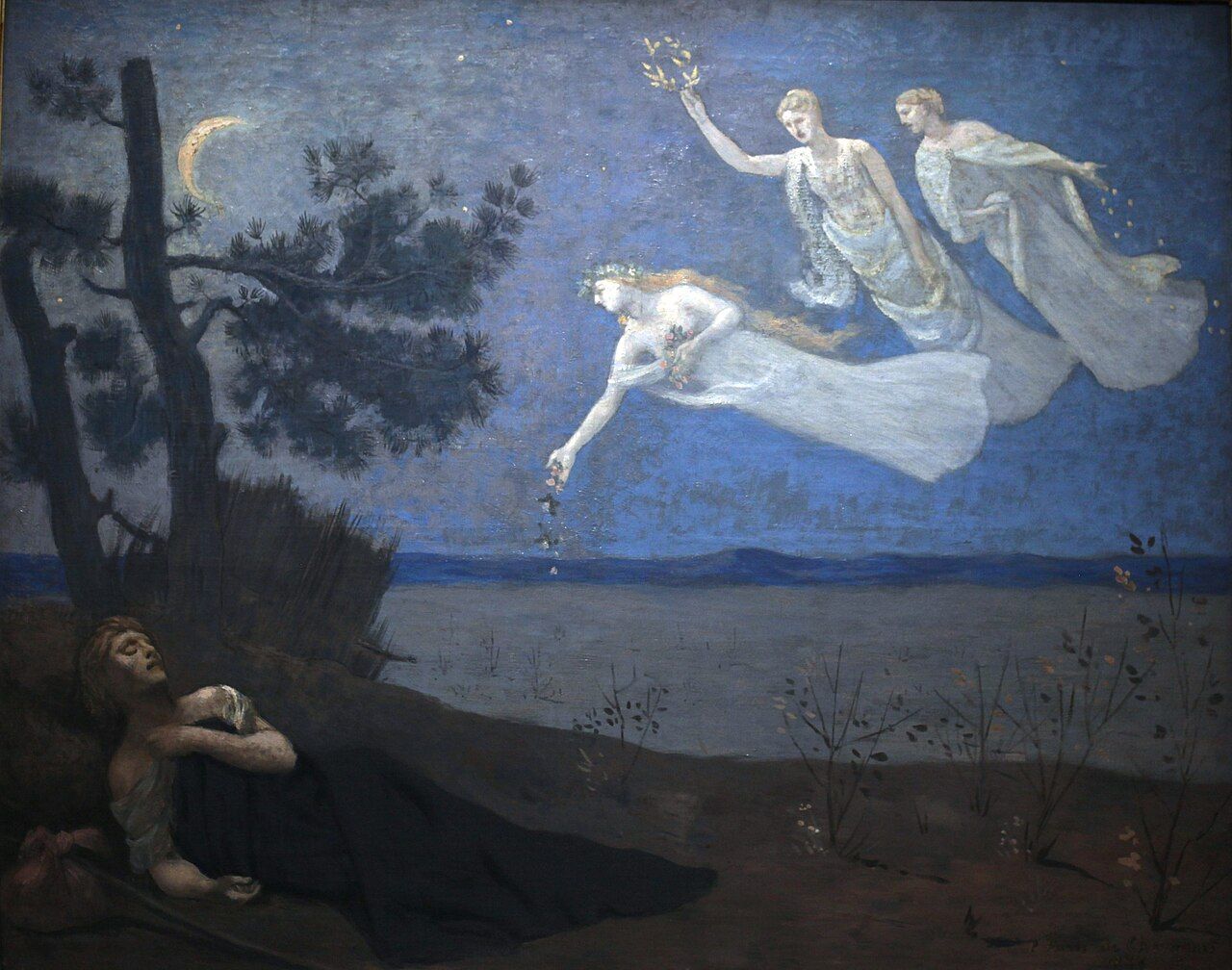
"Who are you, my beautiful fairies?" exclaimed the surprised dreamer.
"My name," said the first of them, "is Love."
"My name," said the second, "is Science."
"My name," replied the third, "is Art..."
Among his non-musical interests that influenced his artistic worldview were the paintings of the French symbolists and impressionists, as well as astronomy, a very popular field in the cultural milieu of the time.
Yakymenko's knowledge of astronomy is evidenced by the fact that in 1904 he became a member of the French Astronomical Society.
Of particular importance to Yakymenko in Paris was his meeting with astronomer Camille Flammarion , widely known for his own observatory, hypnotic and spiritualist séances, as well as popular science works on astronomy and esotericism.
Flammariion's books "Urania" and "Star Dreams" inspired Yakymenko to create musical works of the same name.
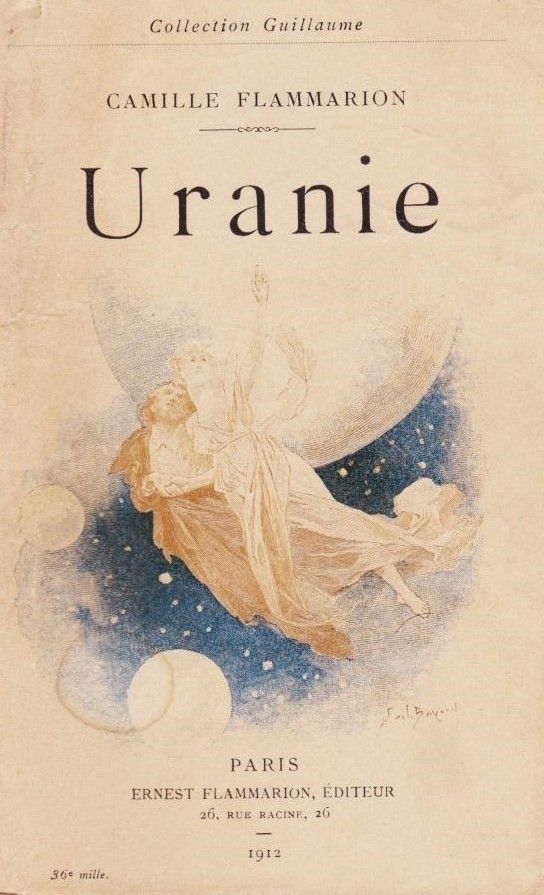
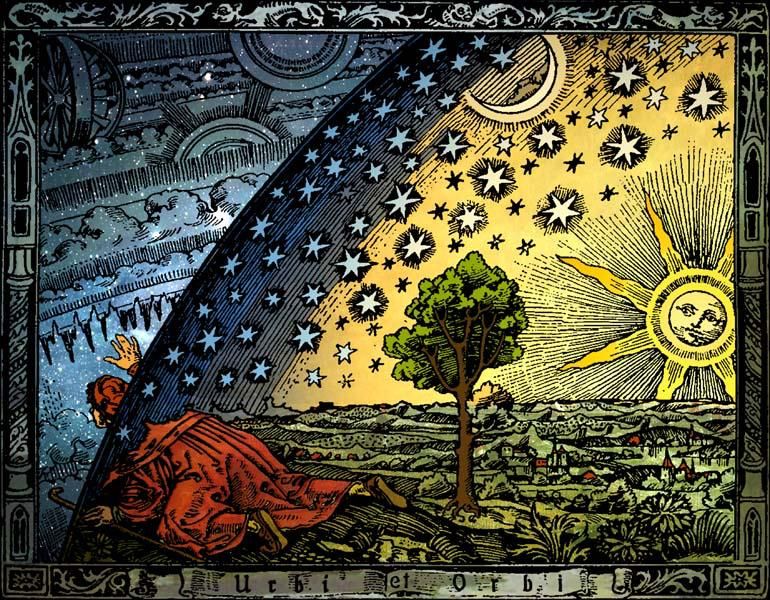
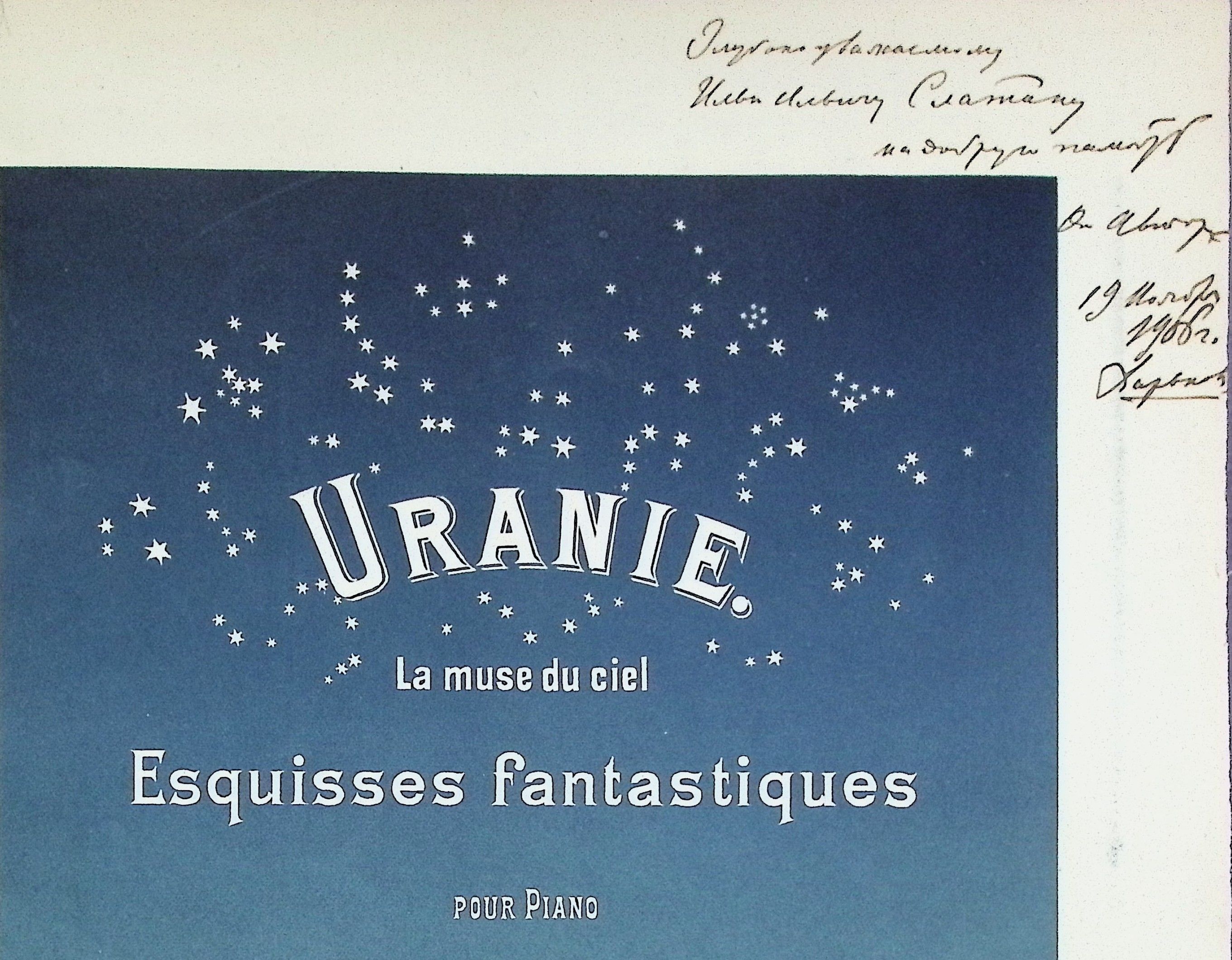
From left to right:
Cover of the book Uranie (1912)
“The Flammarion Engraving” (engraver unknown)
Copy of a cycle with autograph, presented to Ilya Slatin (1906)
Among his early works on the theme of cosmogony, the piano cycle Urania, written in 1904 under the influence of Flammarion's novel of the same name, stands out. Despite the connection of the title with ancient Greek mythology (Urania is the name of one of the nine muses, the patroness of astronomy), Yakymenko's music is hardly associated with the ancient image, but rather with a distant planet, to which the author invites the listener to travel imaginatively through space in the four parts of the cycle. Each part is preceded by the author's literary epigraph, which specifies its figurative content. Through the means of musical language, the composer embodies the sensation of cosmic light, the movement of celestial bodies and human thoughts, which are wonderfully intertwined in a fantastic dance.
Piano cycle Urania performed by ukrainian pianist Pavlo Lysyi
In 1906, Fedir Yakymenko returned to his hometown of Kharkiv, where he taught at a music school. He was also actively engaged as a performer and continued to compose music, as well as write literary and journalistic texts. At the time, Kharkiv was one of the major centers of musical life in the Russian Empire, with its key driving force being Ilya Slatin, director of the music school.
A gifted musician and an outstanding organizer of musical life, Slatin enjoyed unquestioned authority among both colleagues and students. As a mark of respect, Yakymenko presented him with a copy of Urania, bearing the composer’s own autograph and dated 1906. This annotated score is preserved in the collections of the V. Korolenko Kharkiv National Scientific Library.
"Akimenko is completely independent, inventive, fantastic and independent. ...
Serious academicism and classicism are a thing of the past for him. Akimenko is a musical astronomer, capturing the thrill and charm of mystical forces in their playful and intersecting rays. The vibration of sound, akin to the vibration of light...
Capturing with his transparent harmony, soft flicker of modulations, lightness and rapidity of rhythm the reflection of the play of rays, Akimenko strives to capture the magic of the ray, to catch the echo of the soul, enchanted, captivated and bewildered by the mysterious play of heavenly lights and fiery signs...". (Y. Petrovsky, 1908)
In 1912, Fedir Yakymenko moved to Moscow, where he performed his own works as both pianist and conductor at concerts organized by Sergei Koussevitzky. Two years later, he settled in Petrograd, accepting an invitation to teach composition and music theory at the conservatory. It was likely during this period that one of his most iconic works—Sonata-Fantasy No. 2, marked by heightened dramatic expression—was composed.
During his nine-year stay in the Russian capital, Yakymenko lived through profound political upheavals, including World War I and the establishment of Bolshevik rule, which inevitably shaped his worldview. A refined intellectual and aesthete, formed within an aristocratic creative milieu, he could not accept the destructive cultural and social policies of the Bolshevik regime. Instead, he viewed with sympathy the Ukrainian liberation movement and the nation-building processes unfolding in Ukrainian society, which culminated in the proclamation of the Ukrainian People’s Republic and the West Ukrainian People’s Republic.
In 1917, Yakymenko became a member of the Ukrainian Literary and Artistic Society in Petrograd and took an active part in Ukrainian music concerts organized by the society. Ukrainian themes increasingly entered his creative work during this period: he composed Six Ukrainian Pieces for Two Pianos and worked on arrangements of 75 Ukrainian folk songs.
performed by ukrainian pianist Pavlo Gintov
In 1924, Yakymenko emigrated to Prague, where patriotic Ukrainians gathered after the defeat of the Ukrainian People's Republic. For about two years, he taught at the newly established Dragomanov Ukrainian Higher Pedagogical Institute as the head and professor of the music department. His colleagues included prominent figures of Ukrainian culture: cultural scholar and philosopher Dmytro Chyzhevsky, politician and writer Mykyta Shapoval, architect Volodymyr Sichynsky, and musicians Fedir Steshko and Nestor Nyzhankivsky. Yakymenko's Prague students Zinovii Lysko and Mykola Kolessa, who also became famous Ukrainian composers, remembered him as a talented and demanding teacher. The result of Yakymenko's fruitful musical and pedagogical work was the publication of the first Ukrainian-language textbook on harmony in 1925. In addition to his teaching work, he was actively involved in the concert life of the Ukrainian diaspora as a pianist and choir conductor.
During his Prague period, Fedir Yakymenko’s creative output becomes significantly enriched with Ukrainian themes. This includes choral arrangements of folk songs from the cycle Songs of Carpathian Ukraine, choral works set to texts by Taras Shevchenko and Mykhailo Starytskyi , art songs to poetry by Oleksandr Oles and Mykyta Shapoval , as well as piano cycles, notably Three Pieces on Ukrainian Themes and Pictures of Ukraine.
The musical language of these works is more transparent and accessible compared to Yakymenko’s earlier compositions. At the same time, the defining features of his style remain present: an aesthetic rooted in symbolism, astral and fantastical imagery, refined lyricism, and dramatic exaltation.
In 1925, he completed the symphonic poem–nocturne Angel, imbued with a mood of dreamy, contemplative introspection. Around the same time, the piano Ballade was composed — a work of intense expressiveness and heightened dramatic tension.
After two years in Prague, Fedir Yakymenko moved to France. He initially settled on the French Riviera in Nice, but later relocated to Paris, where he taught at the Russian Conservatory, founded by the émigré Yevgeny Gunst, until the mid-1930s. Alongside his pedagogical work, Yakymenko remained actively engaged in composition, producing numerous symphonic, chamber, and piano works. Among them are the Barcarolle “ The Gondolier’s Dream”, the ballet suite " On the Waves of the Dnipro ",and the piano cycle Mediterranean Impressions.
Yakymenko likely cherished the hope that France—where some of the finest years of his youth had passed—would become the place of a renewed creative flourishing. However, the rise of Nazism, the economic crisis, and the outbreak of the Second World War shattered these expectations. Financial hardship led to the closure of the Russian Conservatory, leaving Yakymenko without employment. Publishing houses that had issued his works also ceased operations.
Lonely and forgotten, weakened by hunger, poverty, and illness, Yakymenko spent his final years in Paris, devastated by Nazi bombings. He died suddenly on January 3, 1945, just weeks before the end of the war. His gravestone at the Batignolles Cemetery bears the inscription:
“Fedir Yakymenko — Ukrainian composer.”
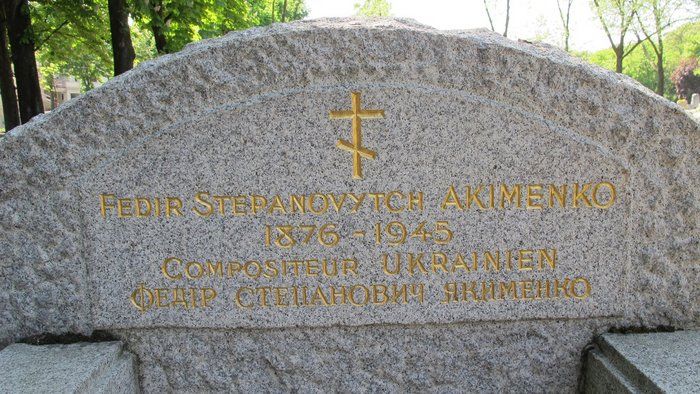
A significant part of Fedir Yakymenko's later works still exists only in manuscripts — in the collections of the National Library of France and private collections. The return of his music to the Ukrainian context, its performance and interpretation — these are questions of restoring the historical perspective.
Text prepared by musicologist Olha Lihus