
Ukrainian Theatre Artists—Creating magic on stage

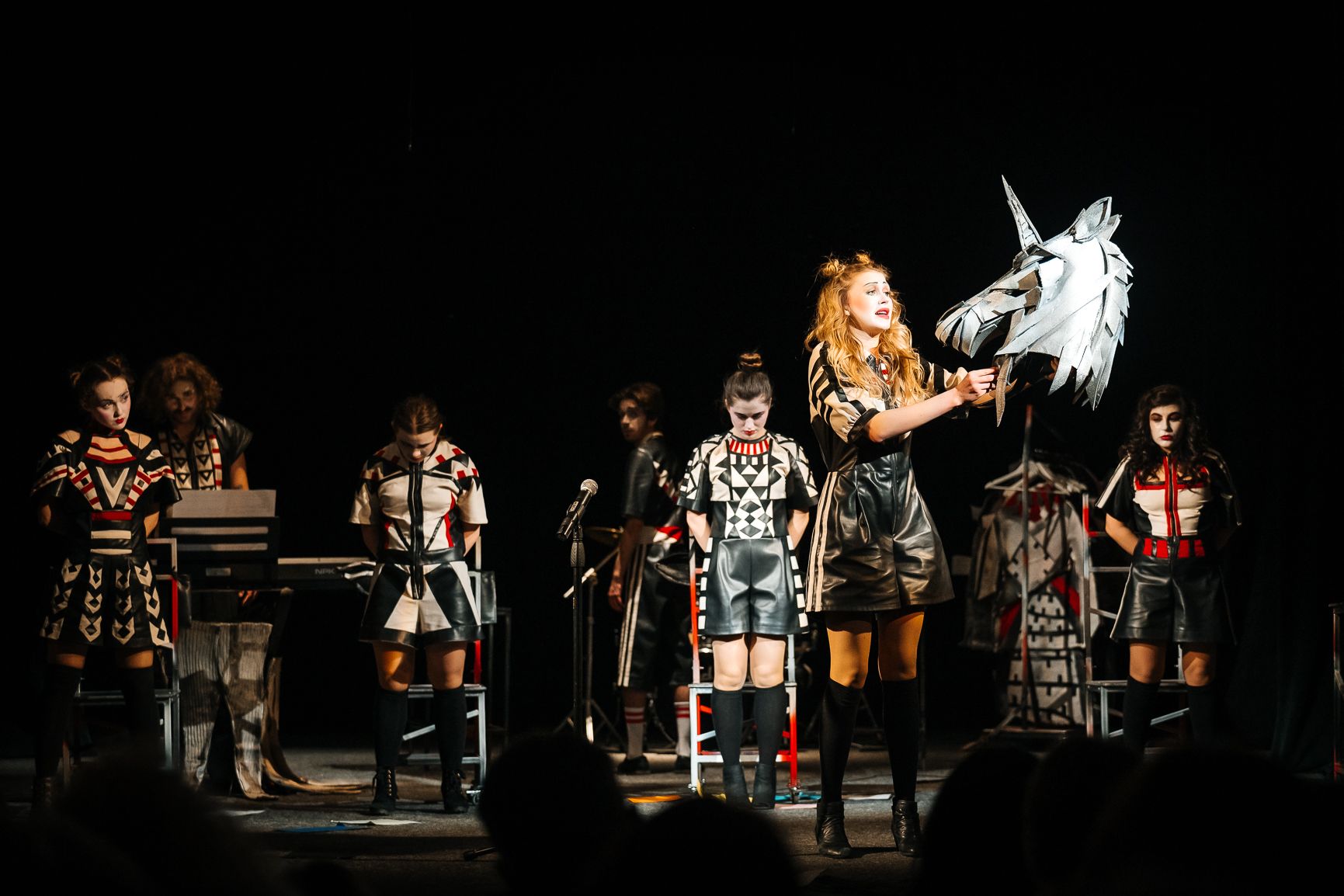
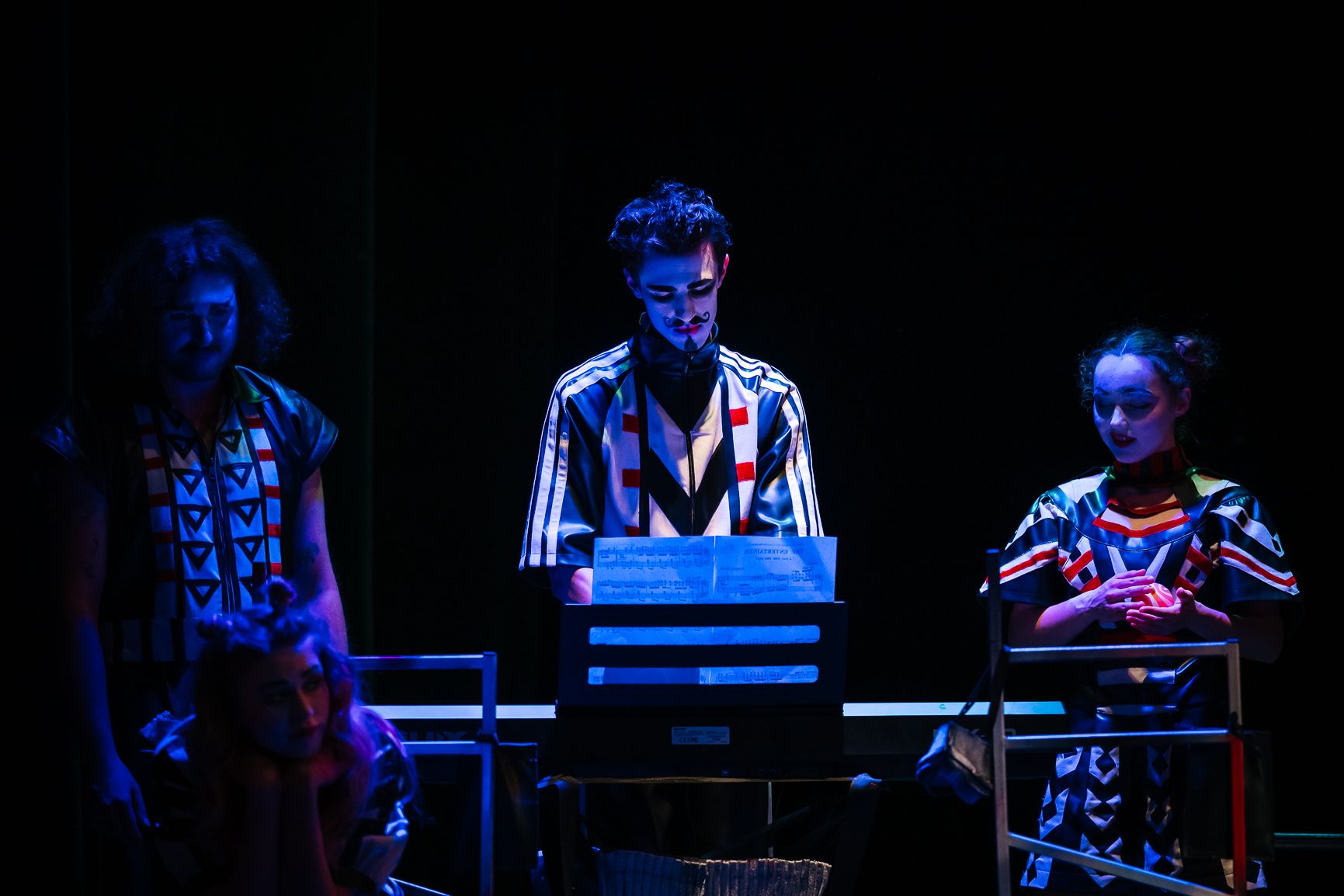
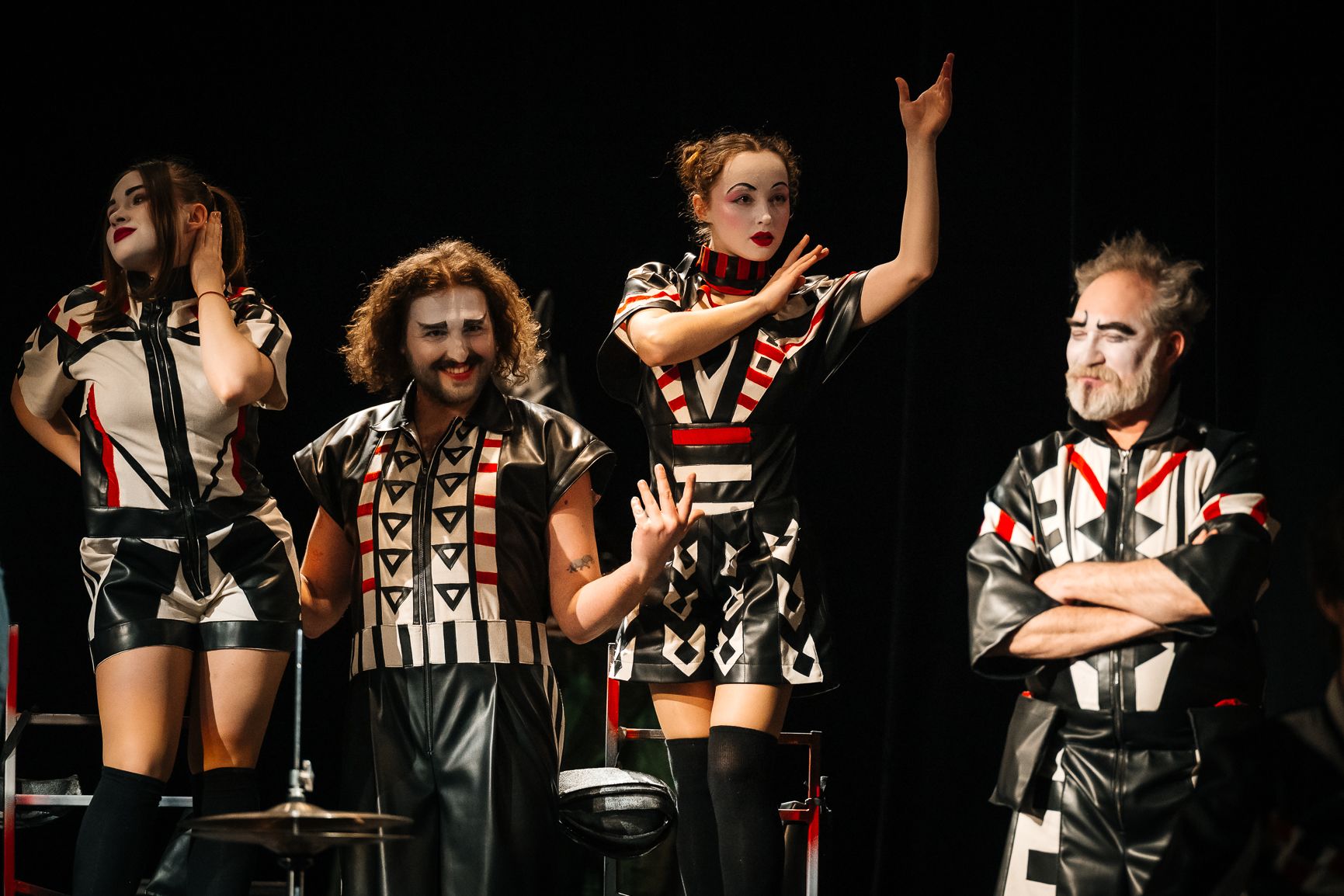
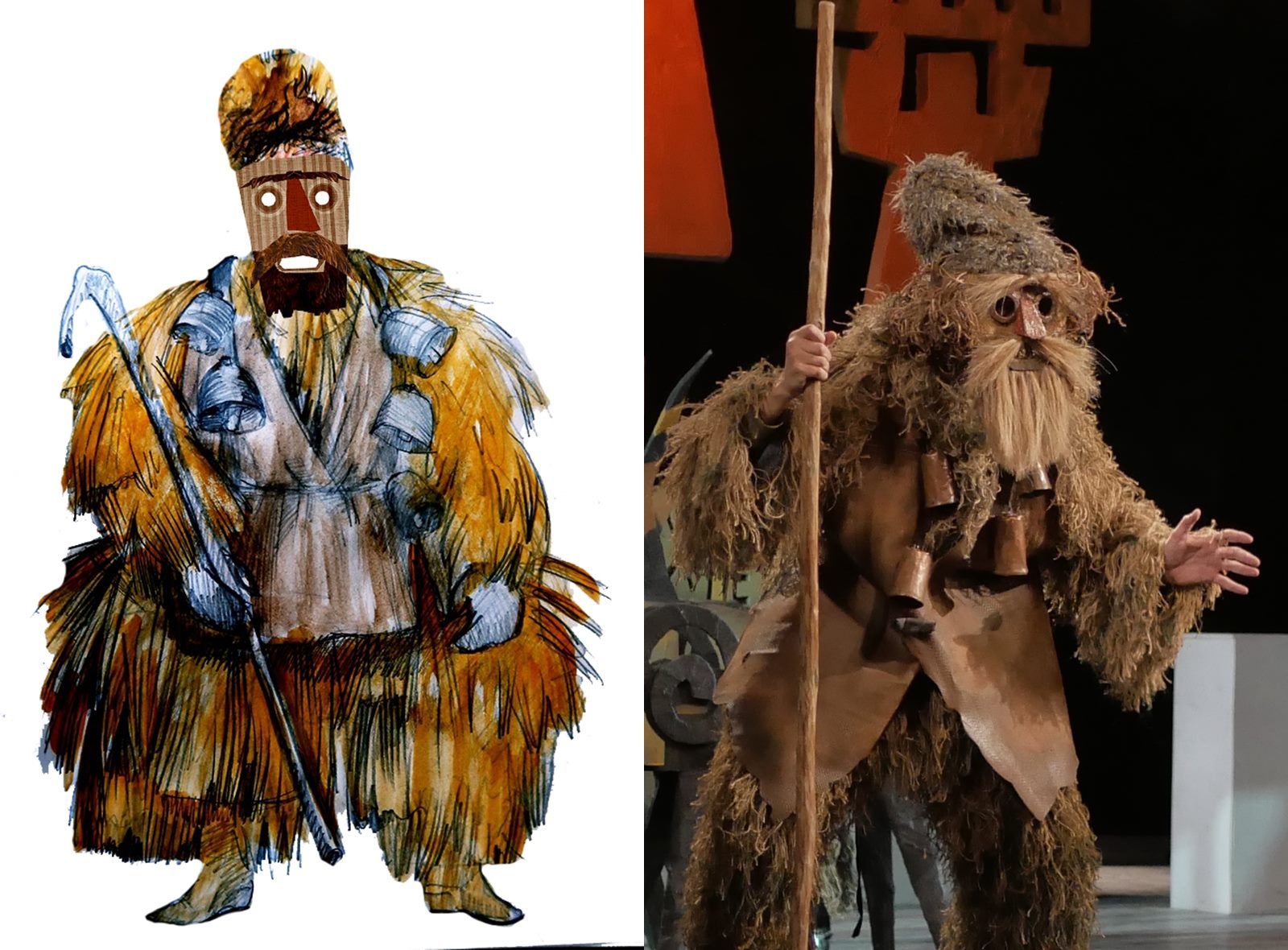
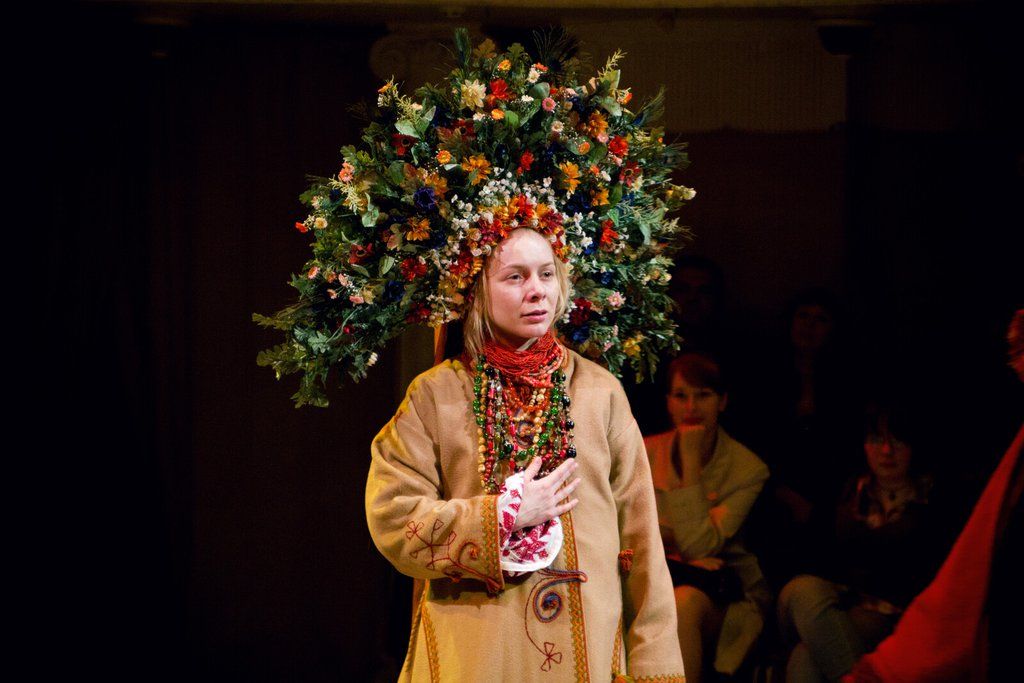
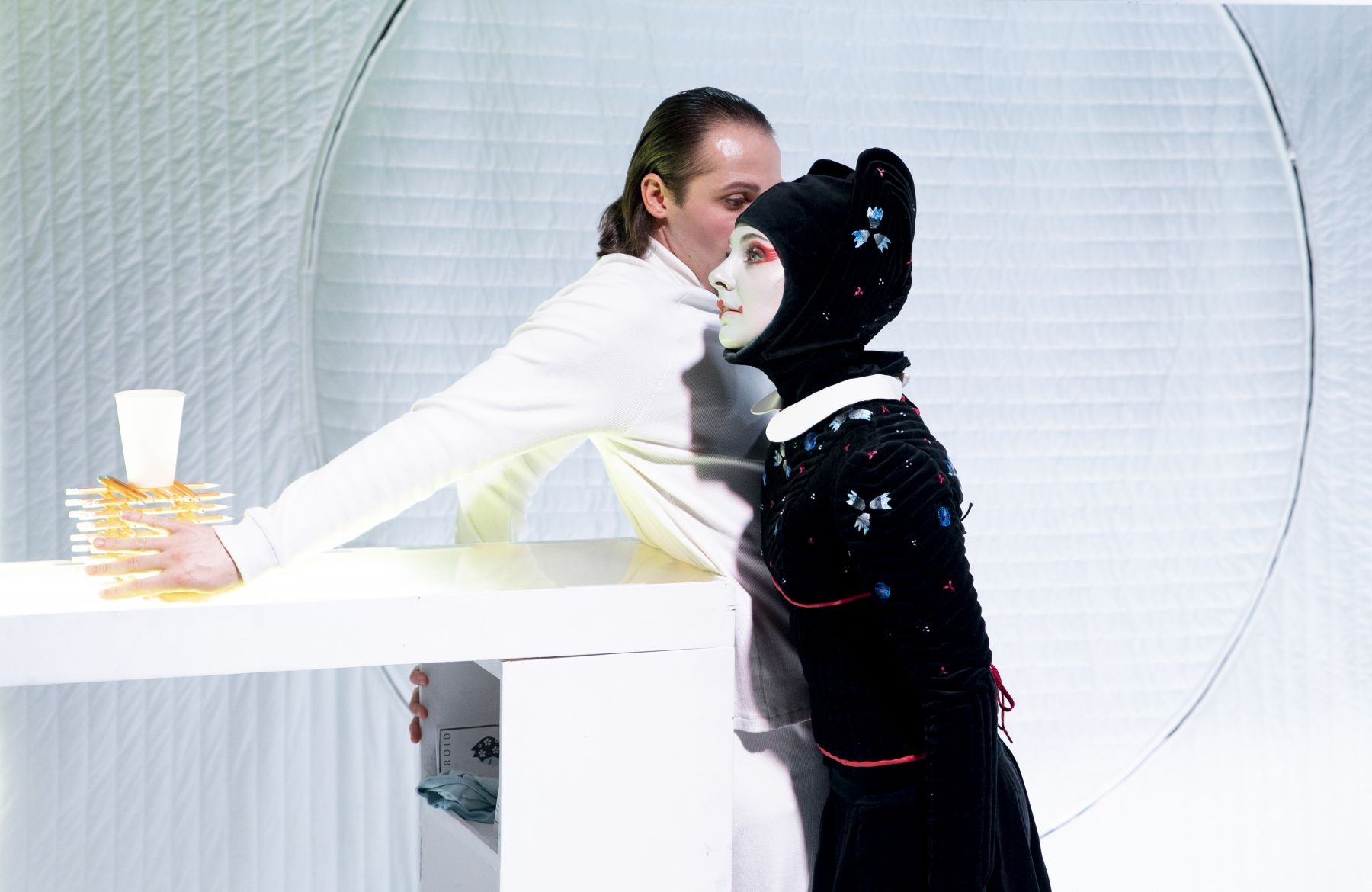
Vertep: Neo-Baroque Mystery by Bohdan Polishchuk. Costume design and scenography by Olena Polishchuk. 2021. Photo: Maksym Busel; The Earth by Davyd Petrosian. Mariia Zankovetska Theatre (Lviv), 2023. Photo: Ruslan Lytvyn.
These six talented designers create the visual world of Ukrainian theatre—from the clothes actors wear to the sets they perform on. Their work combines traditional Ukrainian craftsmanship with contemporary ideas, using bold colours, distinctive patterns, and creative materials to tell stories on stage.
The artists featured here were part of Theatre Stage Characters: Ukraine – Lithuania, an exhibition organised by the Lithuanian Theatre, Music and Cinema Museum, Scenography Gallery, and Lviv Scenography Quadriennale. The exhibition was supported by the Ukrainian Institute, Ukrainian Cultural Foundation, and Lviv City Council, bringing together exceptional talent from Ukraine's theatre scene.
Explore their work and discover how Ukrainian artists shape what you see on stage—where creativity meets tradition.
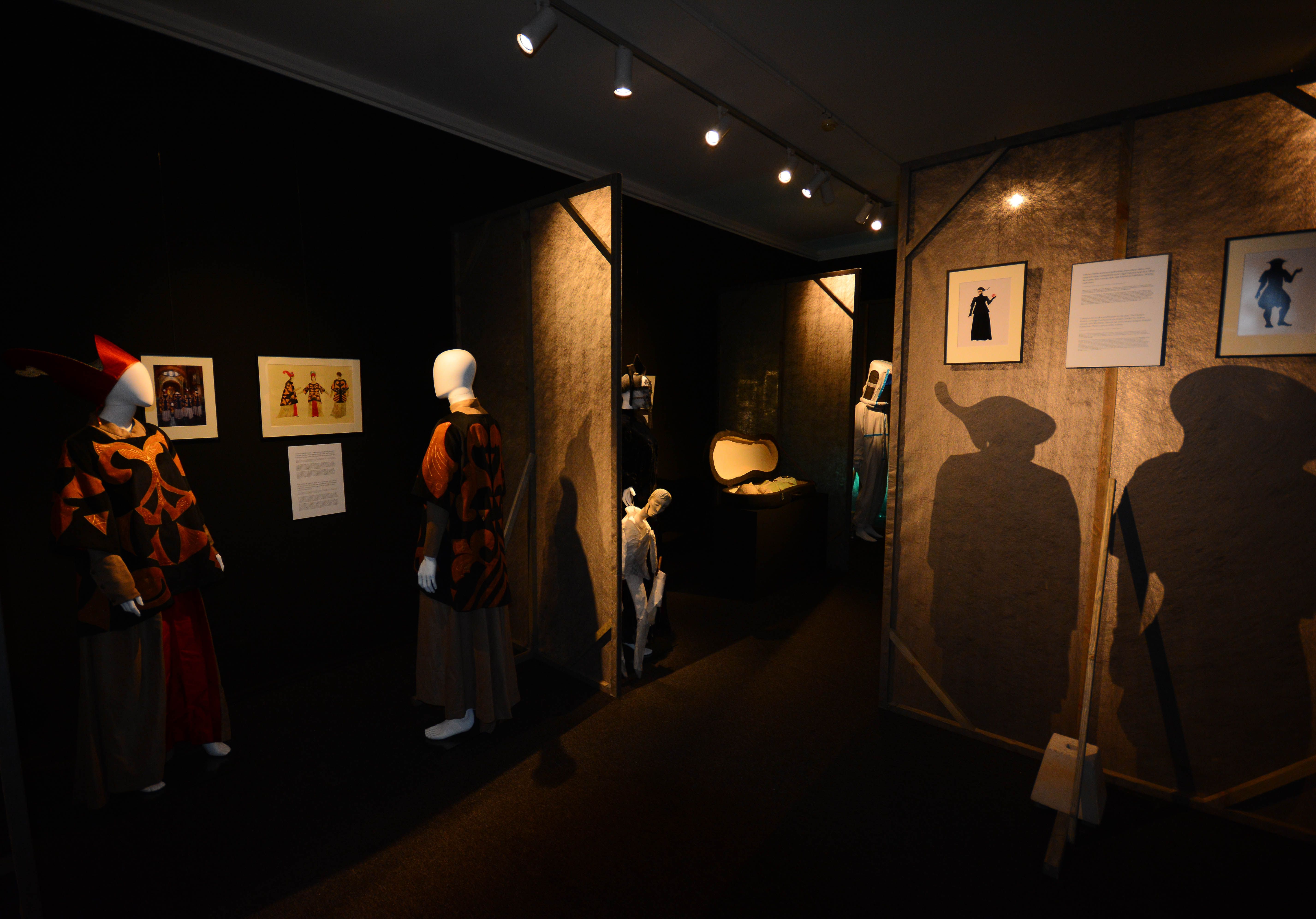
Theatre Stage Characters: Ukraine – Lithuania at the Lithuanian Theatre, Music and Cinema Museum. Photo: Evaldas Narkevičius.
Liubov Dushyna's artistic journey as a costume designer and scenographer has been profoundly shaped by displacement and resilience. In her practice, she combines formal training from Kharkiv State School of Art as a decorative artist with studies in easel graphics and painting at Kharkiv Academy of Design and Arts. She divides her work into two distinct periods: before and after Russia's full-scale invasion of Ukraine. What began as work with private theatres in Kharkiv has evolved into a multi-regional practice across the West of Ukraine, where she now officially works with two theatres in the Zakarpattia region.
Dushyna's creative process is deeply rooted in her surroundings – the local landscape, architecture, and people become the foundation for her designs. This connection to place is evident in productions like:
The Taming of the Shrew at the Khust Regional Drama and Comedy Theatre;
Valse mélancolique based on Olha Kobylianska's work at the Chernivtsi Regional Philharmonic.
Both productions emerged from what she calls 'local colour' – the unique cultural and visual characteristics of each region.
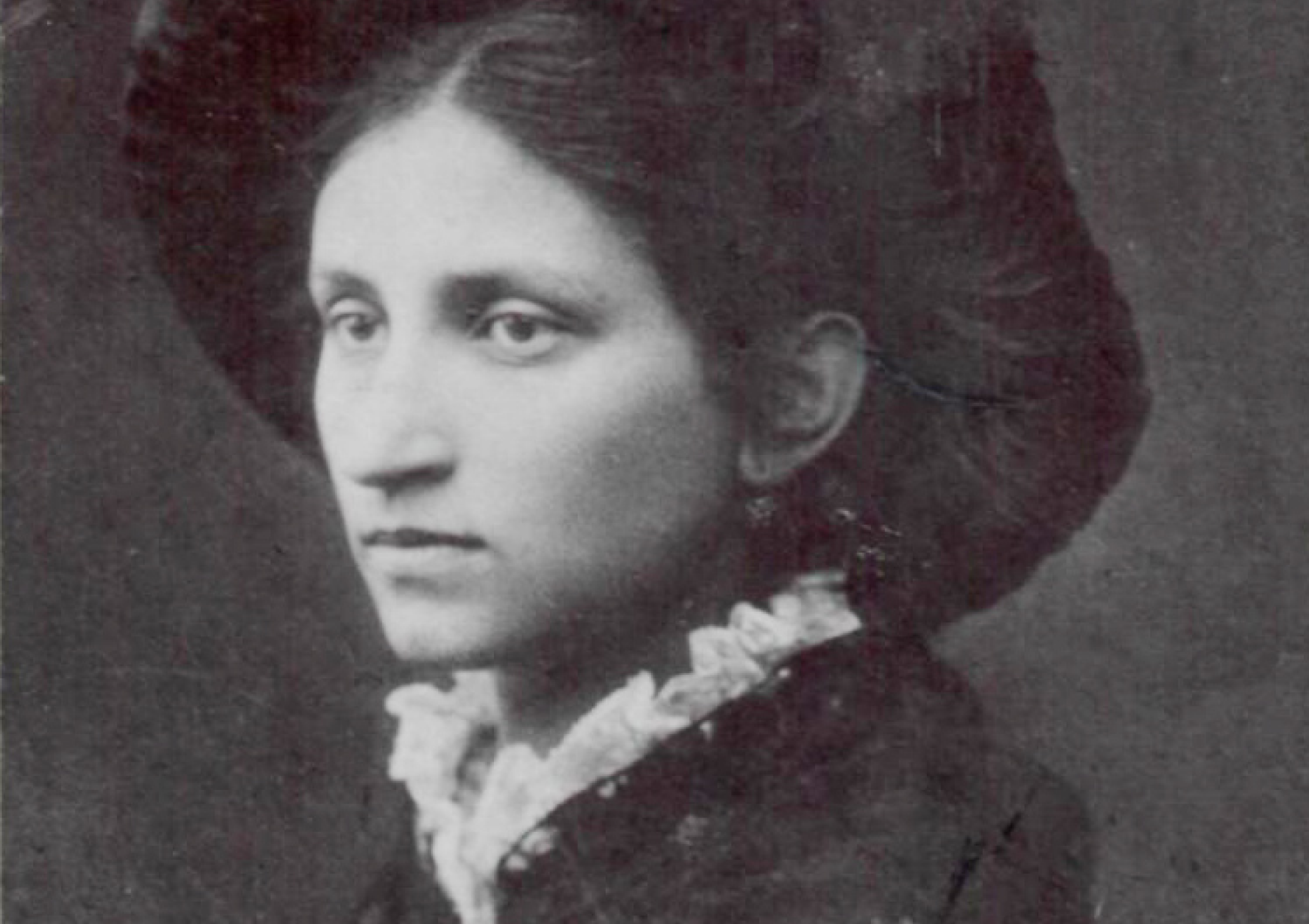
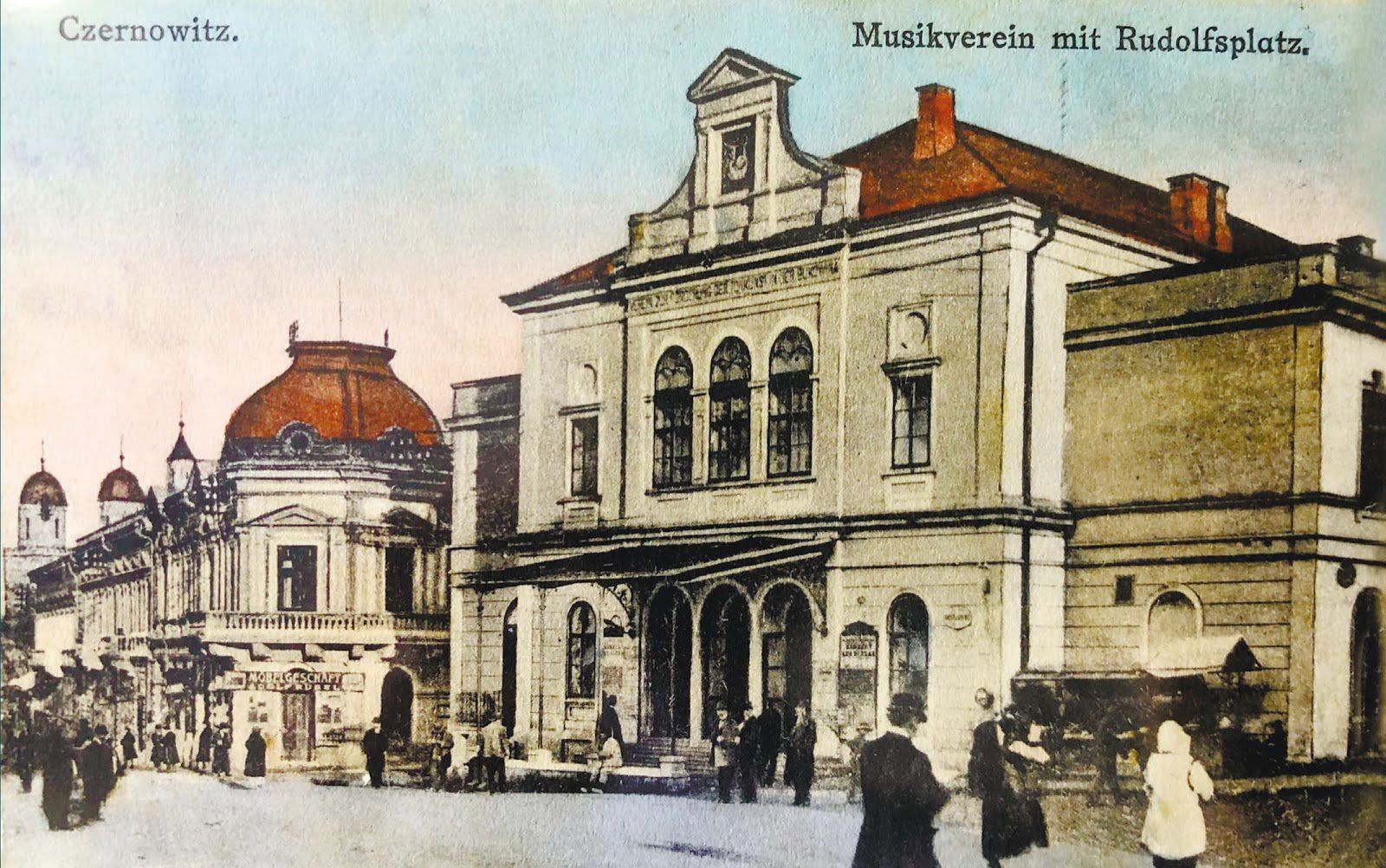
Olha Kobylianska; Bukovyna Society for the Promotion of Musical Arts in Chernivtsi (now Chernivtsi Regional Philharmonic); Valse mélancolique by Tetiana Voronova. Chernivtsi Regional Philharmonic, 2023. Photo: The Scenography Gallery.
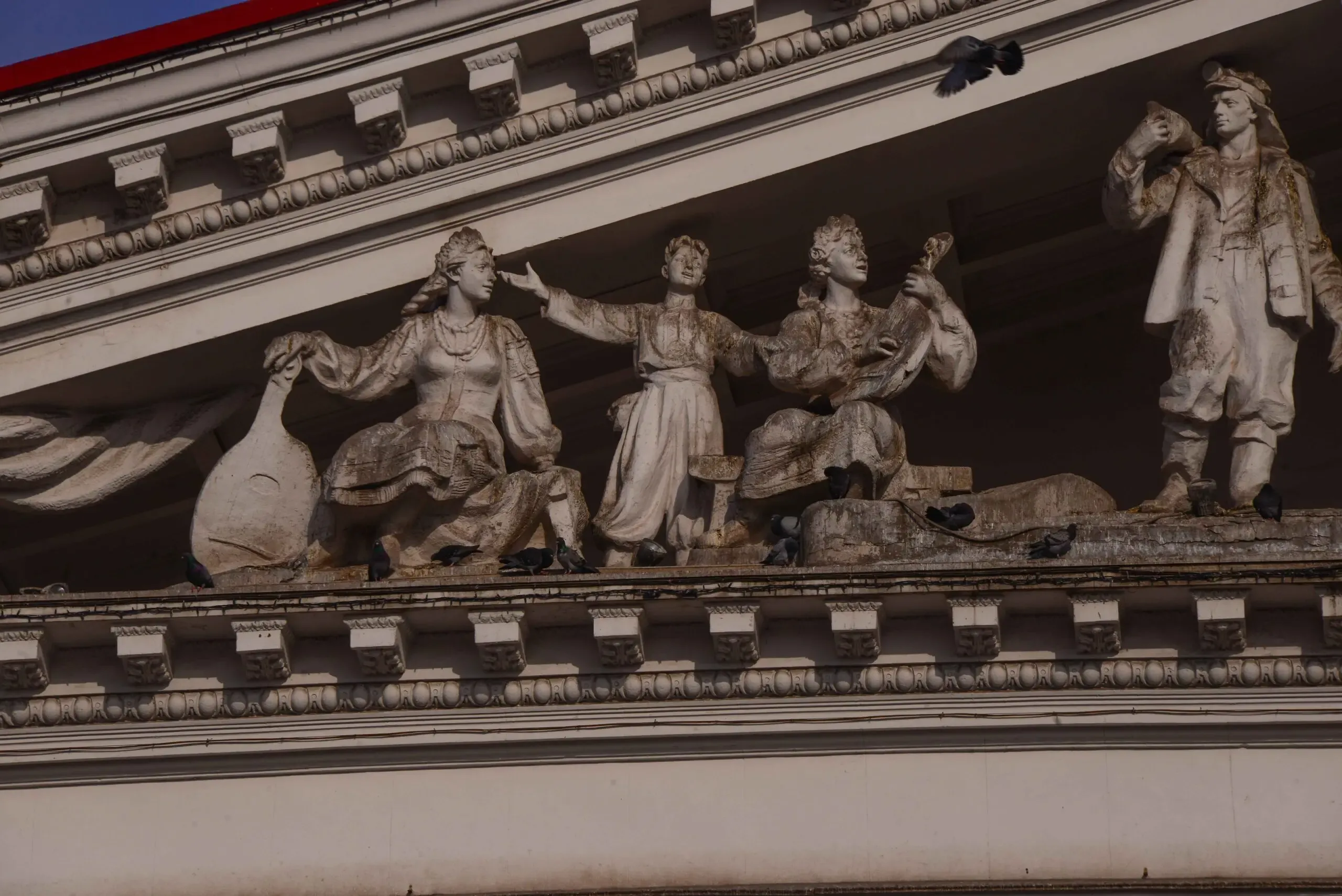
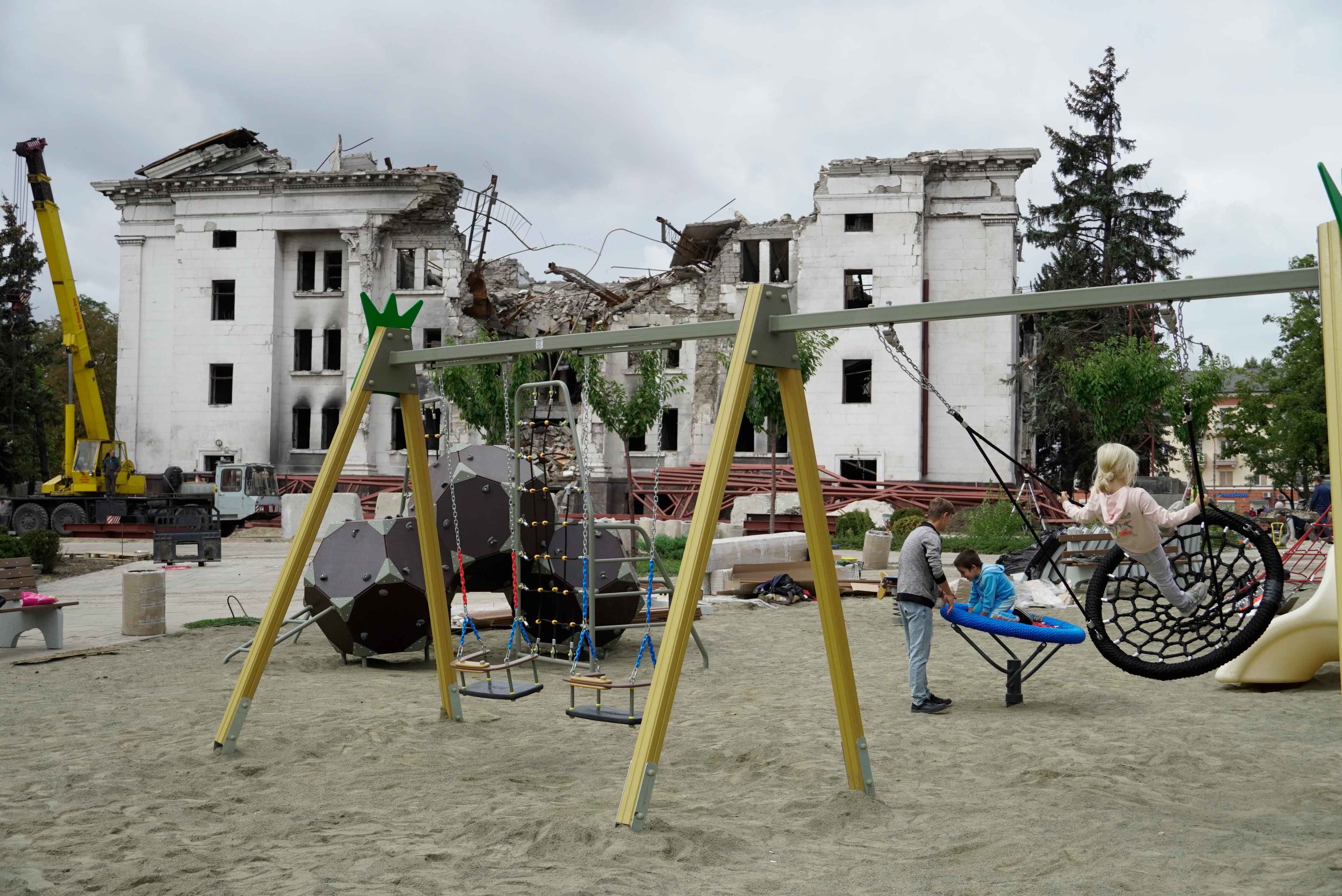
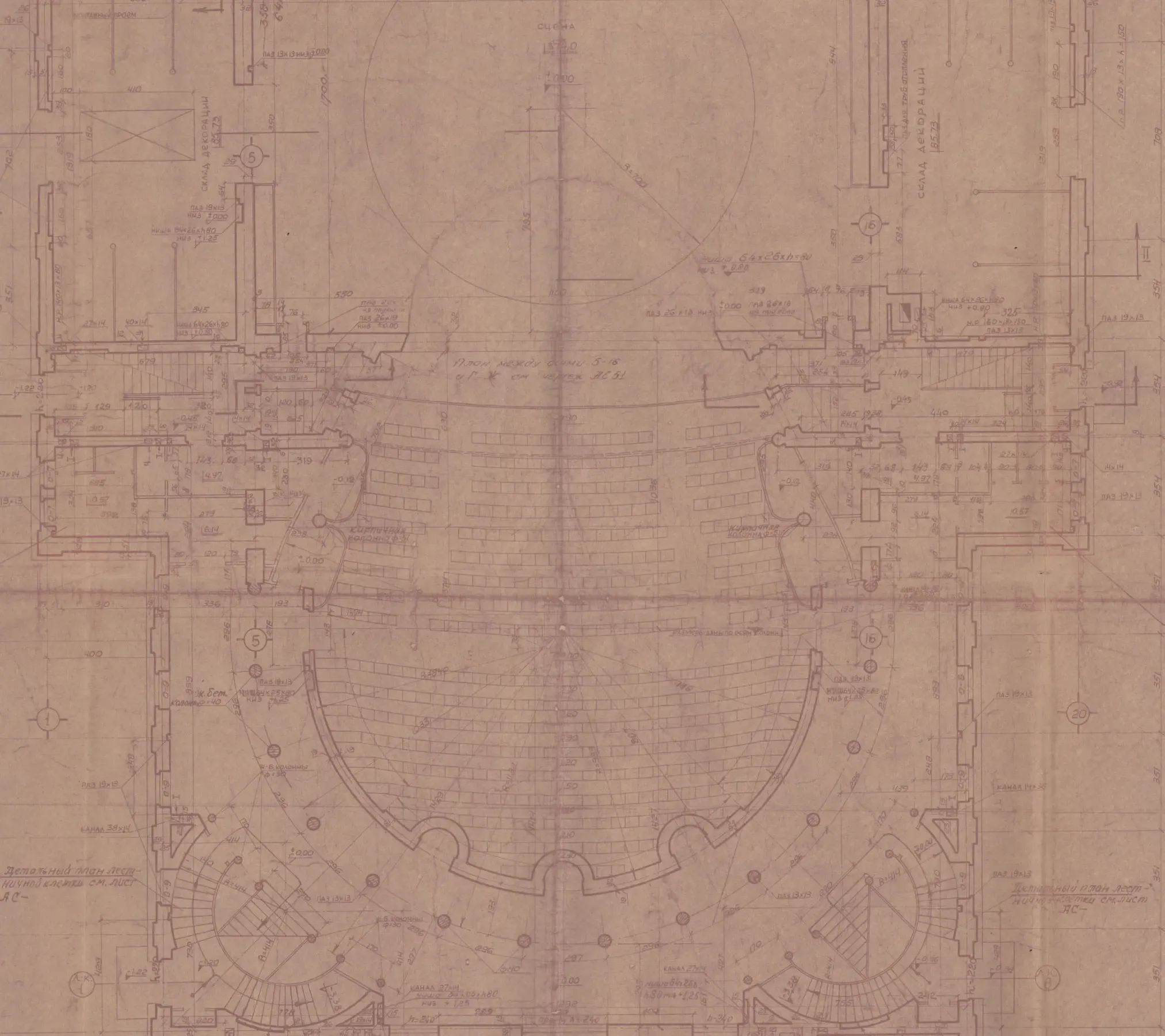
As an internally displaced person herself, Dushyna has taken on increased responsibilities, often handling large volumes of work within tight deadlines. This constraint has become particularly acute while working with the displaced Donetsk Regional Academic Theatre from Mariupol, which operates without its own building or workshops in Uzhhorod. The cultural centre of the city and the only professional theatre in Mariupol, it became a symbol of the humanitarian catastrophe in 2022 inflicted by Russia.
Sculptural composition in the tympanum of the pediment of the Mariupol Drama Theatre. Photo: Semyon Shirochyn; Side facade of the theatre, September 15, 2022. Photo: Stringer/Anadolu Agency via Getty Images; Theatre stage and auditorium. Drawing provided by Semen Shirochyn. Source: Zaborona.
In 2022, Dushyna participated in a residency for Ukrainian women artists in Tbilisi, Georgia, and contributed to the Georgian Scenography Biennial. She was particularly struck by Georgian scenographic art's ability to achieve maximum visual impact through minimal means, noting their restrained, graphically laconic approach to color.
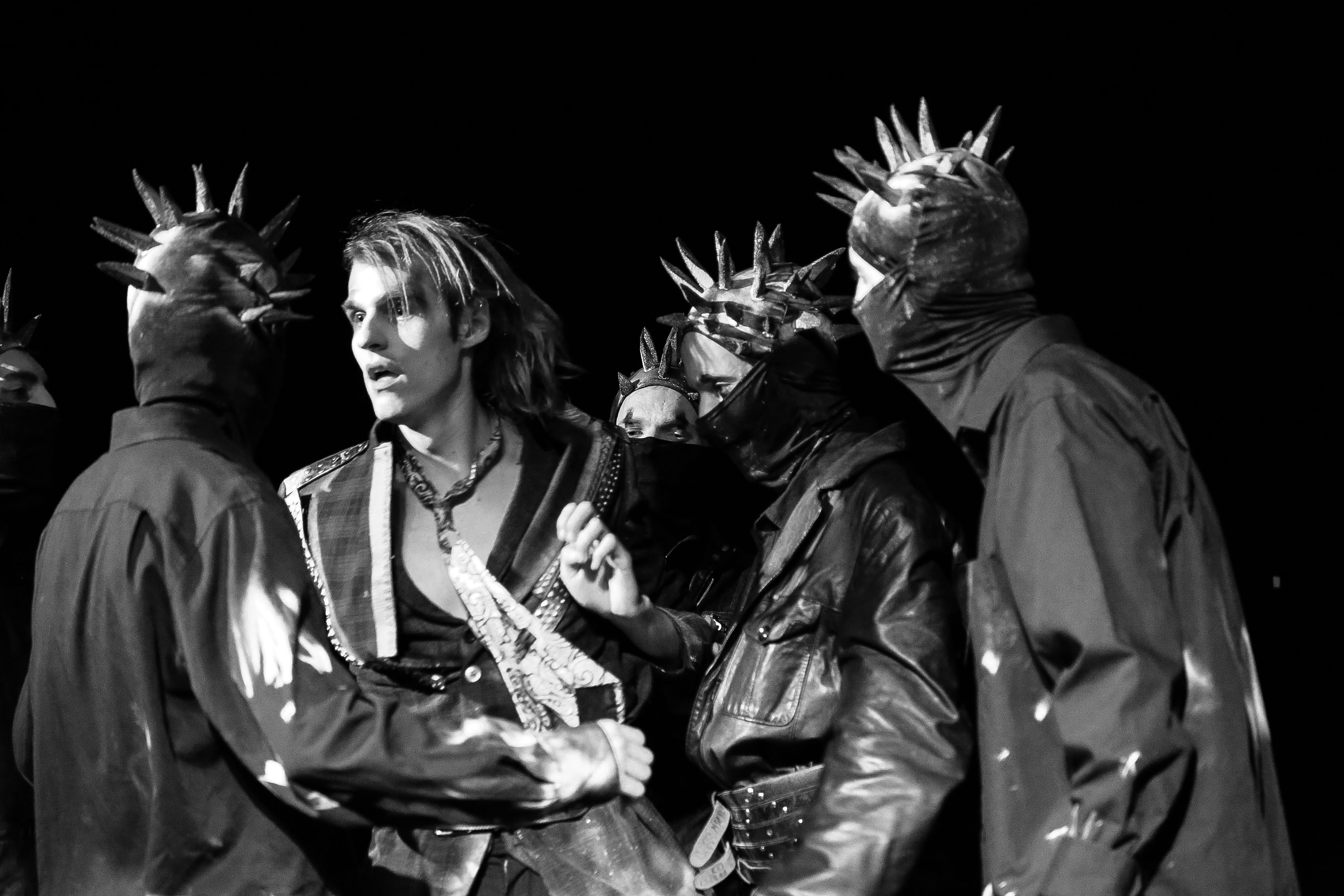
The Georgian treatment of black in costumes left a lasting impression, influencing her subsequent work on productions like Valse mélancolique and the student production of Richard III at Uzhhorod Academy of Arts.
Scene from 'Richard III' based on William Shakespeare's play, Uzhhorod Academy of Arts, 2024. Course leader and director — Kyrylo Dushyn. Photo: Nadya R.
Dushyna's costume from the Switcher production represents her experimental approach to contemporary Ukrainian theatre. This production by the Donetsk Regional Academic Theatre, directed by Anton Mezhenin, explores the cabaret-standup genre while addressing identity questions in modern Ukraine.
The costume for the character Vika – a backup vocalist and dancer in the cabaret – embodies the production's central theme of self-discovery through its eclectic design. The striped pattern continues the director's exploration of identity, combining geometric ornaments reminiscent of traditional Ukrainian clothing with recognisable Adidas stripes.
The costume mixes textures, including white linen, red velvet, and black leather, creating what Dushyna describes as a visual representation of searching for one's place in the contemporary world.
Switcher by Anton Mezhenin, Donetsk Regional Academic Theatre (Mariupol), 2025. Photo: Tiberii Shiutiv.
When asked about her motivation for choosing scenography, Dushyna responds simply:
Because creating worlds and images is still the best thing I know how to do.
Ukrainian designer Danyila Kolot approaches each production like a detective story, searching for the hidden themes and conflicts embedded in every script. Her work spans from Shakespeare's tragedies to contemporary Ukrainian drama, always seeking fresh solutions rather than repeating established formulas.
The first impulse in my work is always the play itself, and searching for answers to the countless riddles laid down by the author.
Each project becomes a puzzle where she uncovers the play's themes and conflicts, then builds costumes that respond to the theatrical space she creates.
For her commedia dell'arte interpretation in The Servant of Two Masters, she studied classical character types to create her own visual language. Her Othello production required extensive research into historic ship construction, which informed both the set design and Venetian carnival aesthetics that shaped the costumes.
Danyila Kolot. Provided by the artist.
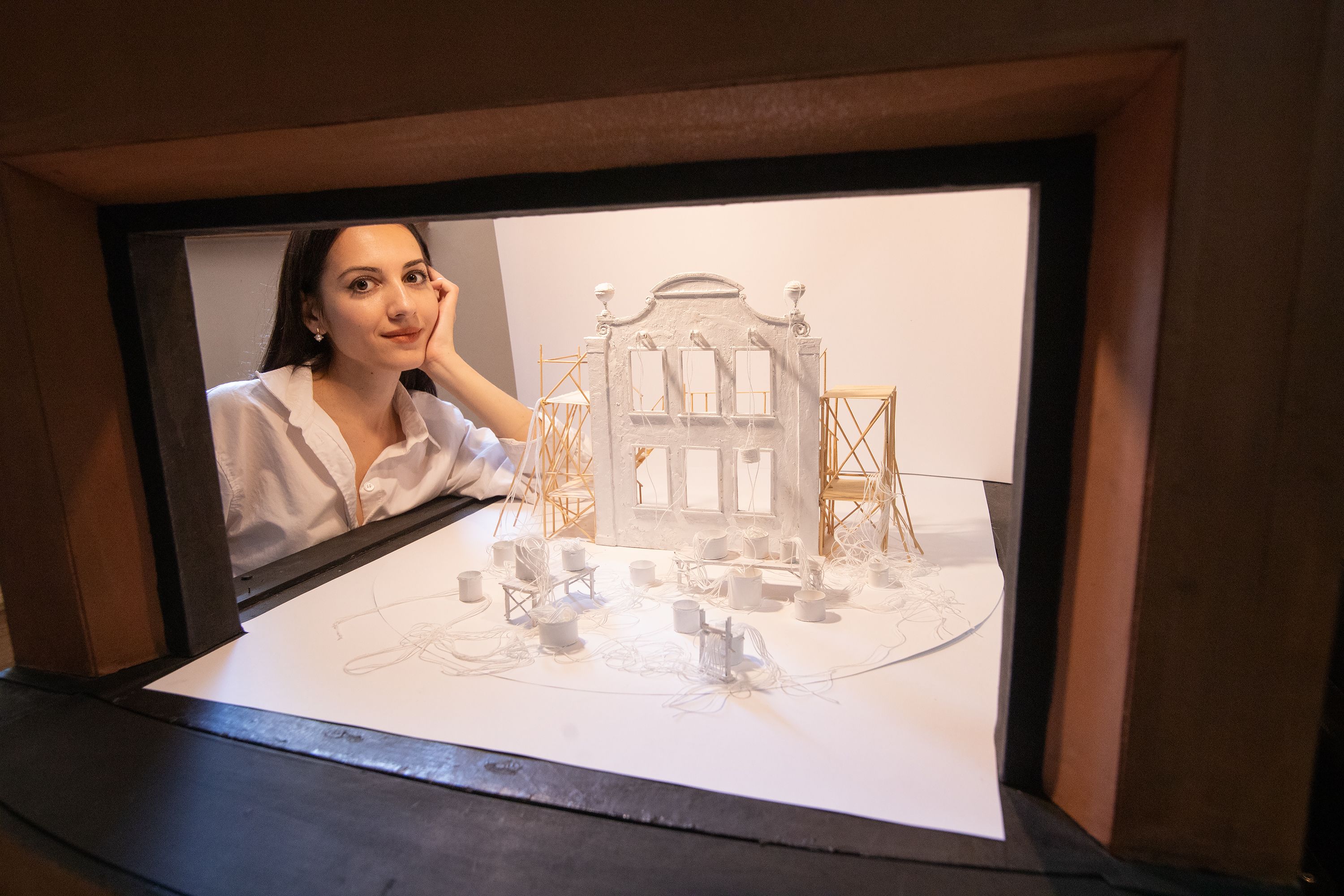
Each venue presents new challenges. Working across theatres in Kyiv and Lviv over the past five years, Kolot has learned that staging concepts possible on one stage might be impossible on another, forcing creative problem-solving with each project.
Technical innovation often drives her most memorable work. For The Earth by Ukrainian writer Olha Kobylianska, Kolot envisioned costumes where fabric would transition into hay texture—an effect that required two months of experimentation to create just seven costumes.
Her Othello production presented different challenges during rehearsals, requiring real-time adjustments to Desdemona's costume to accommodate the actress's physicality while maintaining the original artistic vision.
Otello by Davyd Petrosian, Lesya Ukrainka National Academic Drama Theatre (Kyiv), 2024. Photo: Iryna Somova; The Servant of Two Masters by Davyd Petrosian, Ivan Franko Theatre (Kyiv), 2024. Photo: Julia Weber; The Earth by Davyd Petrosian. Mariia Zankovetska Theatre (Lviv), 2023. Photo: Ruslan Lytvyn.
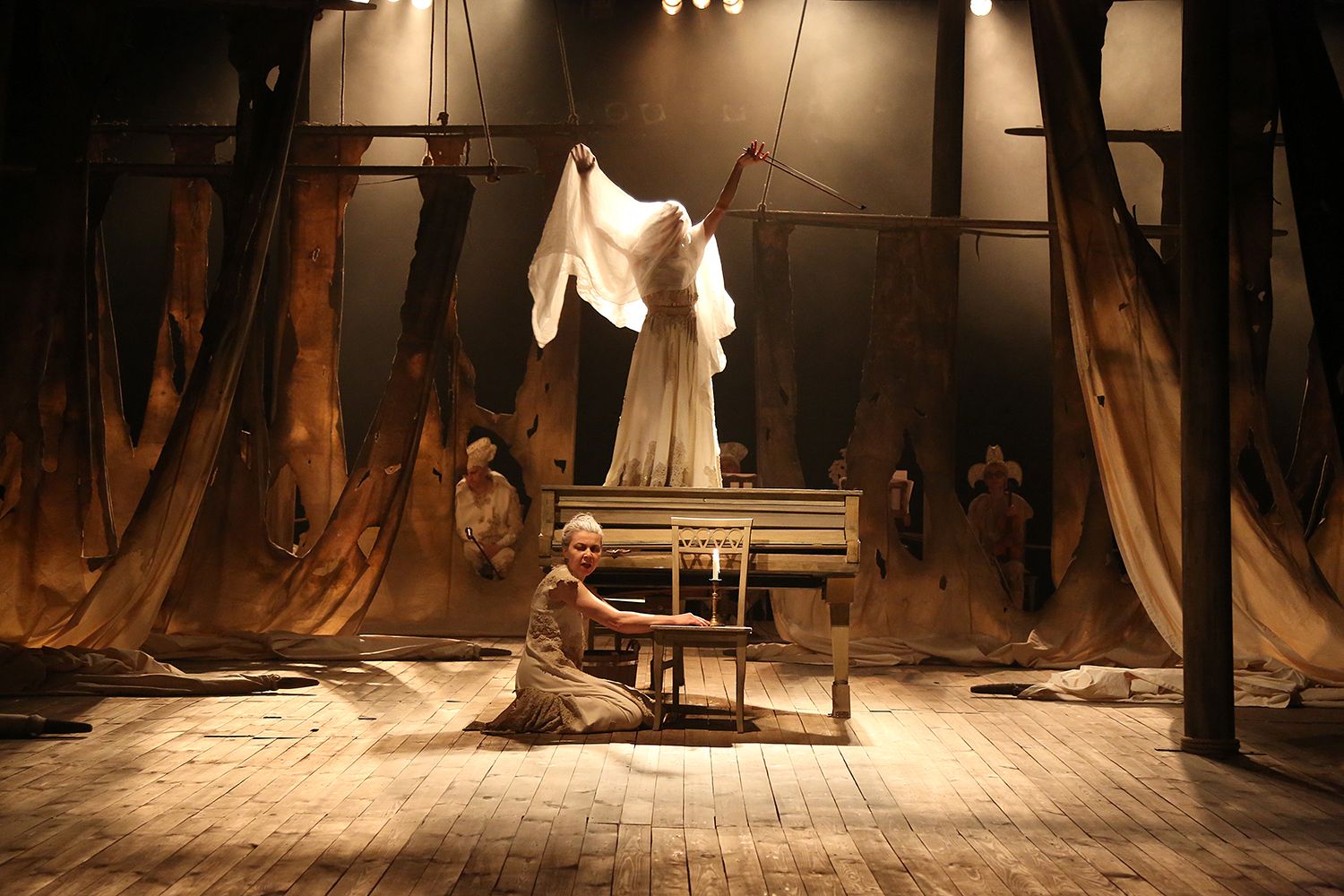
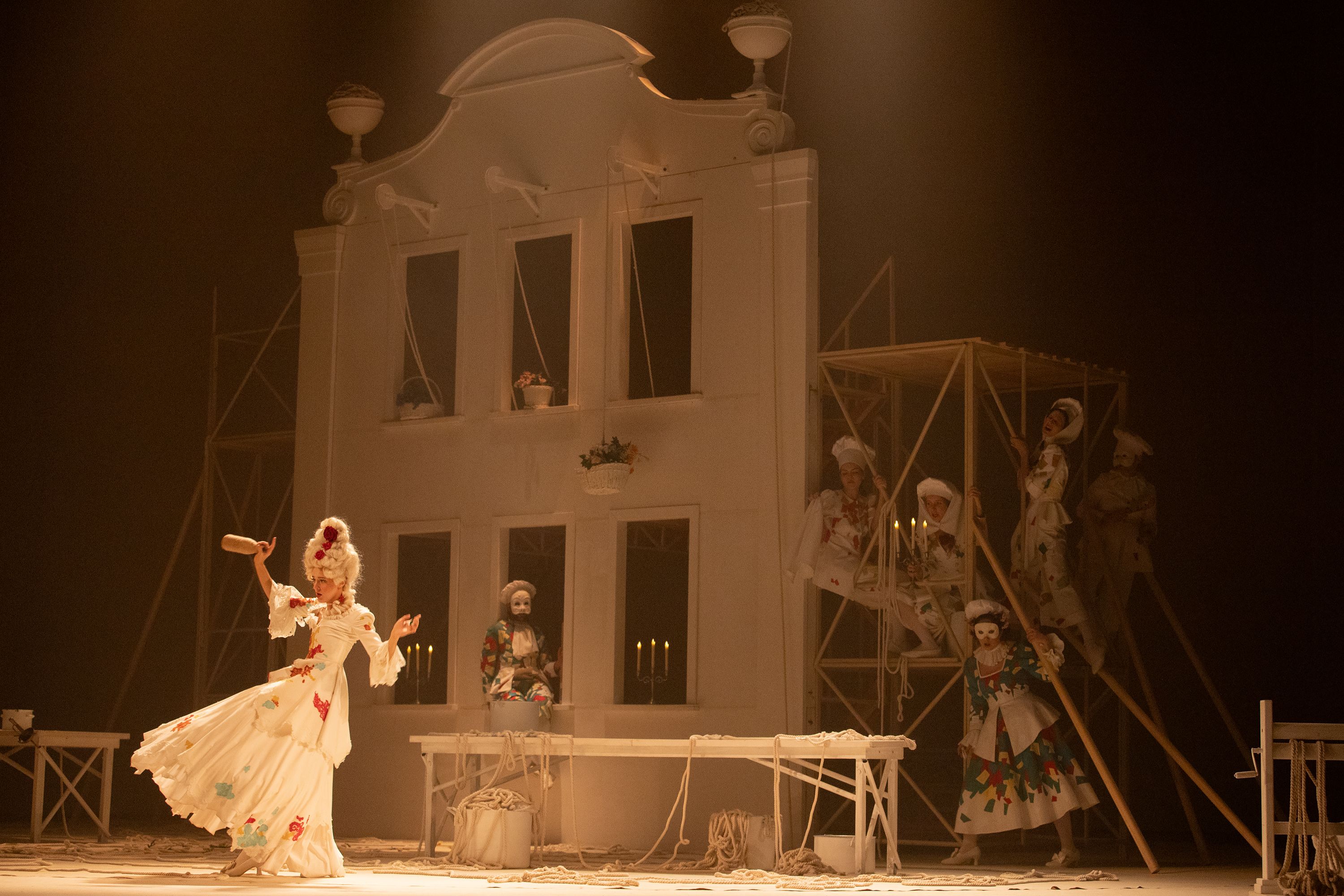
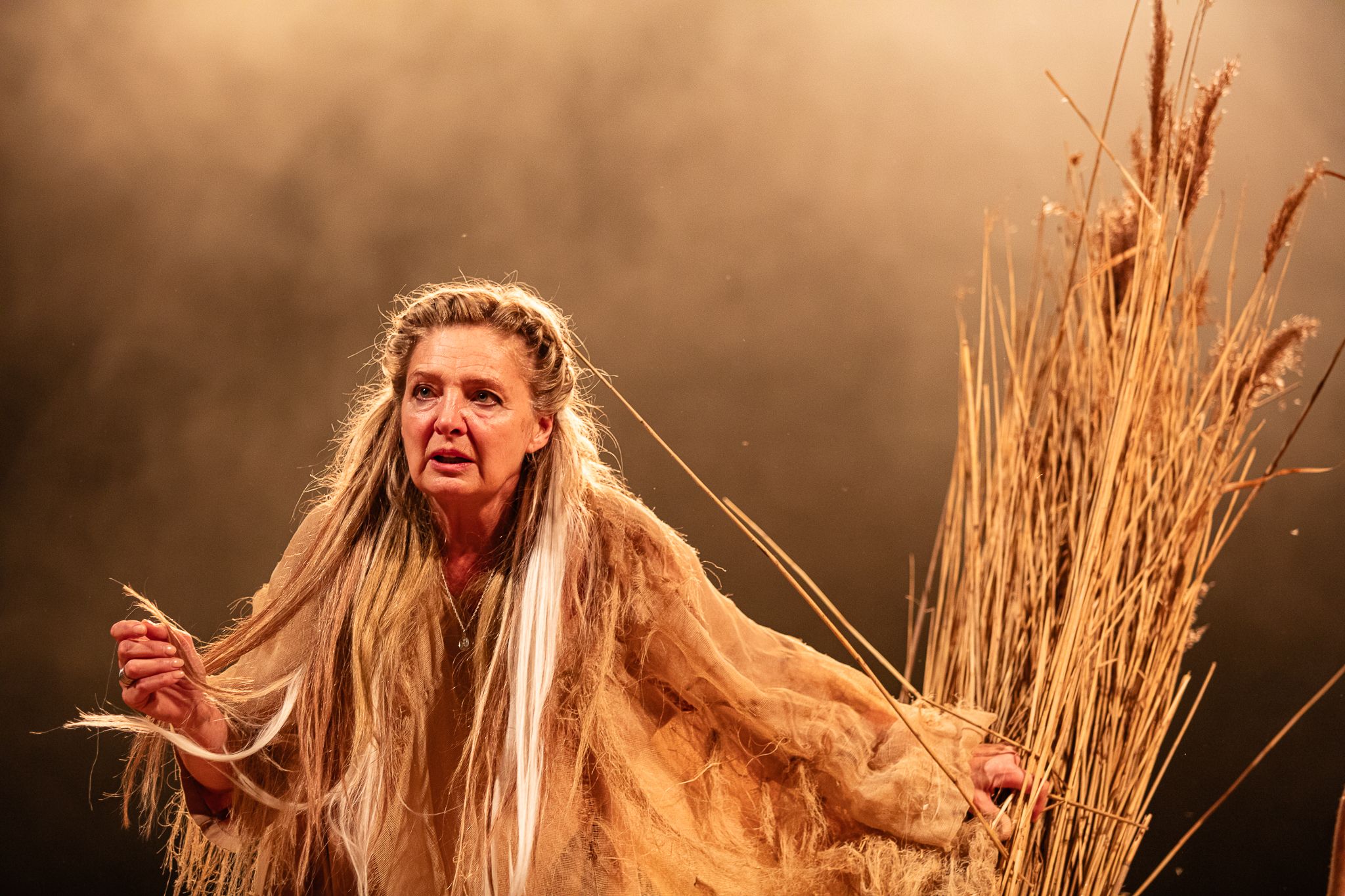
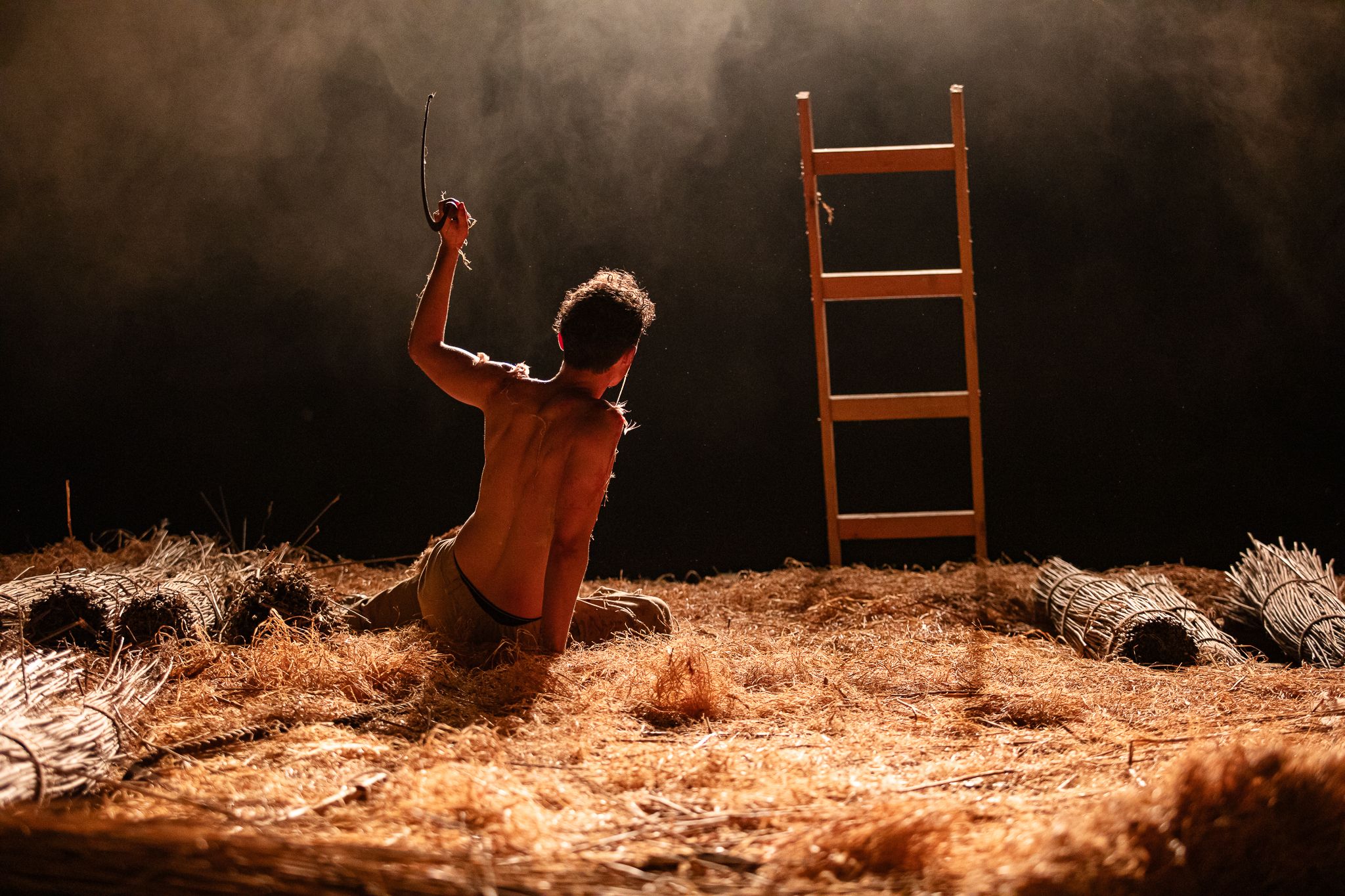
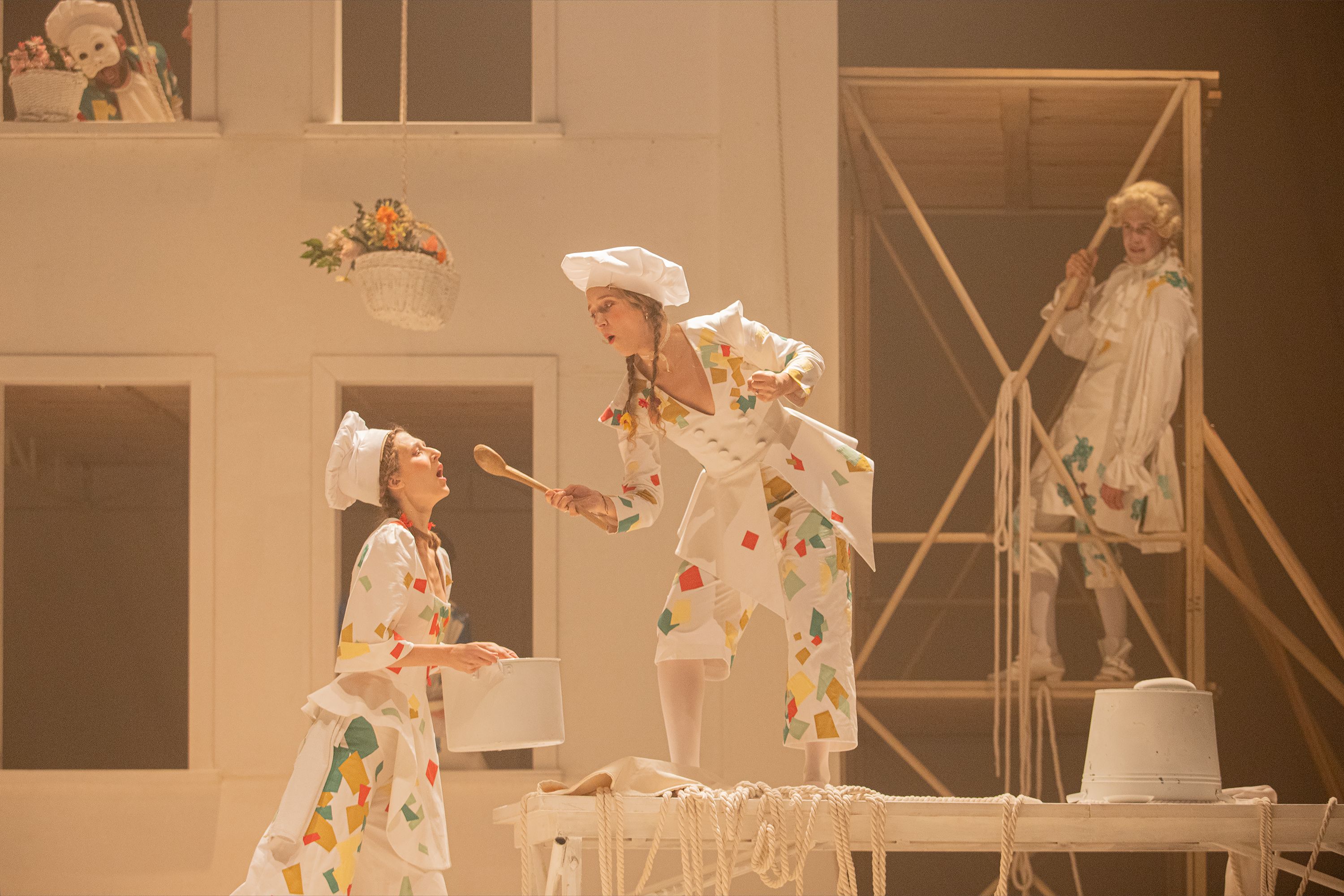
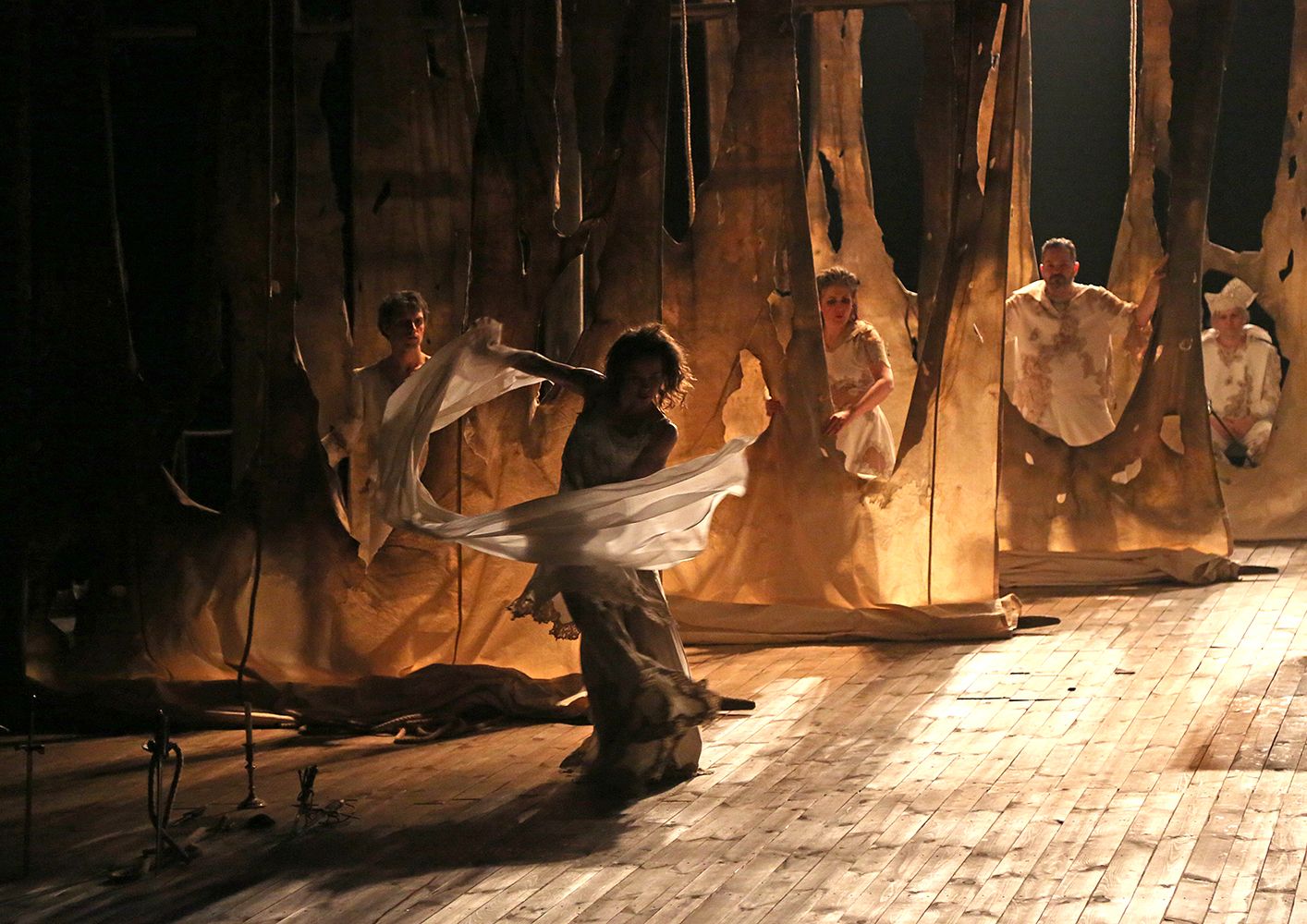
Kolot's breakthrough came with The Visit by Friedrich Dürrenmatt at the Ivan Franko National Theatre in 2023, earning her the prestigious Pectoral theatre award.
Her Othello design received extensive coverage in the Ukrainian Theatre journal, establishing her reputation for bold reinterpretations of classical works.
Recently, she participated in international costume exhibitions in Poland and Lithuania, presenting work from The Stone Host by Lesia Ukrainka. This production reimagined Don Juan through contemporary hippie culture, where Ukrainian ornamental patterns formed vibrant designs that challenged social conventions and celebrated creative freedom.
The Visit by Davyd Petrosian, Ivan Franko Theatre (Kyiv), 2023. Photo: Julia Weber; The Stone Host by Serhii Masloboishchykov, Maria Zankovetska Theatre (Lviv), 2025. Courtesy of Maria Zankovetska Theatre.
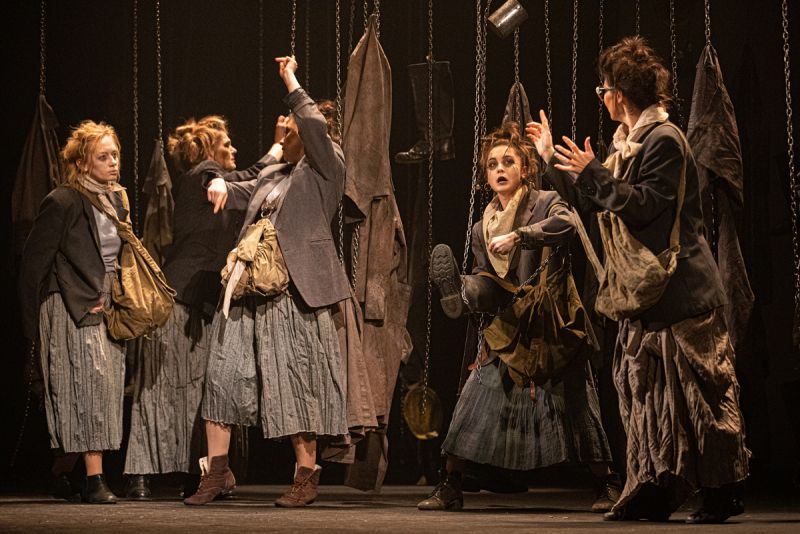
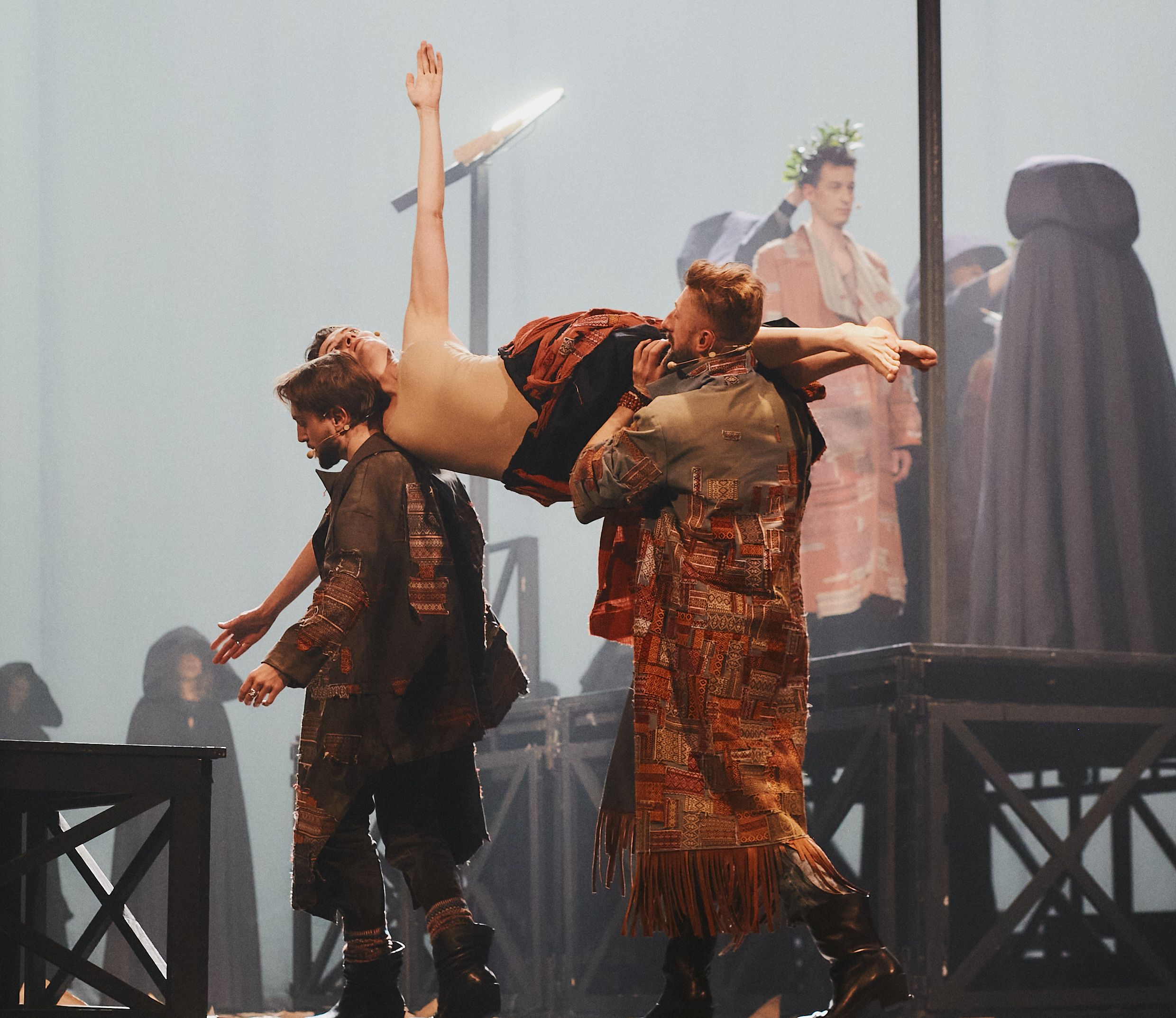
Beyond designing, Kolot recently graduated her first class of scenographers from the National Academy of Fine Arts and Architecture, using her own productions as teaching examples.
Her philosophy centres on what she calls the art of creating playful space—theatrical environments that invite both performers and audiences into new worlds of possibility.
Theatre for me is a kind of addiction I can't live without. It immerses you in a special, unpredictable world with talented people and presents interesting challenges.
Inessa Kulchytska is a Ukrainian costume designer and scenographer who transforms traditional folklore into powerful contemporary theatre.
Based at the Lviv Academic Regional Puppet Theatre, she draws deep inspiration from Ukrainian folk culture, ancient symbols, and the rich tradition of nativity plays that have been passed down through generations.
Her artistic approach is rooted in thorough research. Before creating any costume, Kulchytska dives into historical sources, ethnographic records, and traditional clothing patterns to understand the deeper meaning behind each visual element.
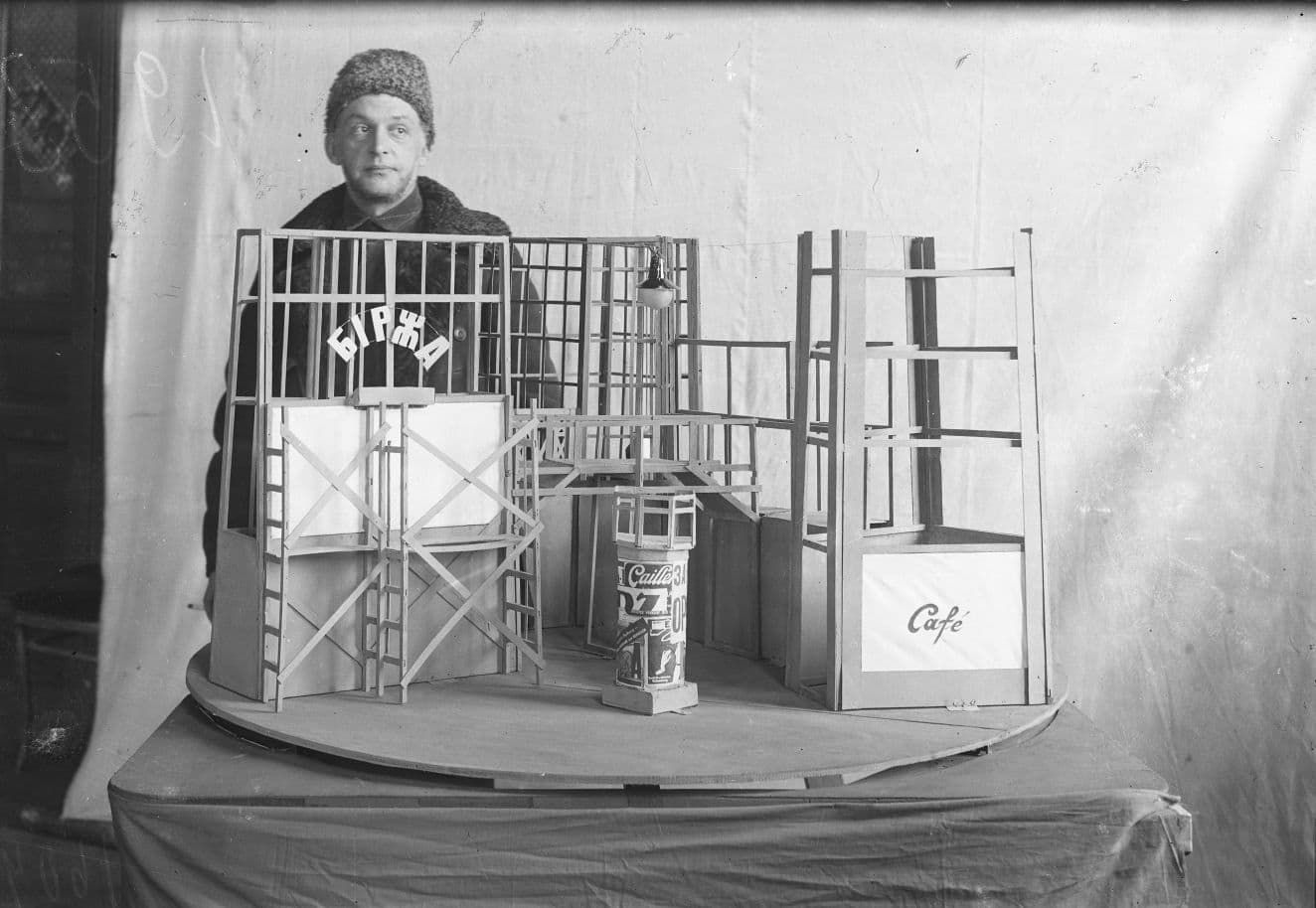
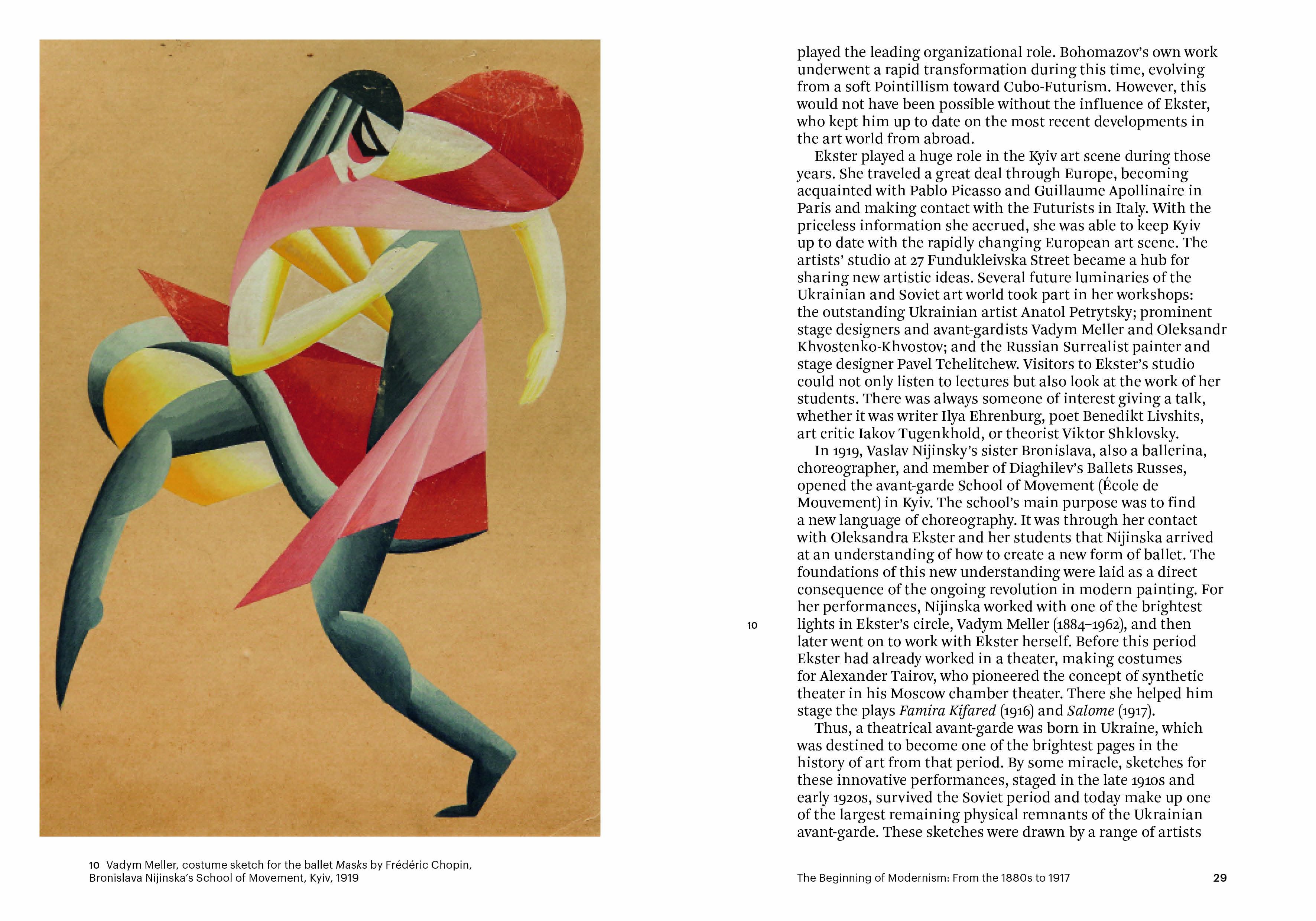
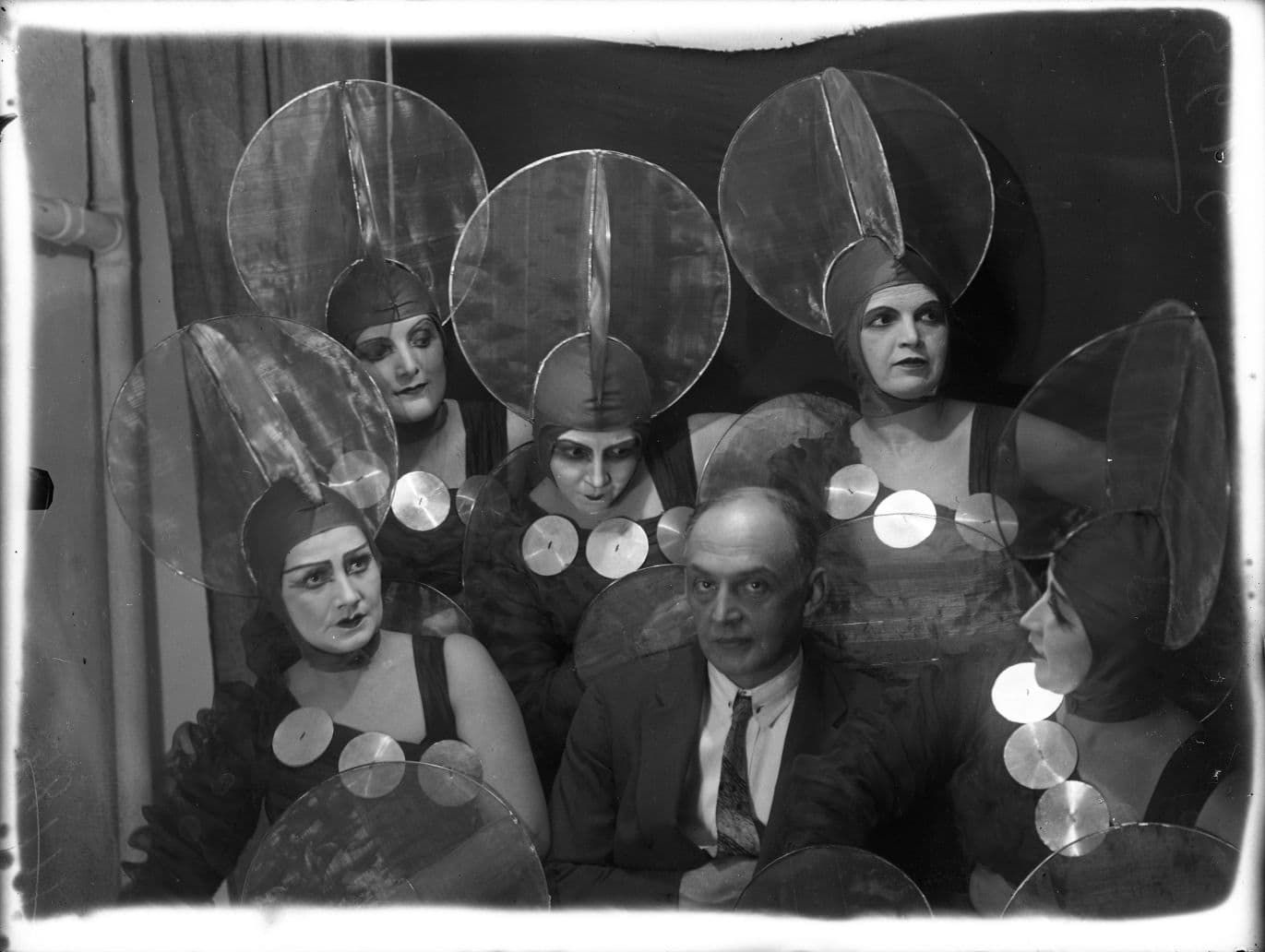
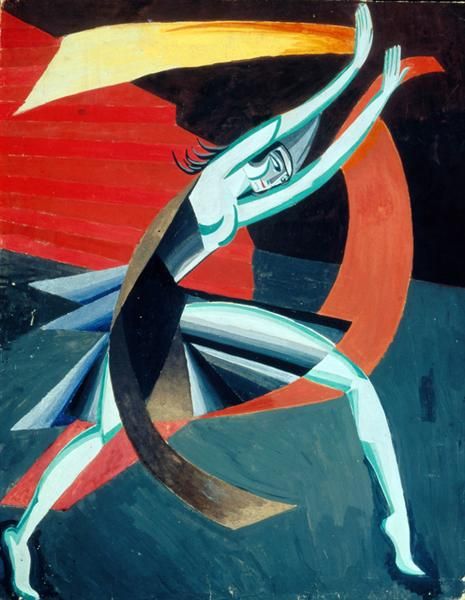
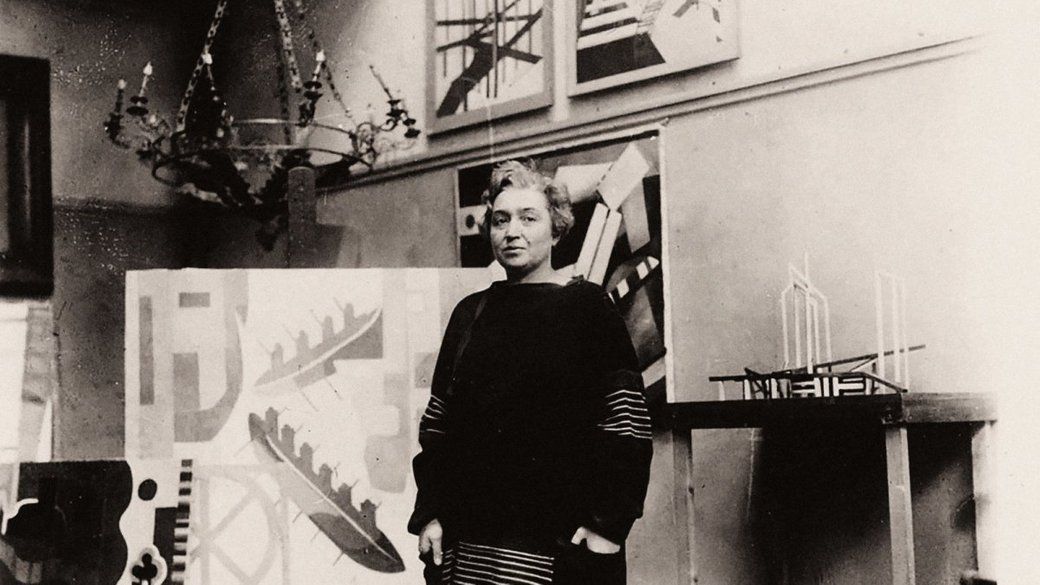
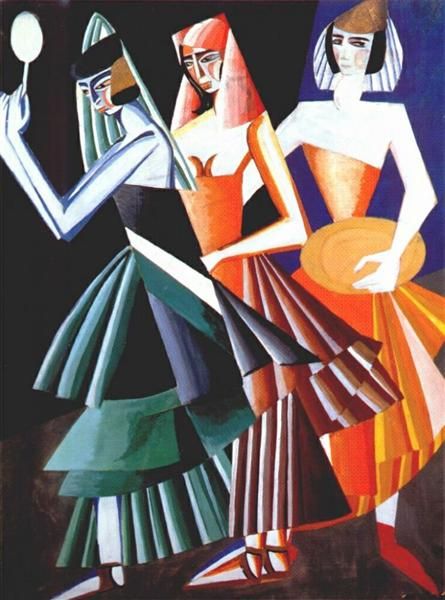
She's influenced by pioneering Ukrainian theatre artists like Vadym Meller and Oleksandra Exter, but brings her own contemporary perspective to this legacy.
Vadym Meller near the set model for the show, 1924. Source: Open Kurbas; Cover of the book 'The Art of Ukraine.' Left: Vadim Meller, sketches of costumes for Frédéric Chopin's ballet Masks, Kyiv, 1919. Source: thamesandhudson.com; Hanna Babiivna, Klavdiia Pilinska, Hanna Lor, Antonina Smereka, Lidiia Krynytska. In the centre — Vadym Meller, 1929. Source: Open Kurbas; Oleksandra Exter, sketch of the costume for Salome, 1917. Source: wikiart.org; Oleksandra Exter. Source: gettyimages.com.
What makes Kulchytska's work distinctive is how she balances symbolism with practicality. In puppet theatre, costumes serve a unique function — they don't just represent individual characters but create visual rhythm and support the overall artistic vision.
Her designs often help live actors blend seamlessly with the puppet world, using matching textures, colours, and styles to create a unified stage experience.
Ivasyk Telesyk by Olena Tkachuk. Rivne Regional Puppet Theatre, 2023. Courtesy of The Scenography Gallery.
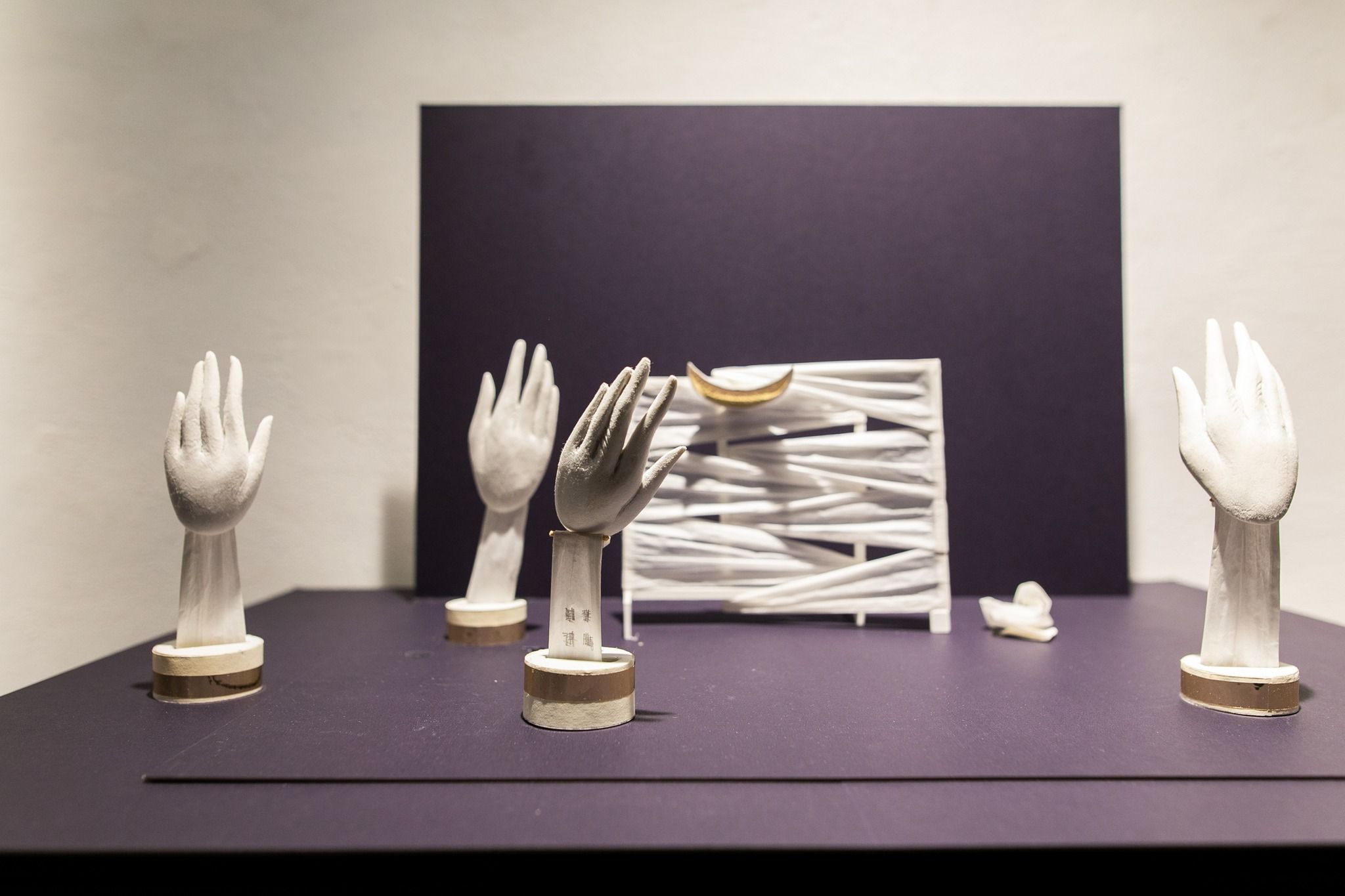
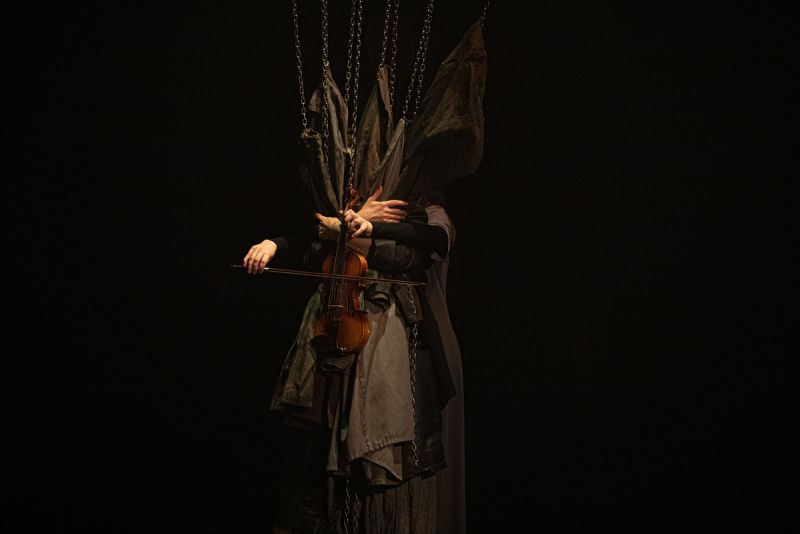
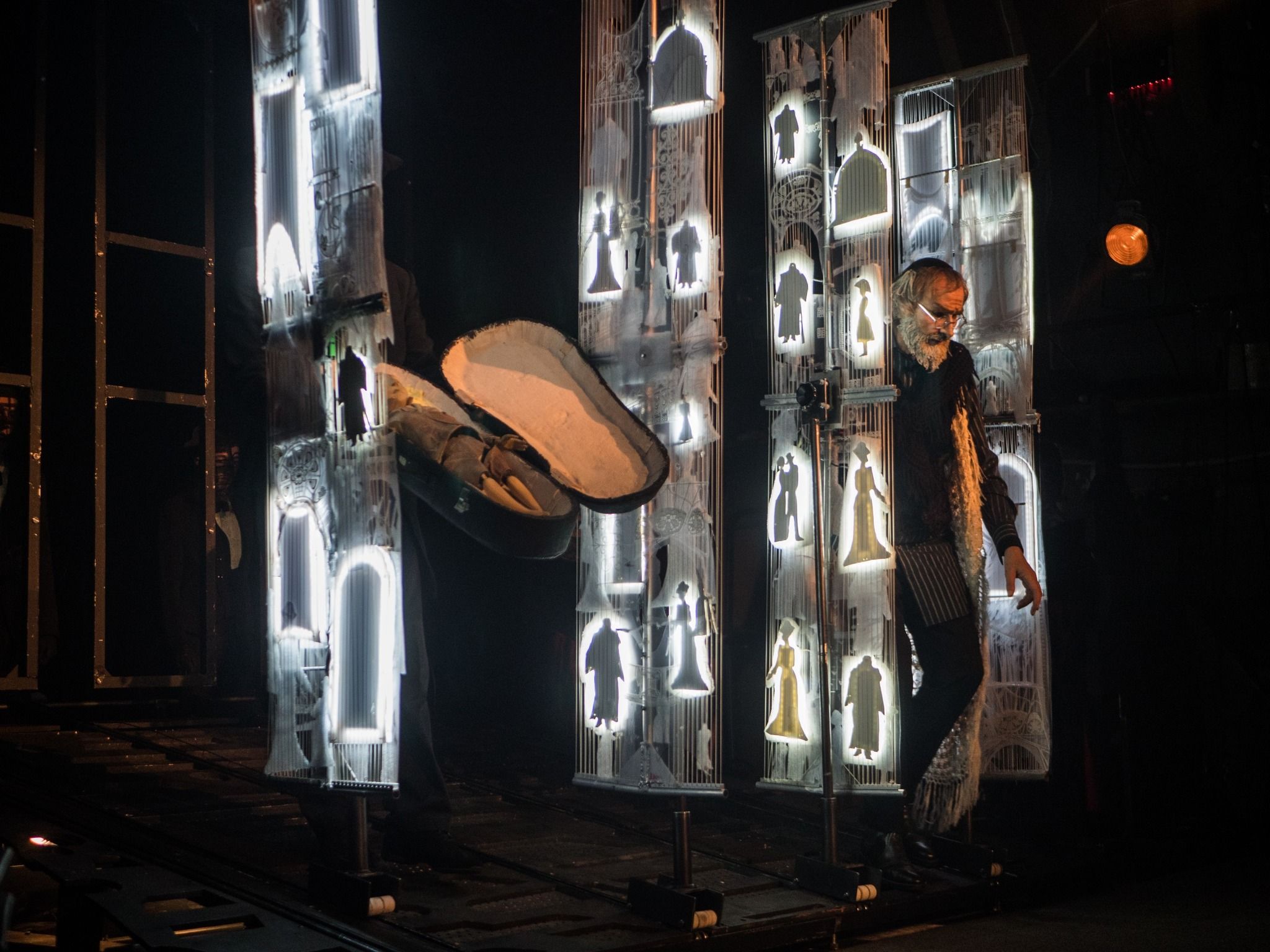
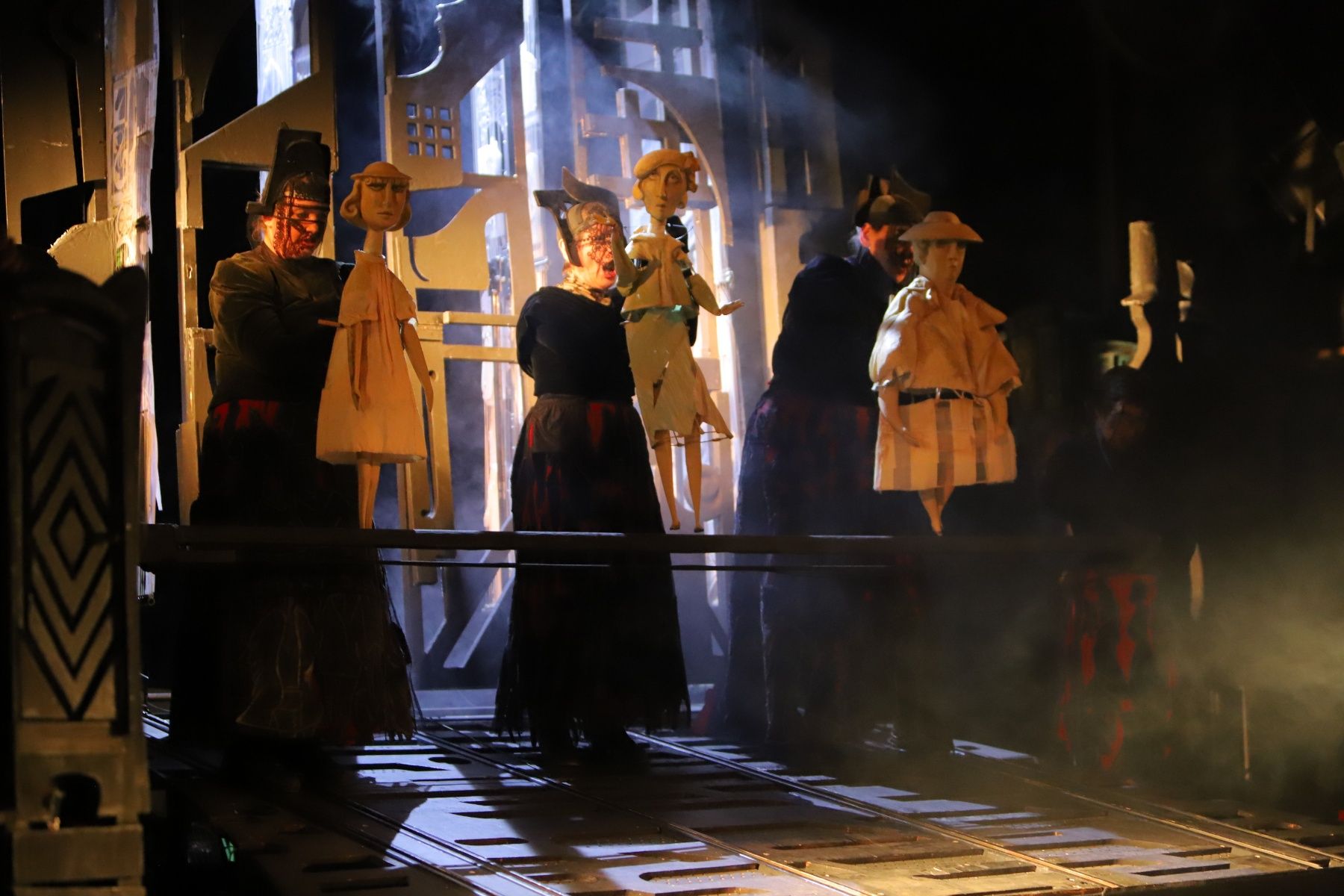
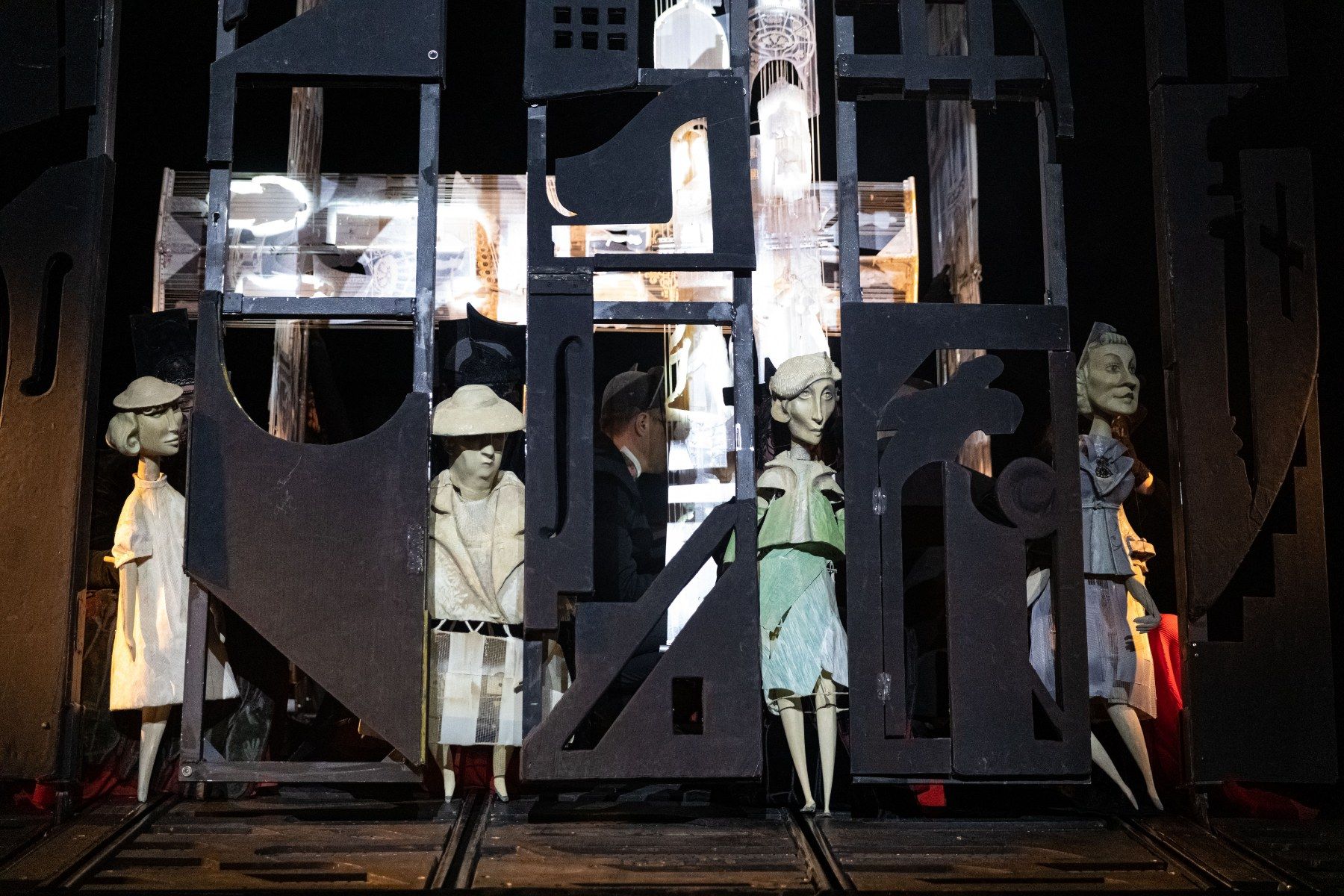
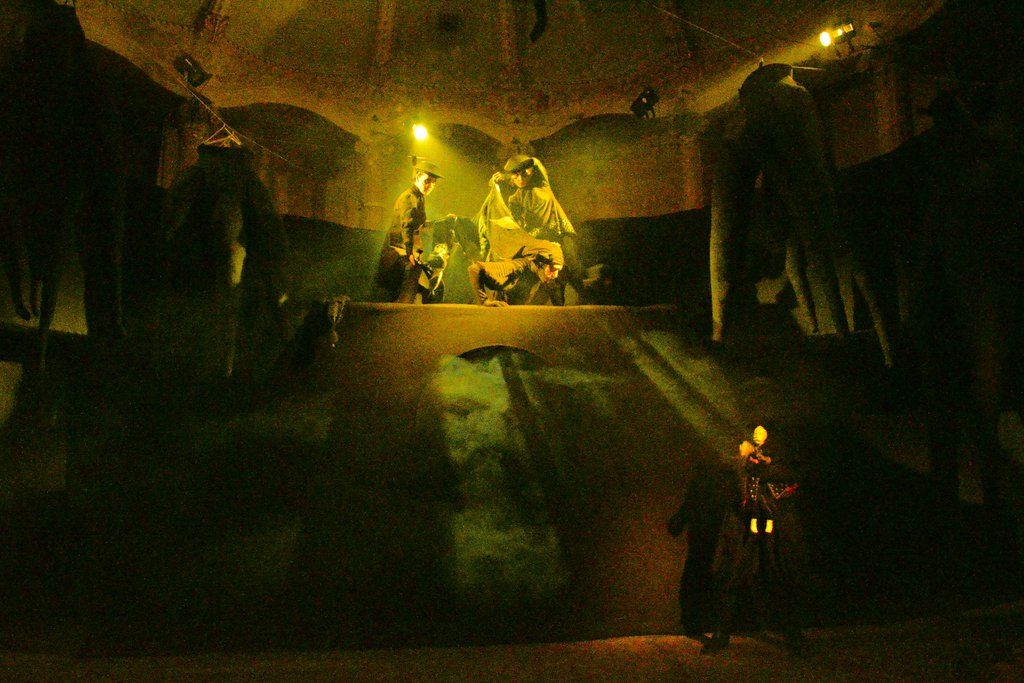
Her recent work tackles profound themes through accessible visual language. In Tango from Beyond, based on a novel about Lviv's complex 20th-century history, she used life-sized puppets and black velvet costumes to represent fragmented historical memory.
The puppets appear 'frozen in time' — incomplete and torn, like selective human recollections of difficult periods.
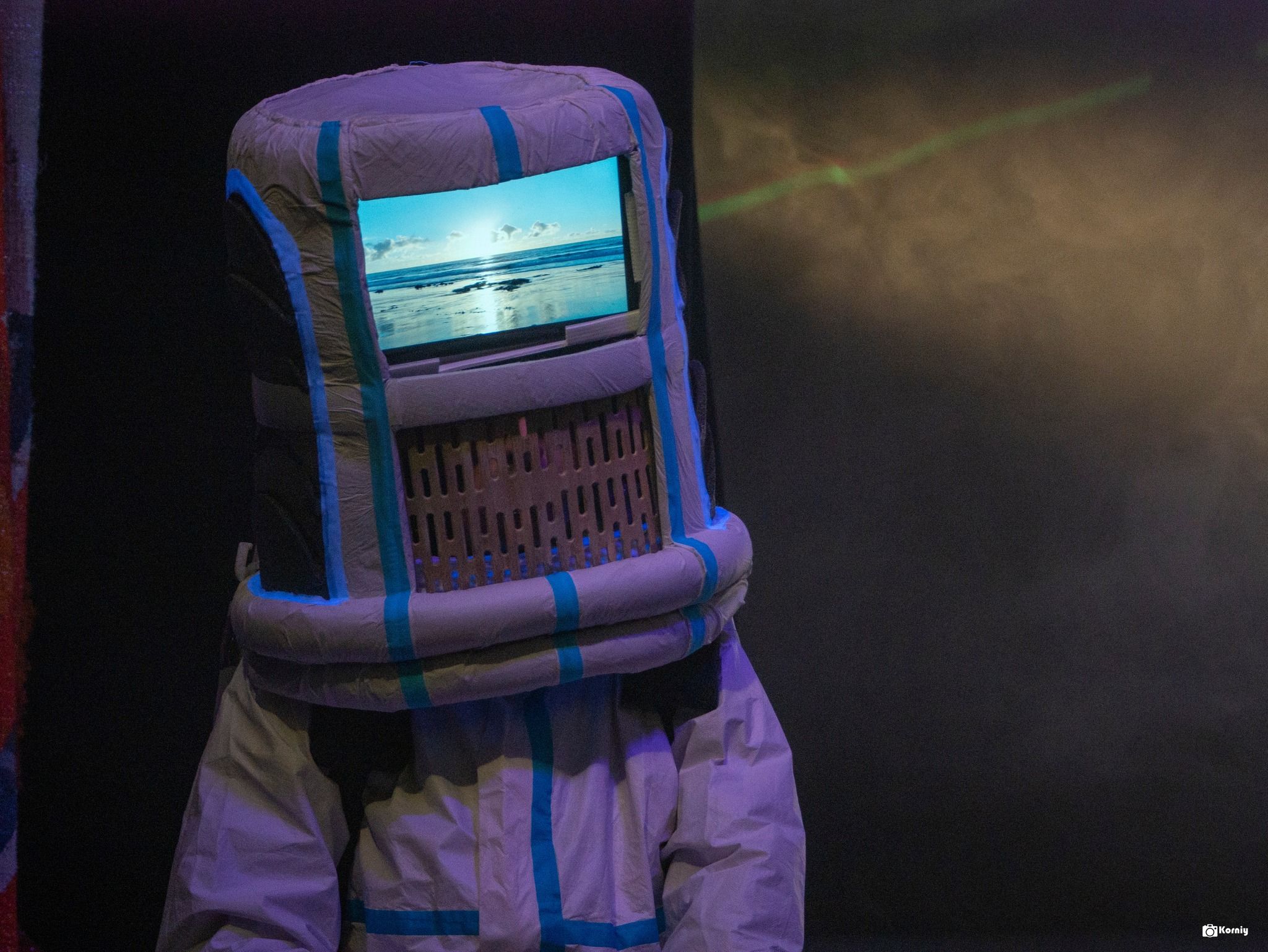
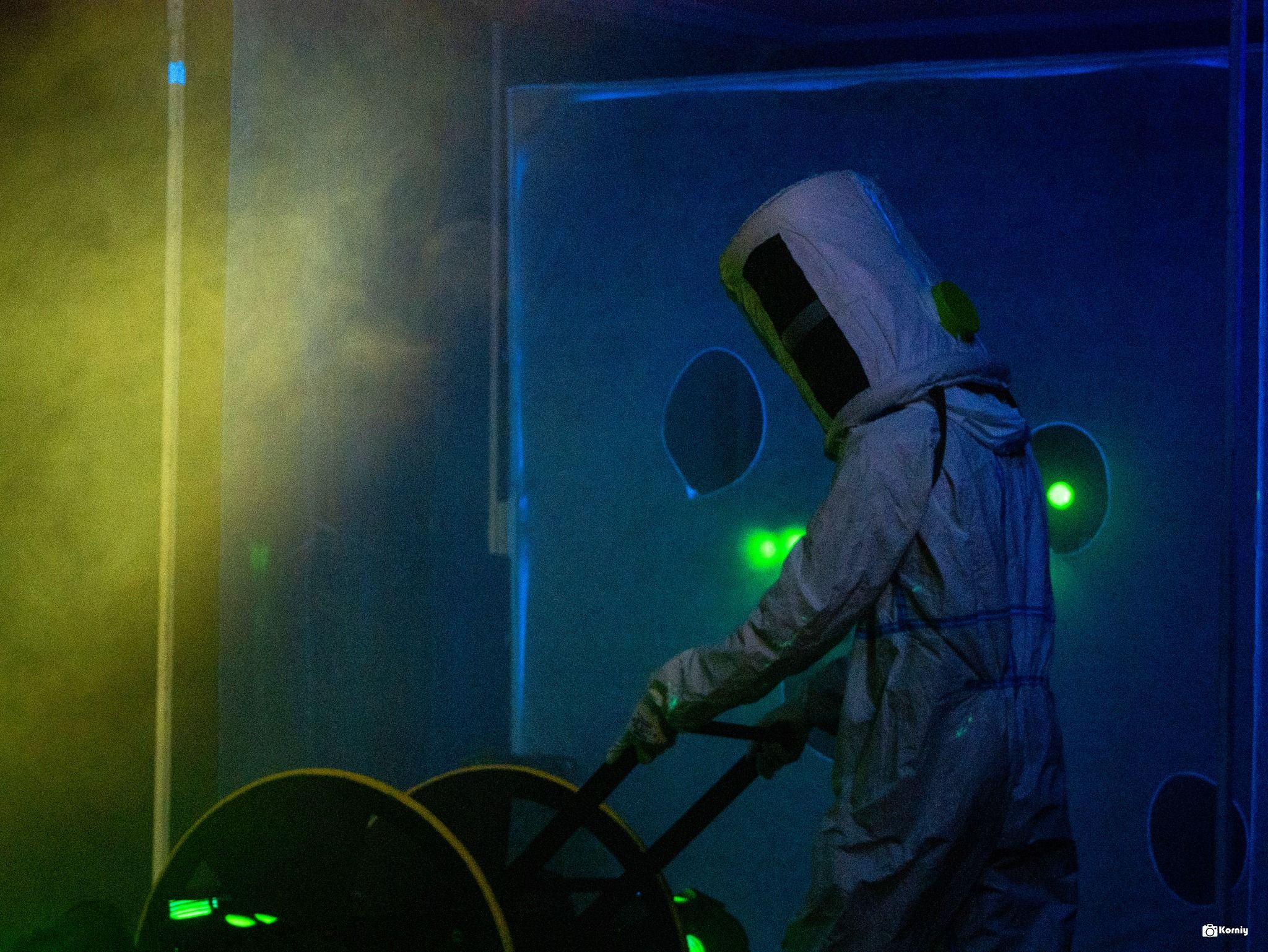
Atomic Mermaid explores themes of survival and environmental threat through actors in spacesuits who become part of the stage architecture itself. Built-in tablets in the costumes show footage of destroyed cities like Chornobyl alongside images of freedom — the sea.
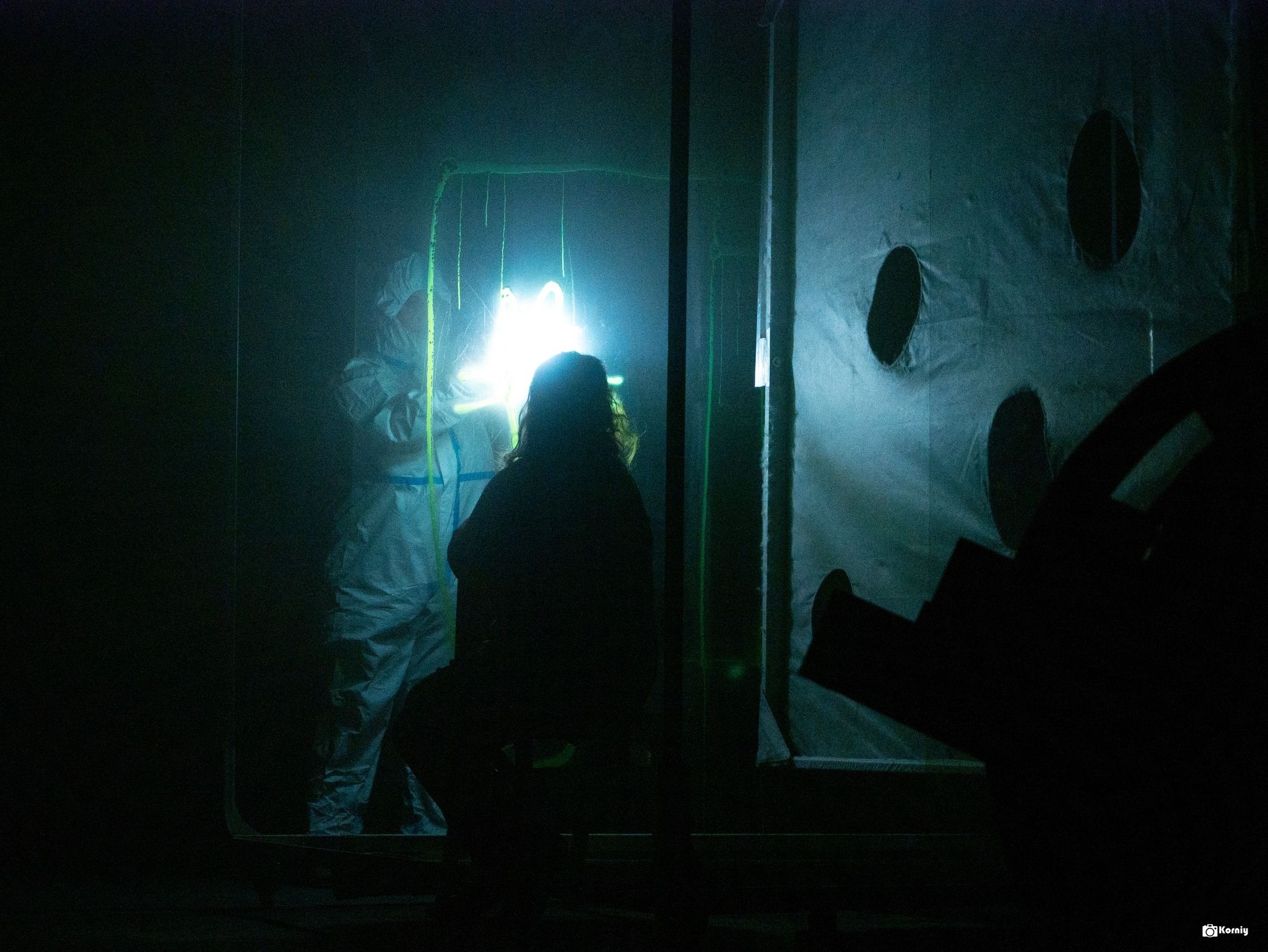
The central set piece is a fragile greenhouse where temporary drawings dissolve under water, symbolising how quickly stability can disappear.
Tango from Beyond by Ulyana Moroz and Yana Tytarenko, Lviv Regional Puppet Theatre, 2021. Courtesy of Lviv Regional Puppet Theatre; Atomic Mermaid by Yana Tytarenko, Lviv Regional Puppet Theatre, 2024. Photo: Korniy Davydiuk.
Kulchytska has worked internationally in Romania and Slovakia, and her work has been exhibited across Europe, including at the prestigious Prague Quadrennial. These experiences have enriched her artistic vocabulary while strengthening her commitment to Ukrainian cultural roots.
Her most celebrated projects include:
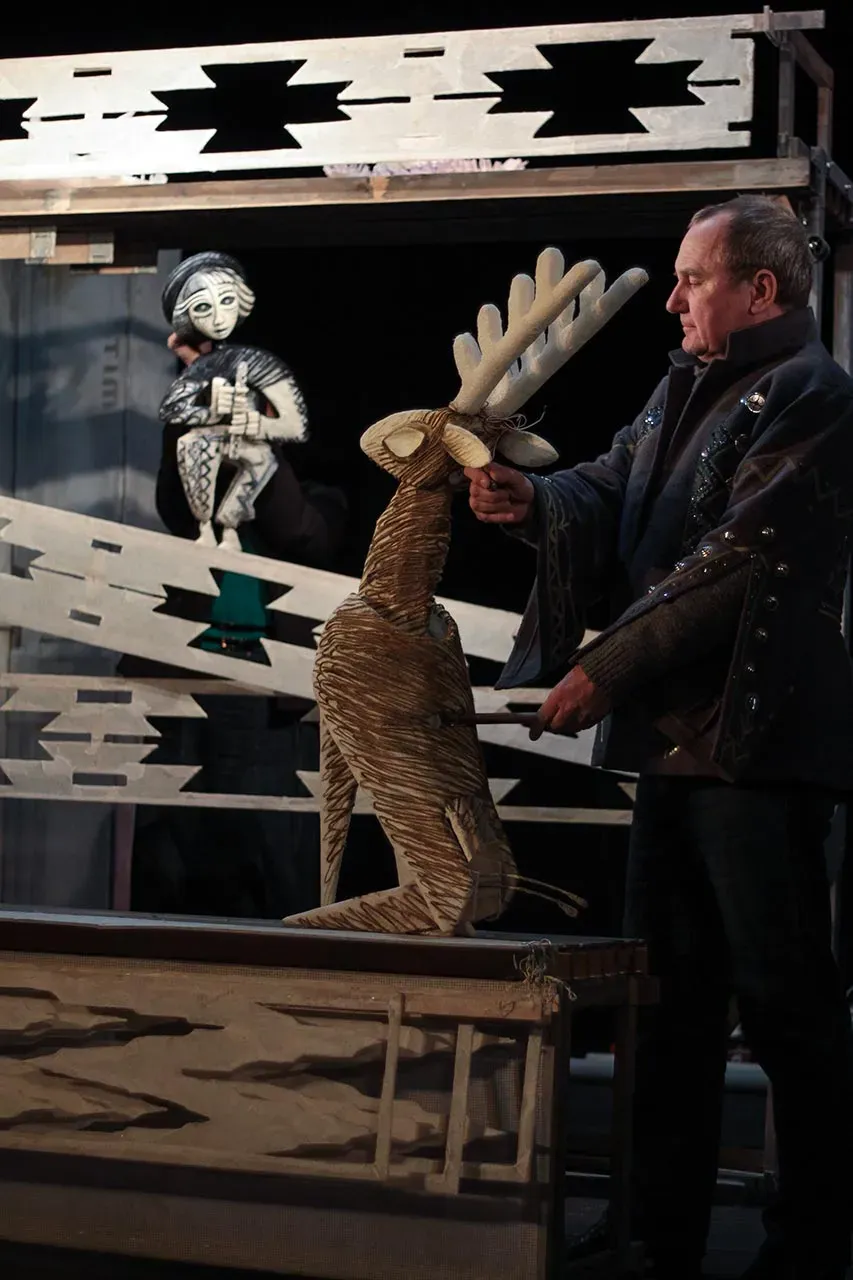
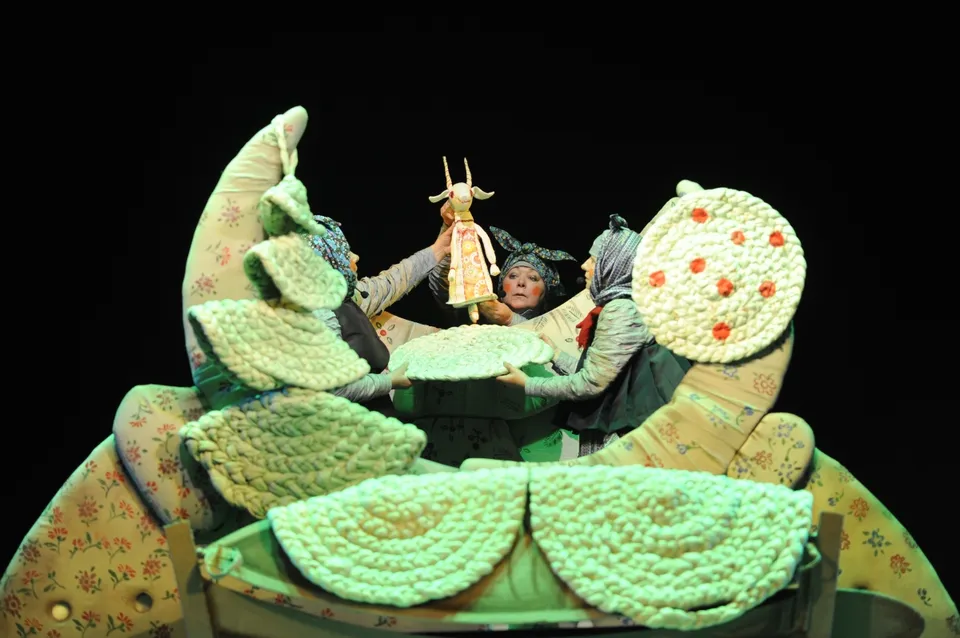
The Golden-Horned Deer, which won awards for Best Scenography;
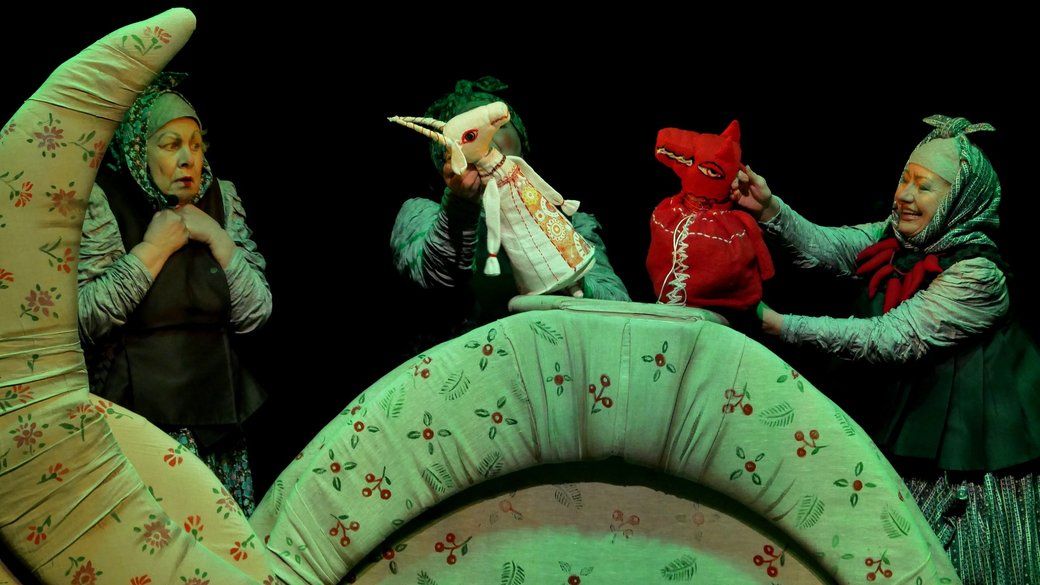
The Black Rooster andThe Boat Full of Tales, which reflect on contemporary events, including the impact of war on Ukrainian families.
The Boat Full of Tales by Olena Tkachuk. Rivne Regional Puppet Theatre, 2022. Photo: Korniy Demydiuk.
For Kulchytska, scenography is more than decoration — it's a language for expressing what's difficult to put into words.
If theatre is a whole world brought to life on stage, then the scenographer is the one who shapes its laws, atmosphere, and face.
Her goal is creating theatre that audiences don't just remember, but truly experience.
Born into a family of artists in Mykolaiv, Bohdan Polishchuk's creative foundation was laid early. His father Anatolii, worked in sacred art, decorating churches, while his mother Tetiana, continues to work as both a painter and an applied arts artist.
This artistic lineage, combined with formal training at the National Academy of Fine Arts in Kyiv, shaped his understanding that modern theatre demands not just natural talent, but intellectual depth and professional mastery.
Bohdan Polishchuk during the lecture at the exhibition opening, Vilnius, 2025. Photo: Evaldas Narkevičius.
What sets Polishchuk apart is his attraction to complexity. He gravitates toward projects that require not only intelligent audiences but also intellectual, creative teams.
His ideal collaborations unfold as 'intellectual games' with people of high culture, where the working process flows with ease and a mutual desire for interaction. This philosophy has led him to work with national and municipal theatres across Ukraine—in Kyiv, Lviv, Chernivtsi, Zaporizhzhia, and Cherkasy—as well as on international projects.
Oedipus The King by Andrii Prykhodko, Courtesy of Frankivsk Drama Theatre, 2020. Courtesy of Frankivsk Drama Theatre.
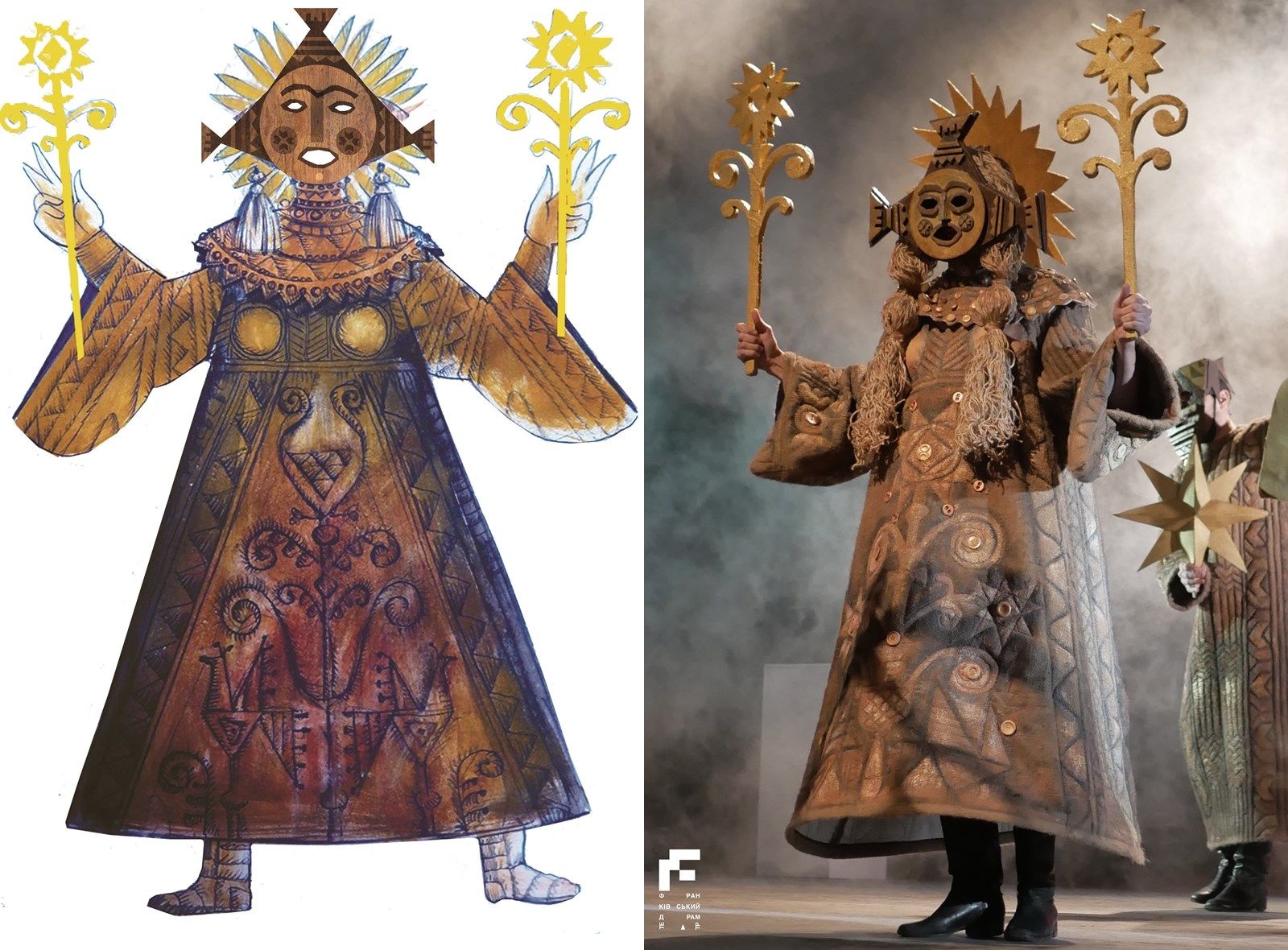
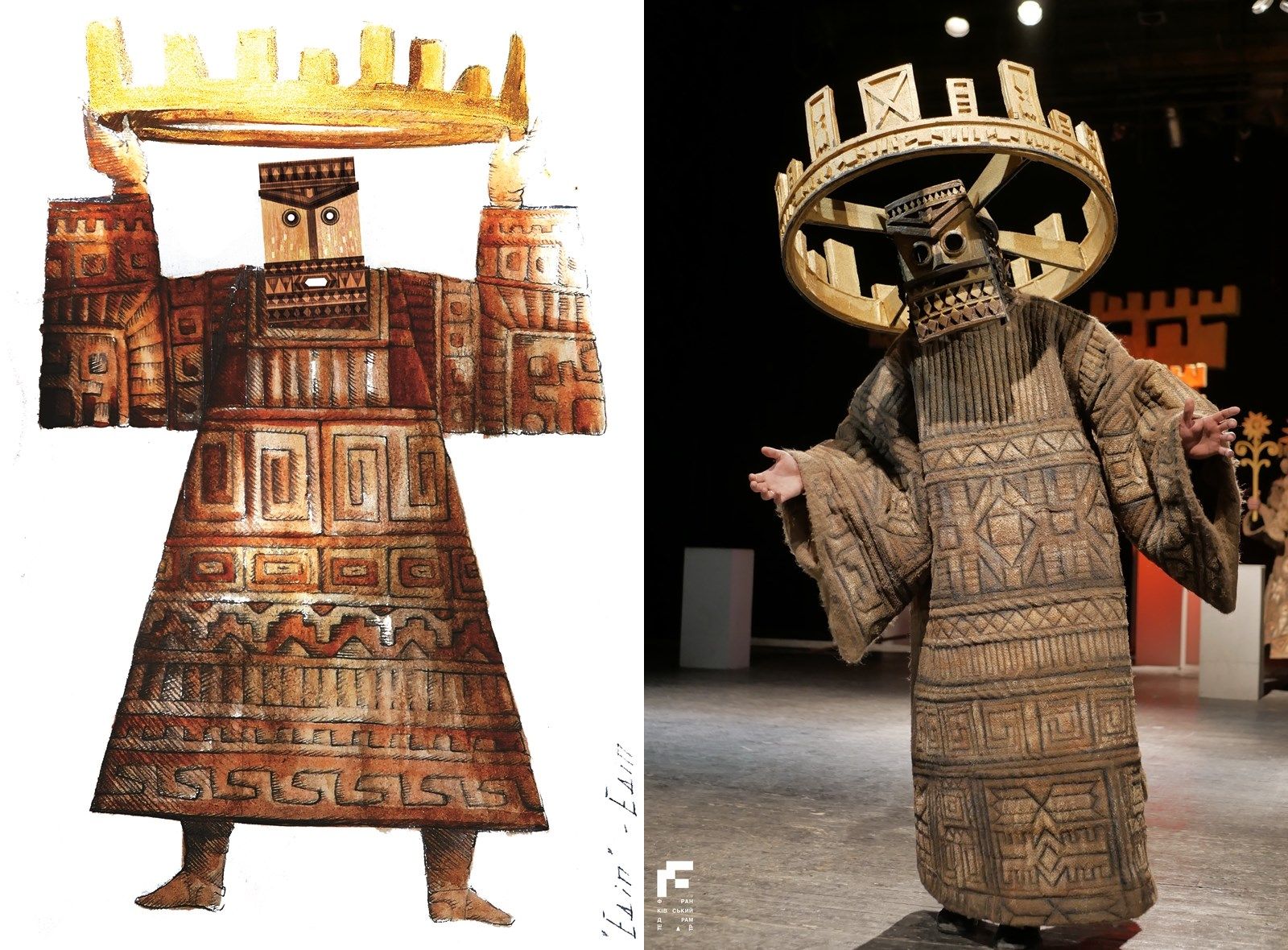
The costumes featured in the exhibition—designs for the characters Goddess and Shadow from The Hunted Passion, or Songs Overheard in the King's Garden—exemplify his distinctive 'black-on-black' approach, referencing Ukrainian Baroque clothing from the crucial Cossack Baroque period when national identity crystallised, yet transformed through fictional interpretations using rich textures of different fabrics, buttons, pleating, and embroidery all rendered in various shades of black.
Among his most significant works is Forest Song by Lesia Ukrainka at the Les Kurbas Theatre. This production, directed by Andrii Prykhodko, marked his first major professional stage work and remained in the theatre's repertoire for years. Ukrainian critics later included it among the important productions of the decade, establishing Polishchuk as a distinctive voice in contemporary Ukrainian theatre.
The Hunted Passion, or Songs Overheard in the King's Garden by Bohdan Polishchuk, Les Kurbas Theatre (Lviv), 2017. Courtesy of Les Kurbas Theatre; The Forest Song by Andrii Prykhodko, Les Kurbas Theatre (Lviv), 2011. Courtesy of Les Kurbas Theatre.
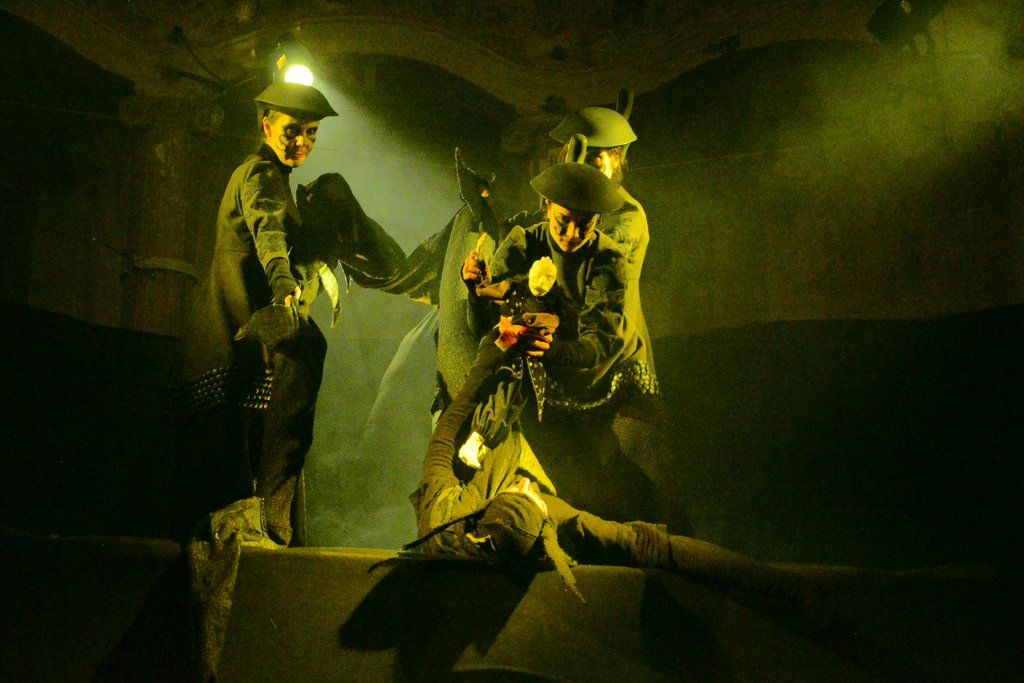
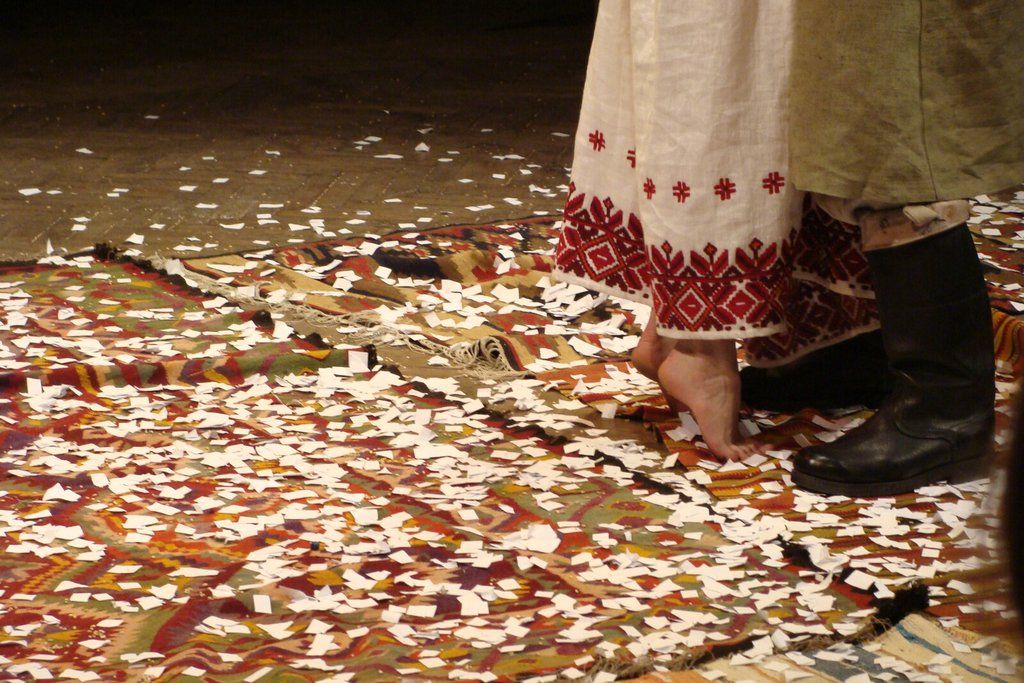
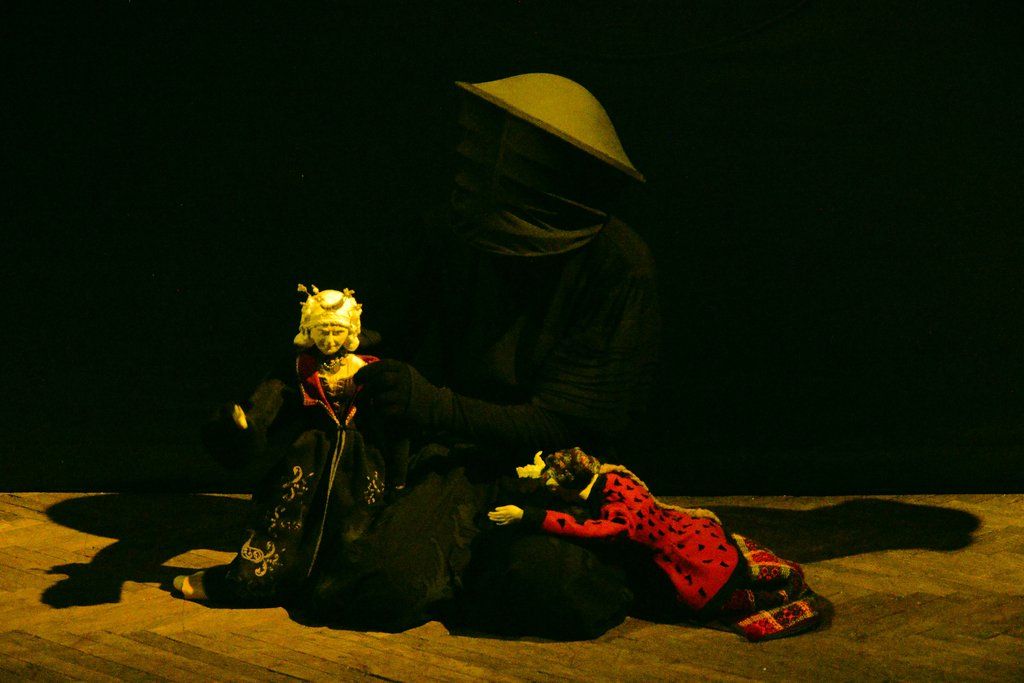
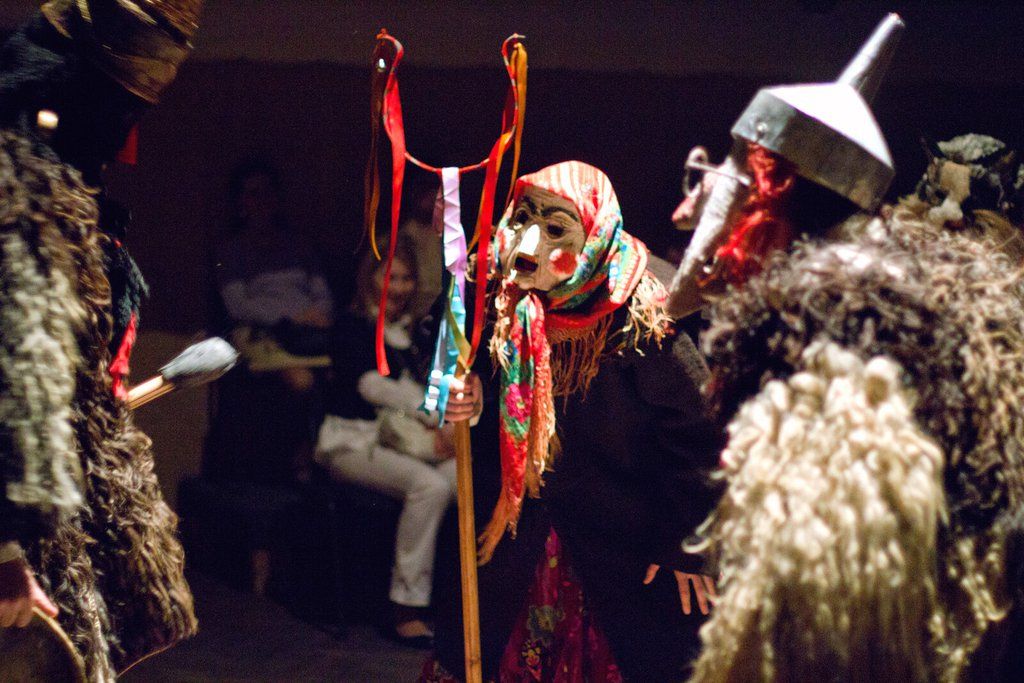
But Polishchuk's most treasured works are those where he serves as both director and designer. These projects, which he calls truly 'his own,' begin as ideas that grow into complete theatrical worlds. Android. Number on Your Back, written by Halyna Lystvak, ran for five years at the Ukrainian Small Drama Theatre.
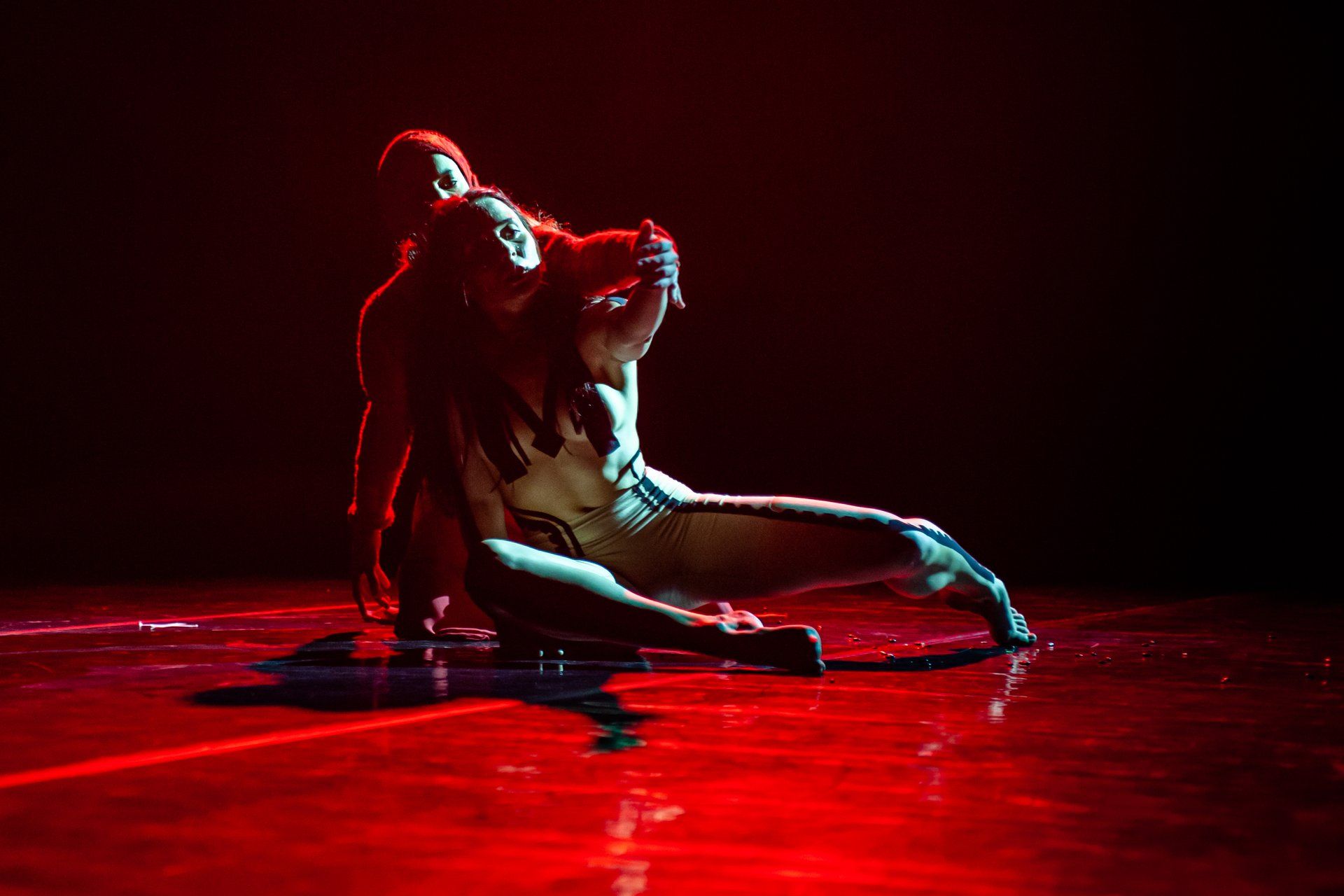
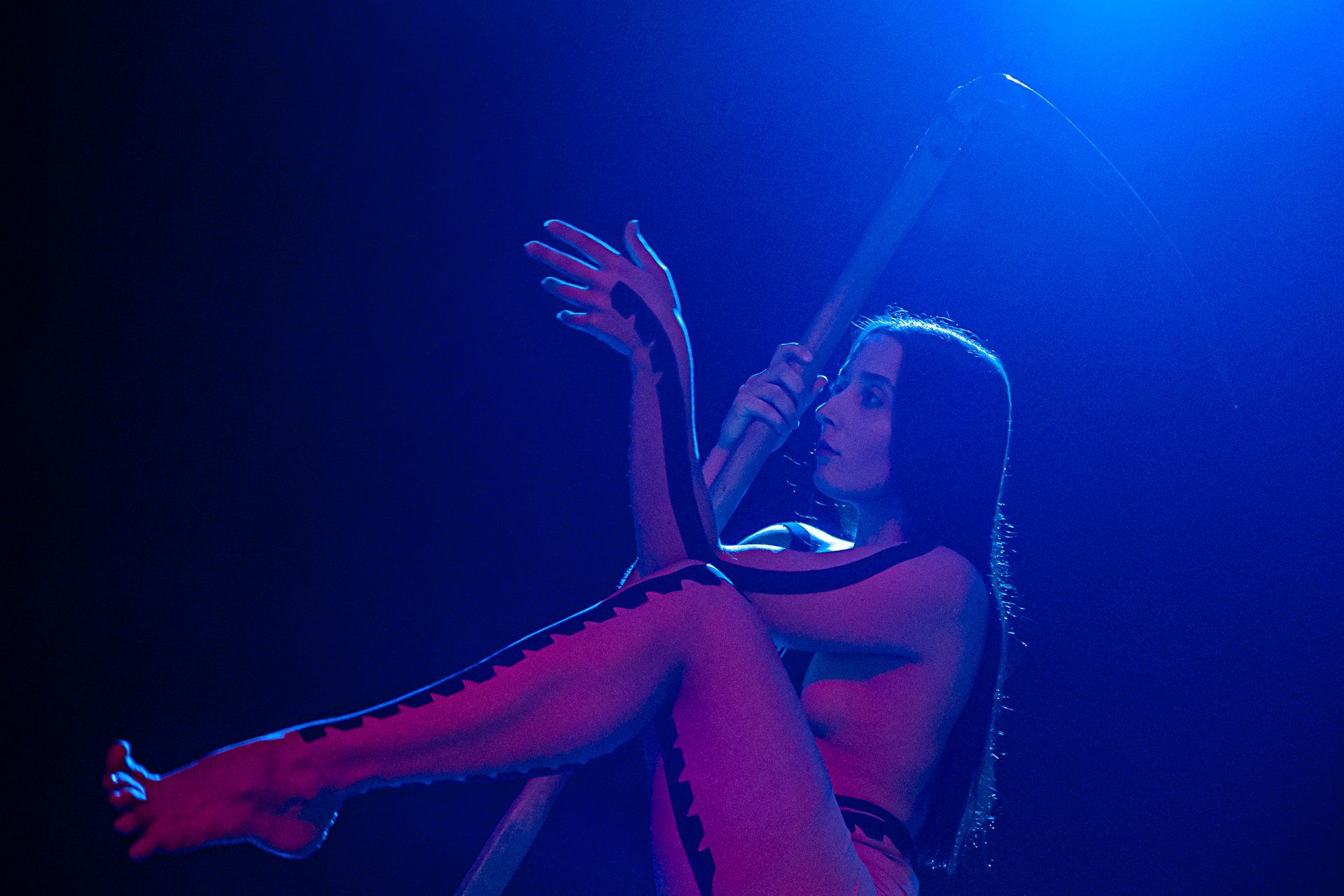
The miniature dance performance, Dance Macabre. The Immortal Dance, created in collaboration with musician Varvara Turta and choreographers, toured internationally to Lithuania and Bulgaria.
Dance Macabre. Directed and designed by Bohdan Polishchuk, Lviv, 2023. Photo: Valeriya Landar. Android. Number on Your Back. Directed and designed by Bohdan Polishchuk, Ukranian Small Drama Theatre, Kyiv, 2019. Photo: Bohdan Poshyvailo.
Beyond individual productions, Polishchuk has become a significant cultural organiser through his work with the Gallery of Scenography, a public organisation he co-founded in 2017.
As curator, he has developed Ukraine's presence on the international stage, creating the Ukrainian pavilion at the Prague Quadrennial of Scenography 2023 and curating projects that present Ukrainian theatrical costume and scenic design to global audiences.
The action of art on people, on society, is not linear, not always obvious. But it is undeniable and possibly serves not only as an instrument, but as the core around which basic human values and national identity are formed.
Bohdan’s work demonstrates how Ukrainian theatre continues to evolve while maintaining its distinctive character, creating what he calls 'territories of freedom' where genuine magic can still live in our modern world.
Olena Polishchuk is a Ukrainian scenographer and costume designer whose work spans stage design, costume creation, graphic design, and spatial environments.
Based primarily in Kyiv, she has collaborated with theatres across Ukraine, including venues in Rivne and Cherkasy, bringing a distinctive artistic vision to contemporary Ukrainian theatre.
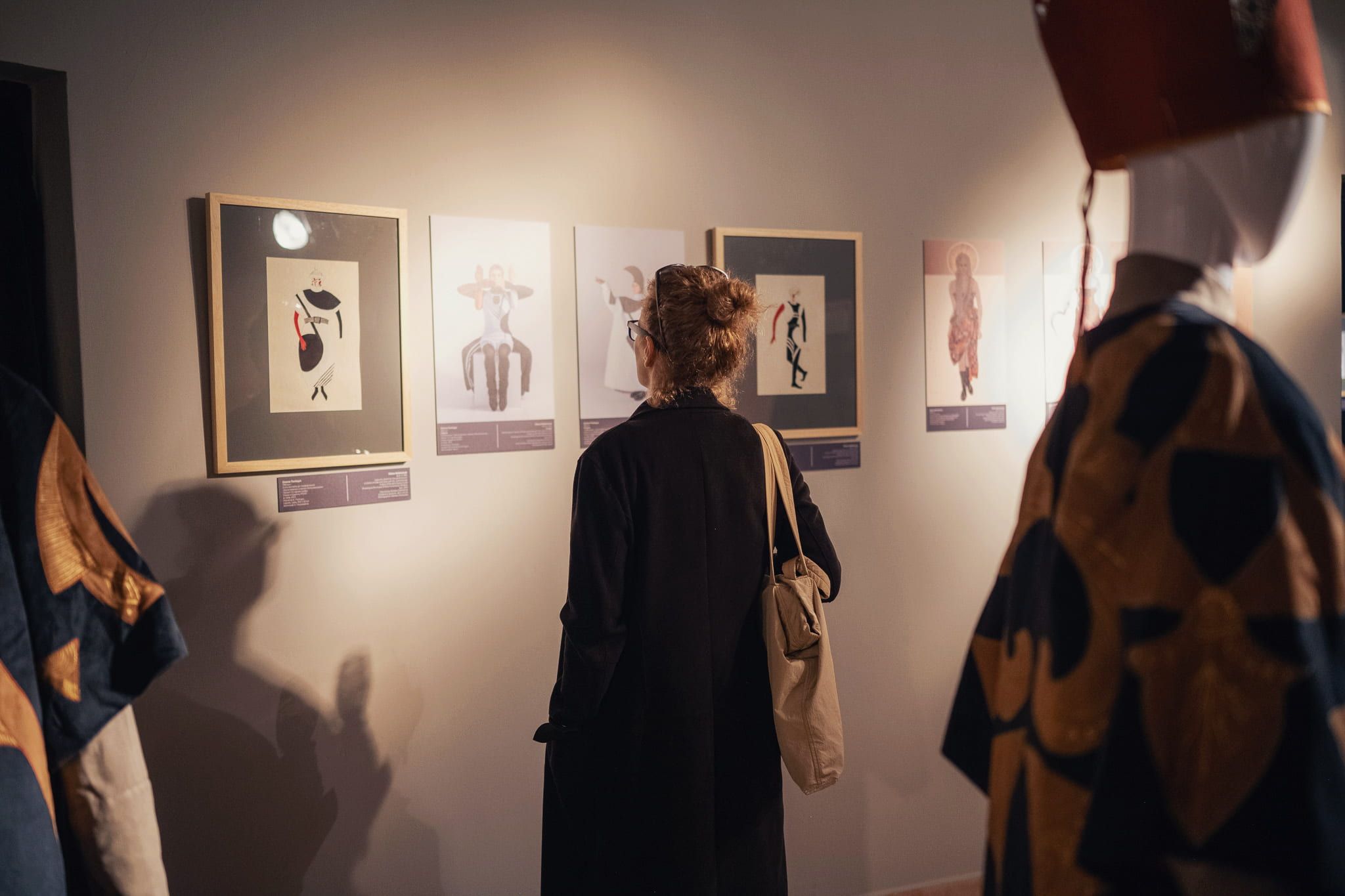
Ukrainian Theatre Costume of the 20th-21st Centuries: Photographs, Sketches, Costumes at the Rozdroża Initiative Centre, Lublin, 2024. Photo: Malwina Majer.
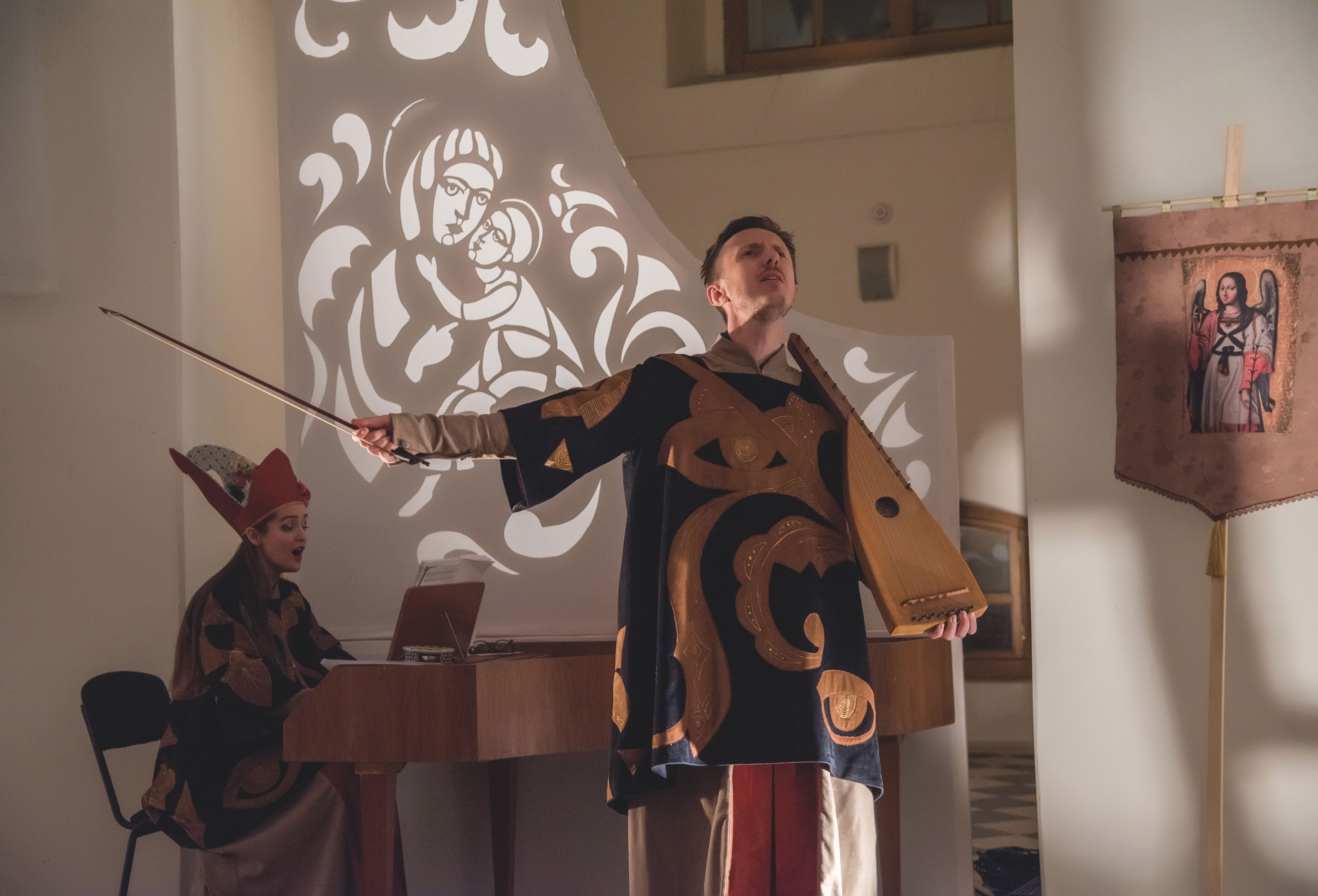
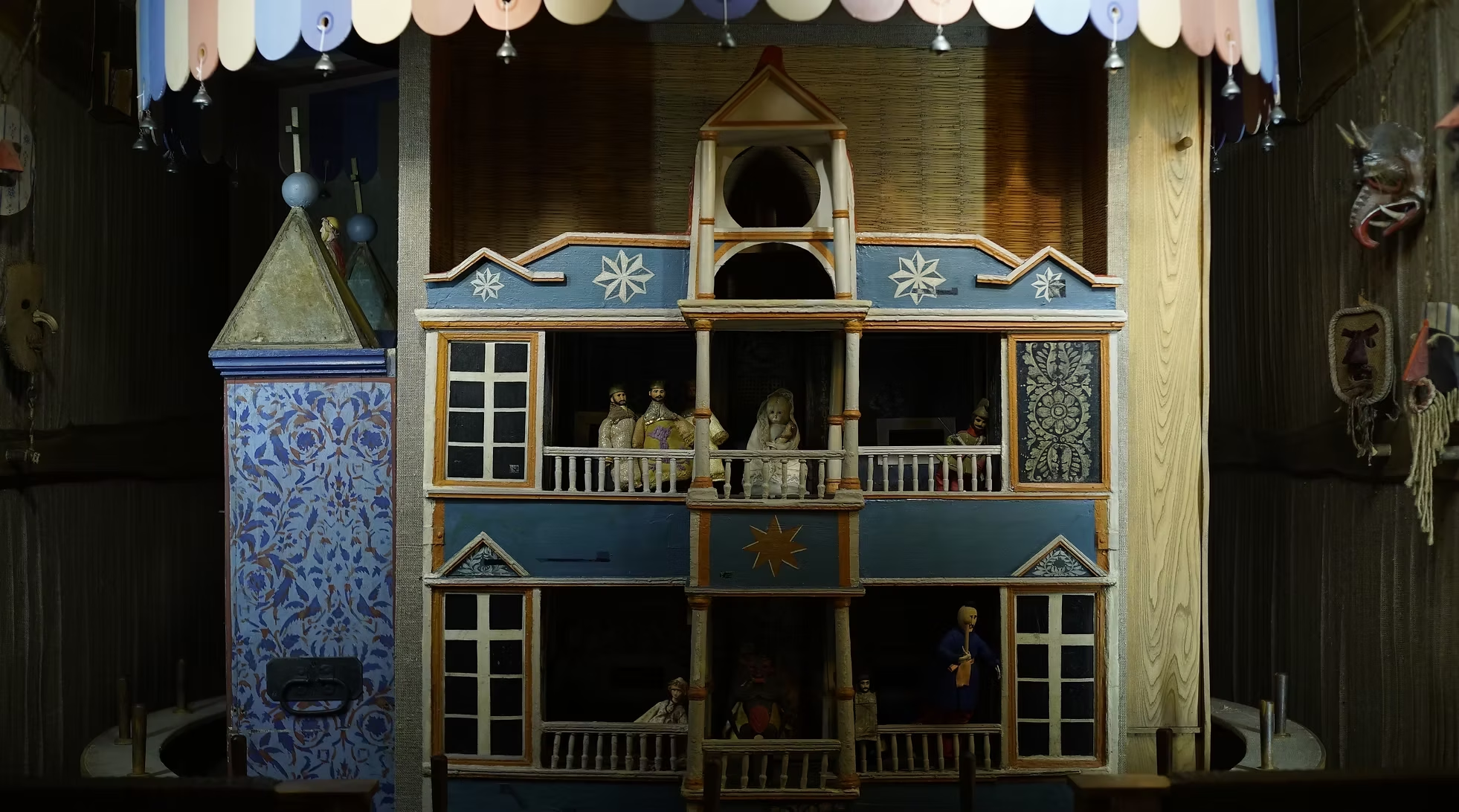
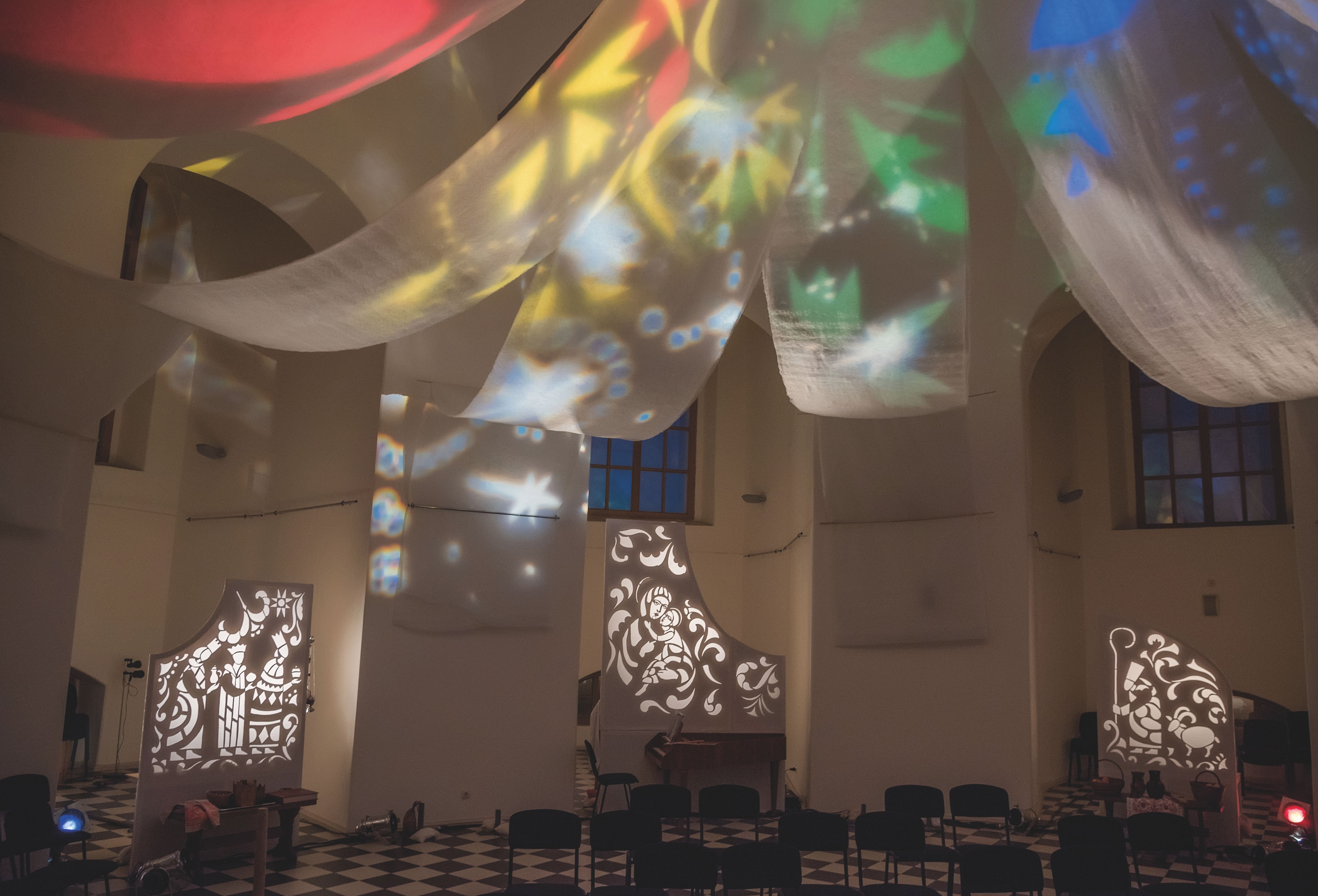
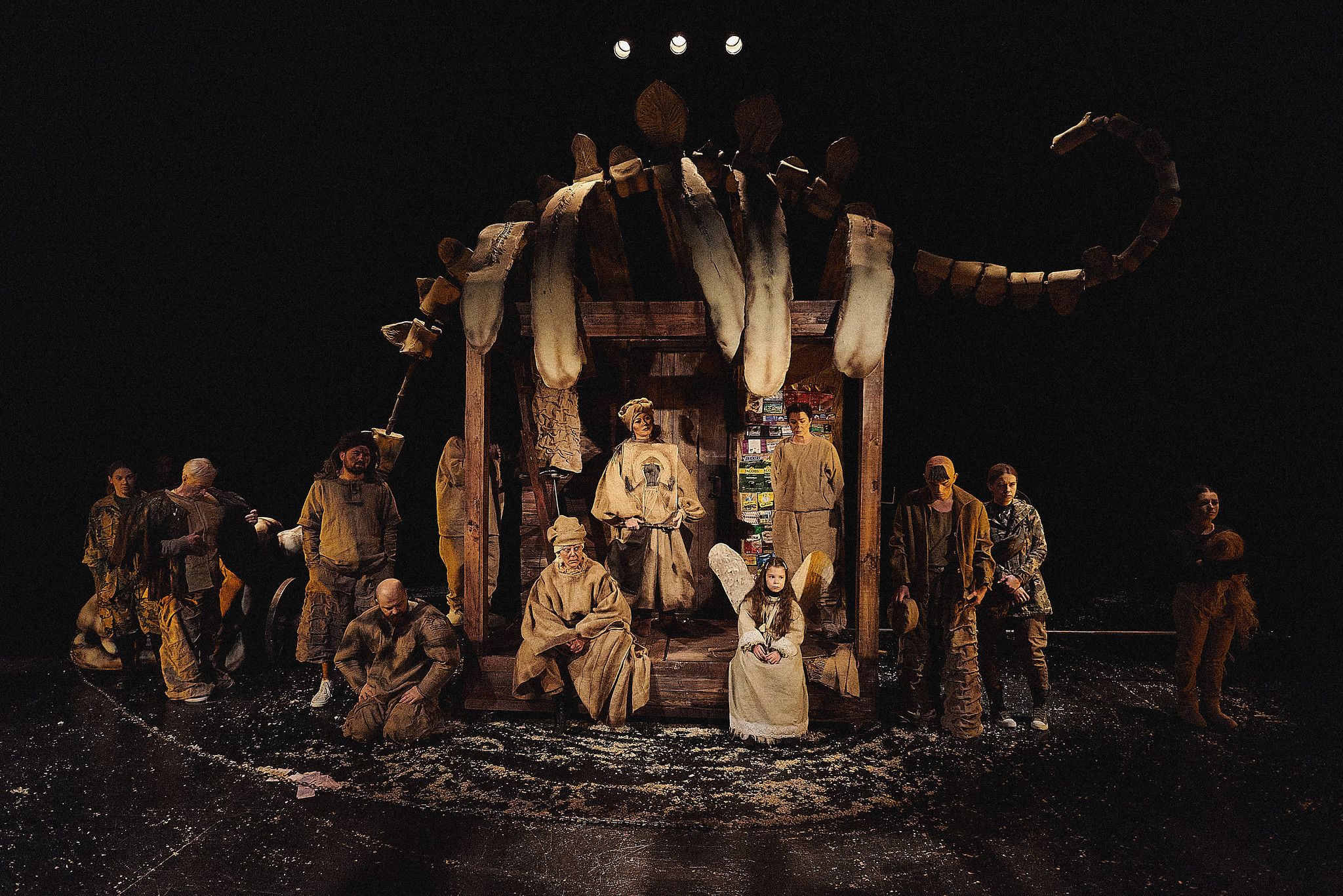
One of Polishchuk's most significant works centres on Vertep: Neo-Baroque Mystery, a reimagining of an 18th-century Ukrainian puppet theatre tradition by the Ignea Corda project. Originally conceived as a folk performance, this production transformed the historical Galaganian vertep into something new for contemporary audiences.
The performance premiered at the Great Bell Tower of the Kyiv Pechersk Lavra in 2021.
Rather than recreating traditional folk theatre with its characteristic exaggerated performances, Olena and director Bohdan Polishchuk created costumes that evoke the solemnity and ritual quality of the Baroque period.
The four main costumes share similar cuts and colour palettes but feature distinct ornamental decorations. Women's characters wear elaborate headdresses, and all costumes reference ecclesiastical vestments decorated with large appliqué elements that hint at Baroque styling.
Vertep: Neo-Baroque Mystery by Bohdan Polishchuk, 2021. Photo: Alla Cheremys; Sokyryntsi (Galagan’s) Vertep. Photo: Museum of Theatre, Music and Cinema Arts of Ukraine.
Olena's international presence has grown through collaborations with the Scenography Gallery, including participation in prestigious events like the Prague Quadrennial, the Tbilisi Biennial, and exhibitions such as Ukrainian Theatrical Costume of the 20th-21st Centuries: Identity, Context, Landscape in Lublin.
Working in theatre presents unique creative challenges, as Polishchuk must balance her artistic vision with practical considerations. Costumes must serve the overall production concept while maintaining their own visual impact within the theatrical space.
The collaborative nature of theatre means my designs passes through many hands from conception to final performance, making it a success when the finished costume resembles the original sketch.
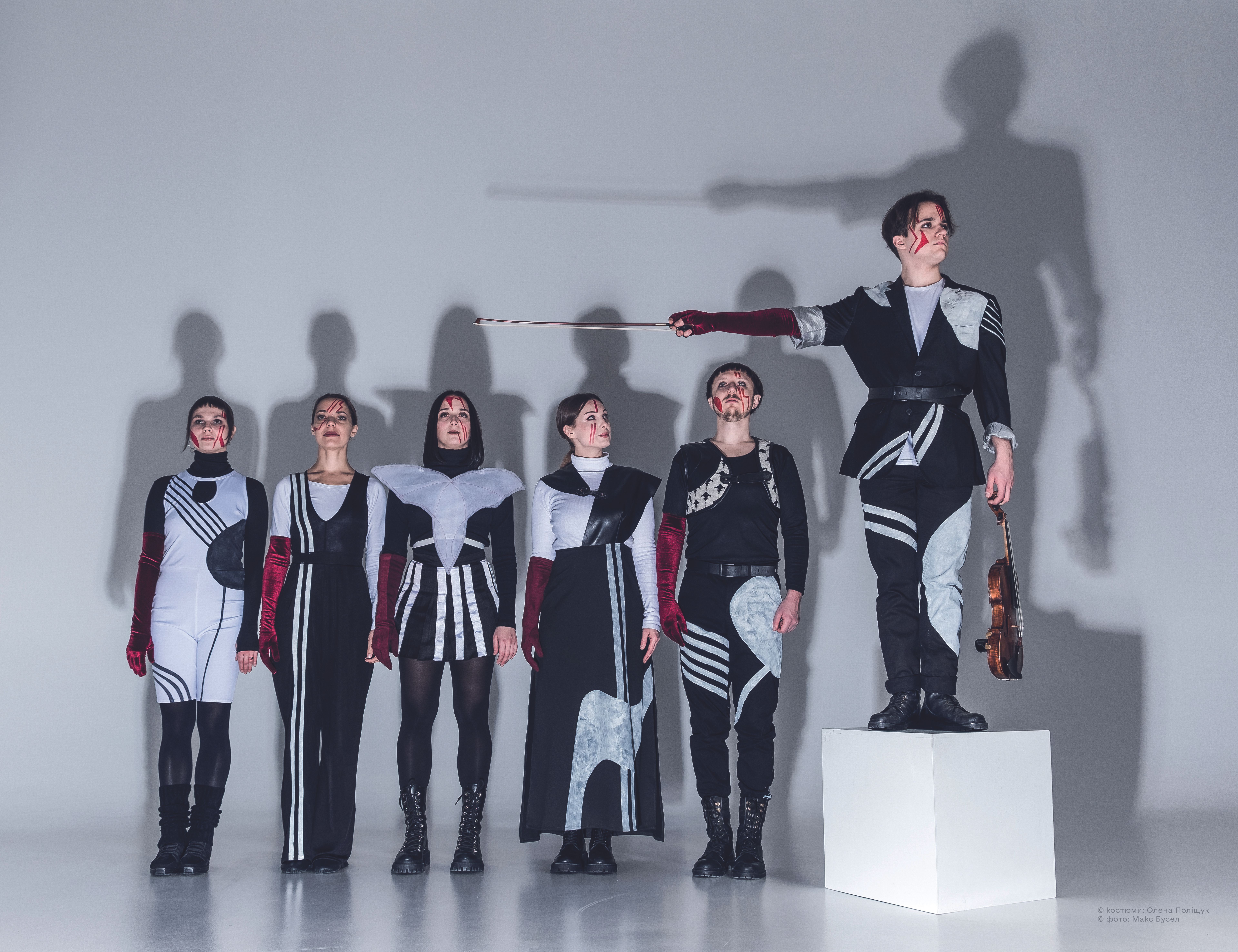
Her recent work includes Hide and Seek with Mr. Lyatoshynsky, a site-specific performance-promenade that took place in the composer's house-museum in Kyiv. This project, developed in partnership with Austrian collaborators, demonstrates her interest in expanding beyond traditional theatre spaces.
A Game of Hide-and-Seek with Mr. Lyatoshynsky by Bohdan Polishchuk, 2024. Courtesy of the Scenography Gallery.
Oleh Tatarynov has been shaping the visual world of Ukrainian theatre since 1999, working as the chief artist at Kyiv Academic Theatre for Young Audiences on Lypky.
His approach to costume and set design led to some memorable creations, like a crocodile costume with a working jaw large enough for another actor to dive inside during a performance of Peter Pan in 2025.
An artist must play through the entire performance in their mind with the imagined costumes to ensure the silhouette, colour, and texture work perfectly.
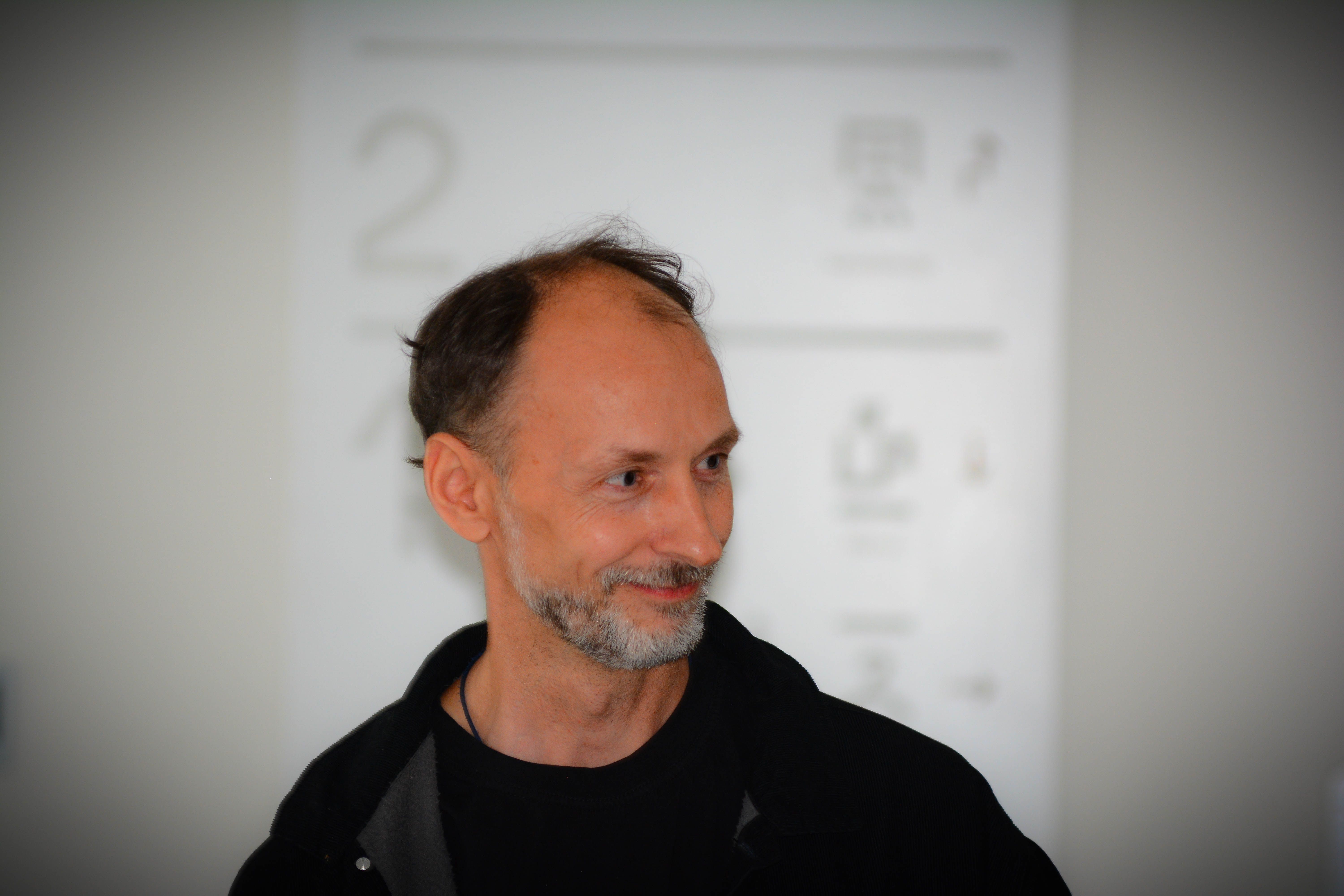
Oleh Tatarynov during the lecture at the exhibition opening, Vilnius, 2025. Photo: Evaldas Narkevičius.
The collaborative process is essential to his work. Sketches must be approved by directors, while actors contribute to the practical needs for stage movement.
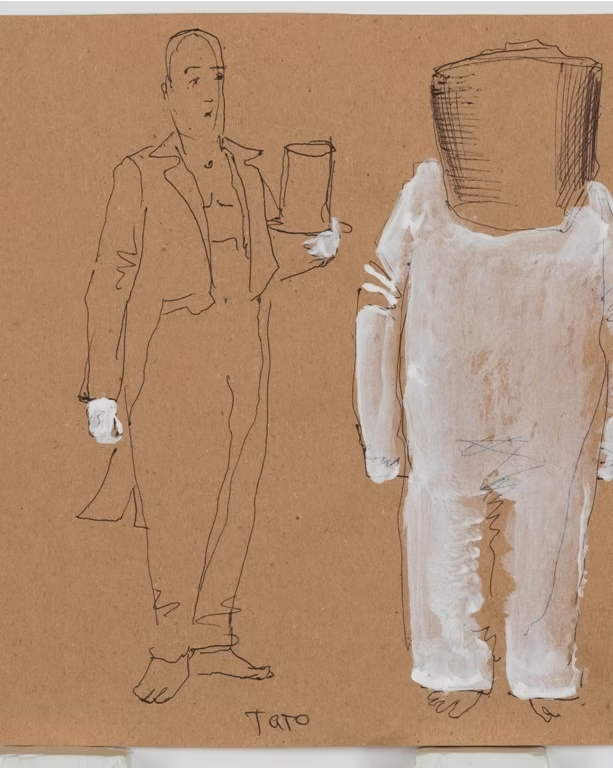
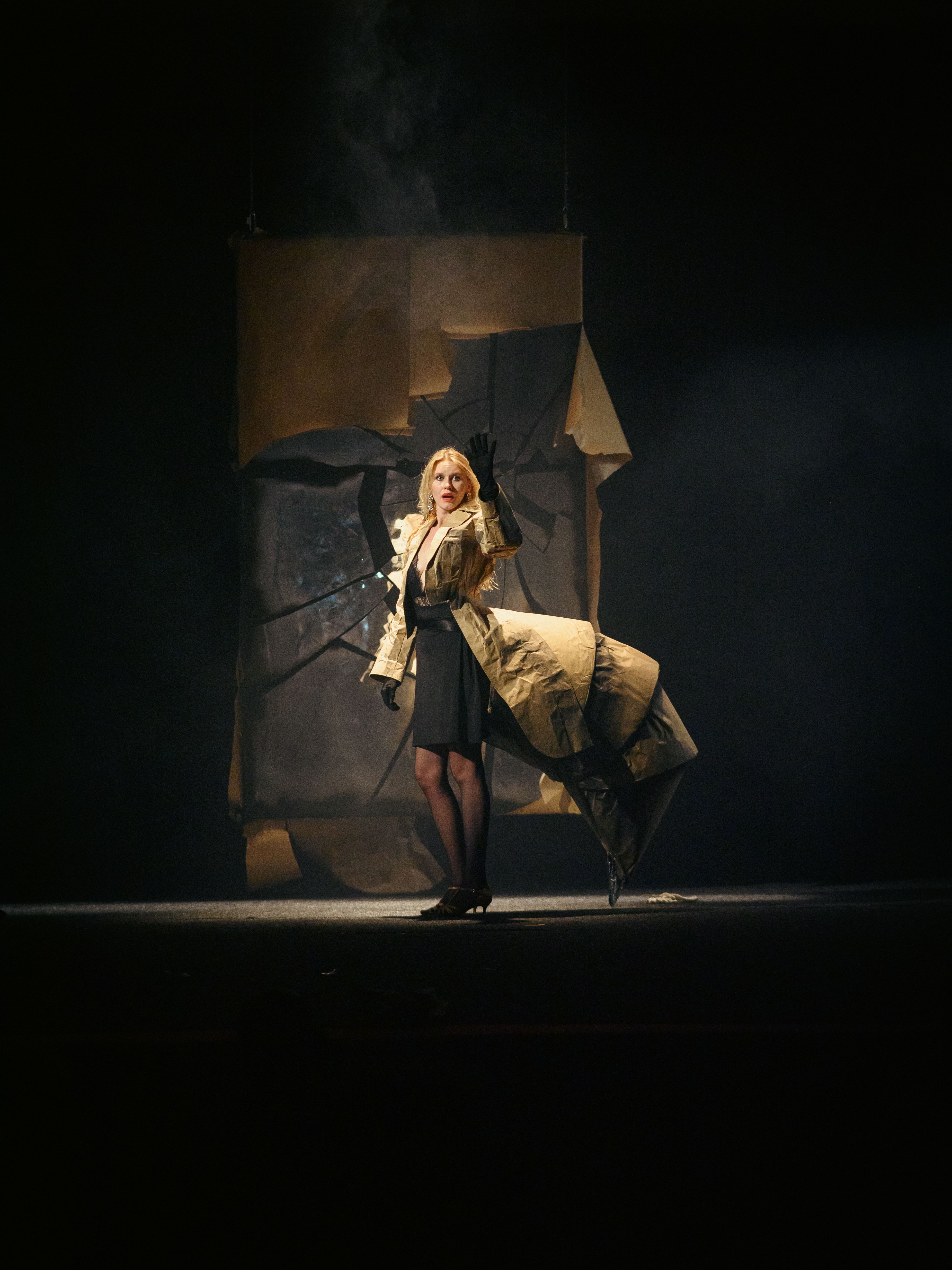
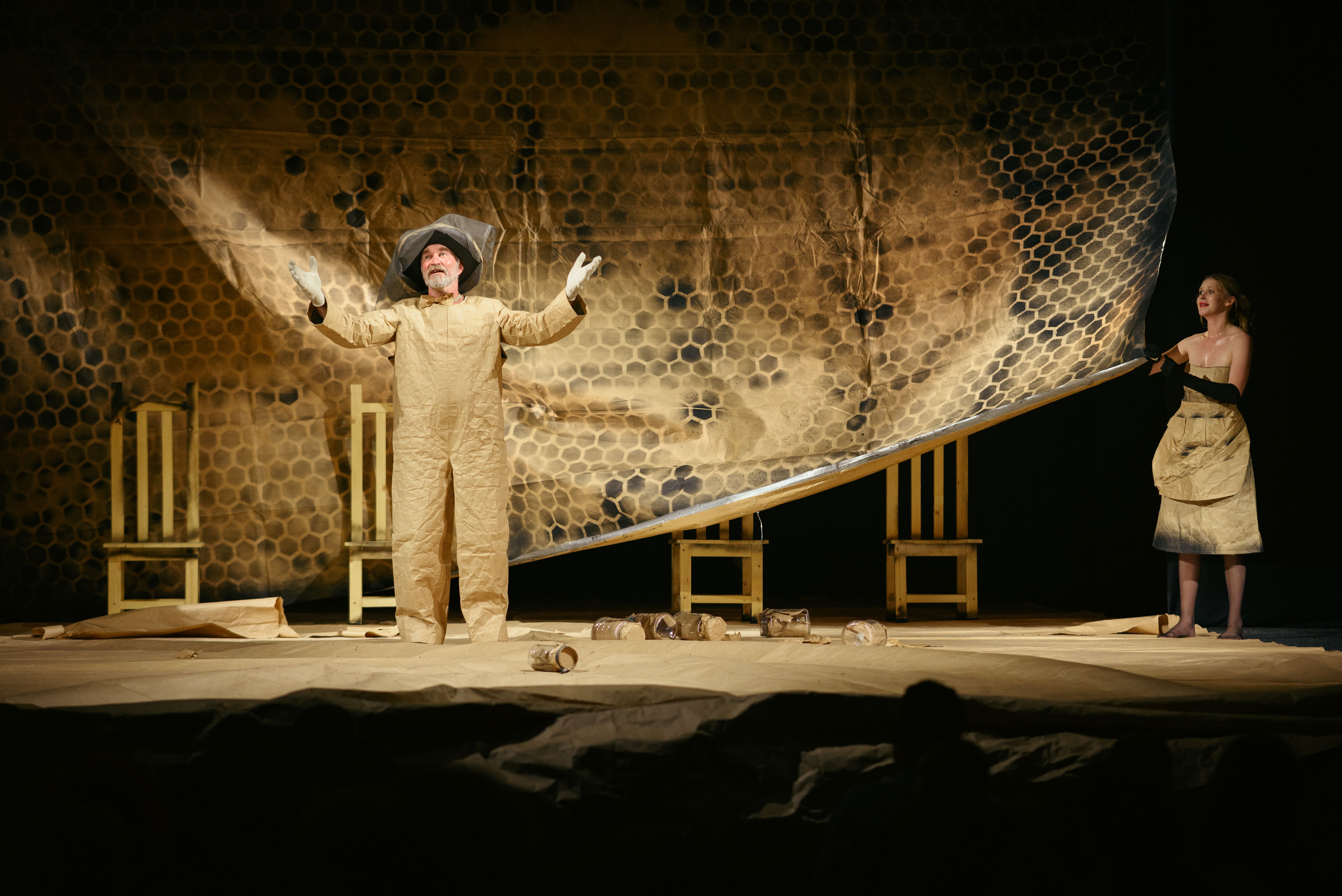
Sometimes costumes require ongoing refinement during rehearsals, especially those with unusual functions—like a paper dress with an active dance sequence that initially caused wardrobe malfunctions until the construction was perfected.
Tatarynov's work spans multiple Ukrainian theatres, from his home base in Kyiv to venues in Dnipro, Chernihiv, the evacuated Mariupol theatre now in Uzhhorod, and Cherkasy.
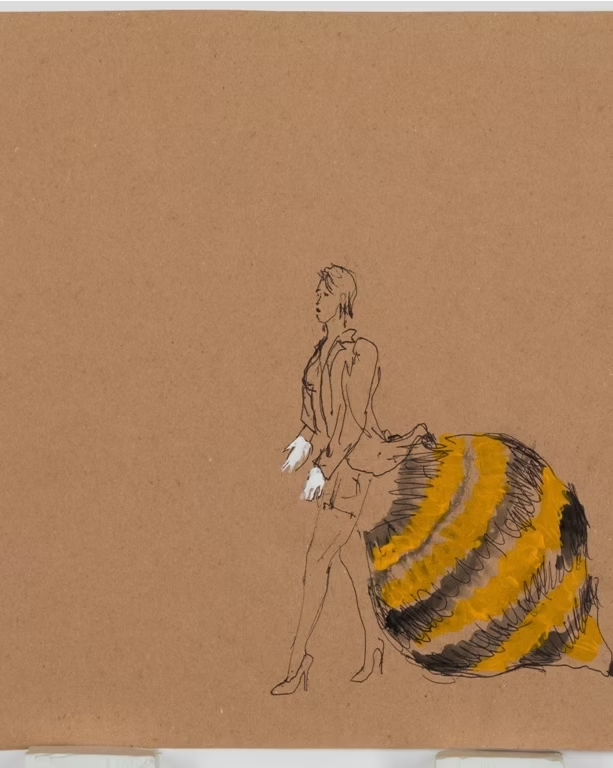
Sketches of costumes for Gone with the Wind by Ihor Matiiv, Donetsk Regional Academic Theatre (Mariupol), 2024. Courtesy of Museum of Theatre, Music and Cinema Arts of Ukraine.
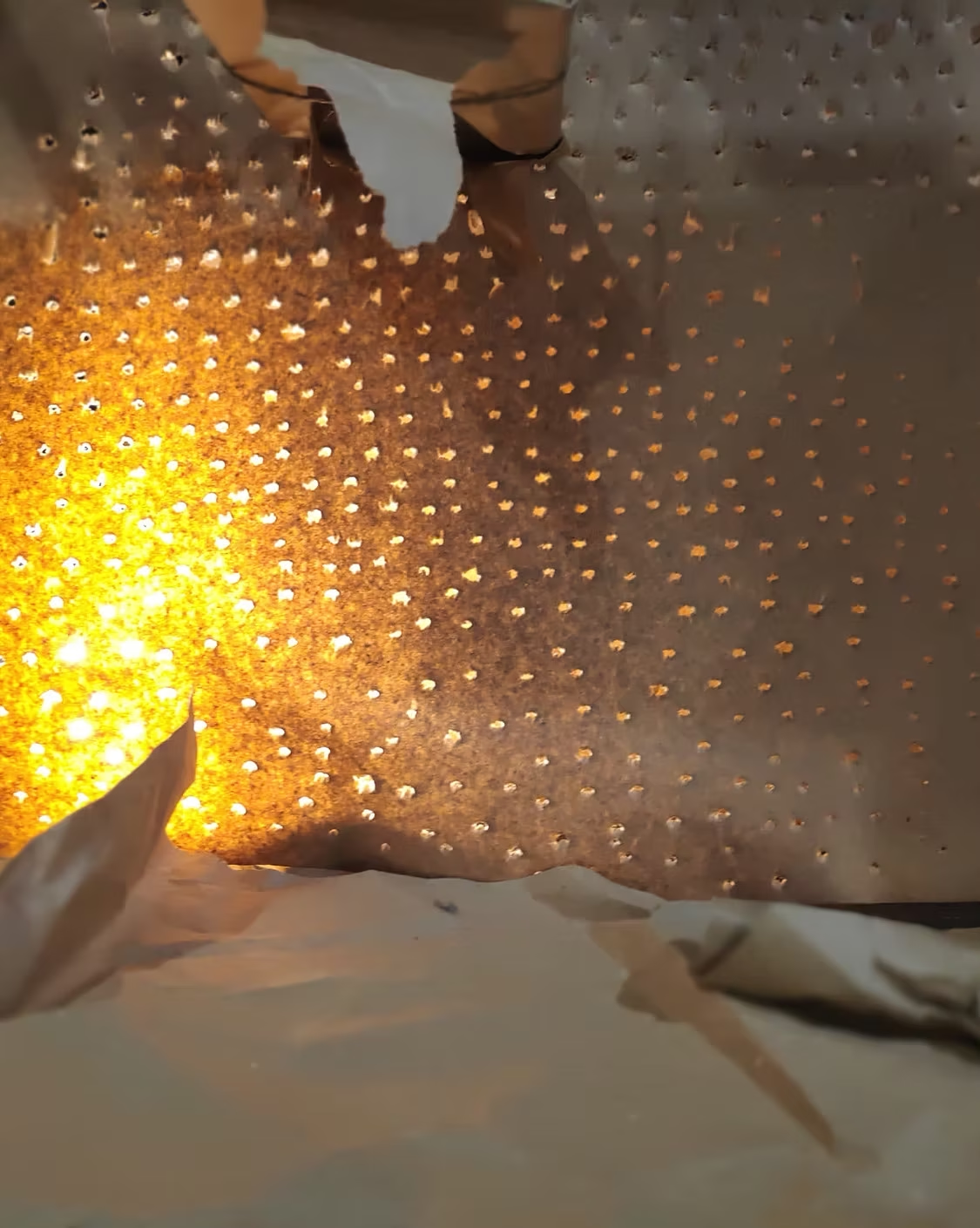
His costume for Safonivna, played by Tetyana Shumeiko in Five Songs of Polissia at Chernihiv Theatre, exemplifies his thoughtful character development. The character represents a crude Soviet-era woman who thrives on gossip and others' misfortunes.
Tatarynov dressed her in burlap, creating an archaic silhouette reminiscent of Palaeolithic sculptures and Scythian stone figures, with hints of folklore witches. The rough material suggested both mummy wrappings and doll-like qualities, sometimes appearing skin-like under stage lights.
Five Songs of Polissia by Ihor Matiiv, Chernihiv Theatre, 2023. Photo: Ira Marconi; Gone with the Wind by Ihor Matiiv. Donetsk Regional Academic Theatre (Mariupol), 2024. Photo: Tiberii Shiutiv.
Recent notable productions include:
The centennial celebration shows Peter Pan at his home theatre;
Gone with the Wind for the war-displaced Mariupol theatre;
Madam Rubinstein, honouring actress Nelli Masalska in Dnipro.
These works represent Ukrainian theatre's resilience—continuing to create beauty and meaning despite the ongoing challenges facing the country's cultural institutions.
Each theatre brings different challenges—varying technical capabilities, different creative teams, and unique working styles that demand flexibility and adaptation.
I want to help people see the good in themselves and in the world around them.